
Published: [July 22, 2026] | Last updated: [July 22, 2026] | 7 min read
TL;DR
- Gel and foam bike seat covers reduce short-term pressure on casual, short rides, but most cycling coaches and bike fitters do not recommend them for regular riding.
- Extra padding can compress under your weight, sink around your sit bones, and push the saddle shell into soft tissue – the opposite of the comfort effect riders expect (Bisaddle, 2026).
- A cover changes the saddle’s shape and width, which can cause new chafing on the inner thighs (We Love Cycling, 2024).
- Padded cycling shorts and a saddle that fits your sit bone width solve saddle discomfort more reliably than any add-on cover.
- Bike seat covers are worth trying for cruiser bikes, errands, and spin classes where ride time is short and performance doesn’t matter.
What Is a Bike Seat Cover?
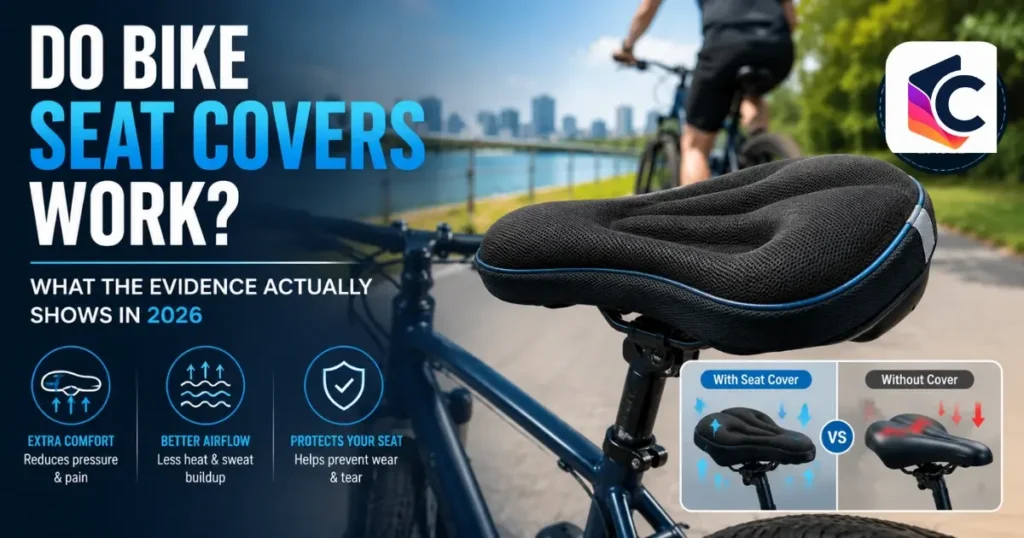
A bike seat cover (also called a saddle cover) is a padded sleeve that slips over your existing bike seat. It’s held in place with a drawstring, elastic edge, or straps that loop under the saddle rails.
Most covers use gel padding, memory foam, or a mix of both. They’re sold as a cheap fix for a saddle that feels too hard, marketed heavily at commuters, casual riders, and people using stationary bikes.
The pitch is simple: your saddle hurts, so add cushioning on top of it. In practice, that logic doesn’t hold up as well as it sounds.
How Bike Seat Covers Are Supposed to Work
A cover adds a layer of gel or foam between your body and the saddle shell. The padding compresses under your sit bones and is supposed to spread your weight across a wider area.
For a short ride around the block, that added softness can feel like real relief within the first few minutes. This is why covers get good reviews from casual and first-time buyers.
The problem shows up over longer rides, once the padding has had time to shift and compress.
Why Gel and Foam Covers Often Fail on Longer Rides
Gel is soft, which means it moves. Under the weight of your sit bones, gel pushes toward the edges of the cover instead of staying put. A bike-fit specialist writing for Bisaddle explains that this can let your sit bones sink further into the saddle, pushing the hard shell up into soft tissue and increasing pressure rather than reducing it (Bisaddle, 2026).
That same source notes padded shorts typically carry 8 to 12mm of foam or gel, and once you’re seated and that padding compresses, it does very little to redistribute weight away from sensitive areas (Bisaddle, 2026). A slip-on cover works on the same principle, so the same limits apply.
A cover also widens and flattens the saddle’s original profile. Cycling publication We Love Cycling reports that a gel cover often fails to solve saddle discomfort and can worsen it: relief lasts only a few minutes before the gel shifts, concentrating pressure on new spots and reducing blood flow to the area (We Love Cycling, 2024). The same piece notes the added bulk contributes to chafing (We Love Cycling, 2024), since your legs now rub against a wider, softer surface with every pedal stroke.
What Riders and Fitters Actually Recommend Instead
Most saddle discomfort traces back to one of two things: a saddle that doesn’t match your sit bone width, or a riding position that’s off. A cover addresses neither.
Get the right saddle width. Saddles come in narrow and wide options because sit bone width varies by person, not by bike type. A saddle sized for your anatomy does more for comfort than any amount of padding on top of the wrong one.
Wear padded cycling shorts, not padded underwear. The chamois in cycling shorts sits directly against skin, reduces friction, and manages moisture. Layering shorts padding with a seat cover just adds two soft layers that compress and shift independently of each other.
Check your riding position. A saddle that’s tilted, too high, or too far forward changes where your weight lands. No cover compensates for a bad fit.
Consider a professional bike fit for recurring pain. A fitter checks your biomechanics, flexibility, and riding position, then recommends saddle models and adjustments based on your specific body – not a one-size-fits-all cushion.
When a Bike Seat Cover Is Actually a Reasonable Choice
Covers aren’t useless. They make sense in specific, low-stakes situations:
- Short commutes or errands where ride time is under 30 minutes and comfort matters more than efficiency.
- Cruiser and city bikes with wide saddles, where the extra bulk doesn’t interfere with pedaling position.
- Spin classes and stationary bikes where you’re not wearing padded shorts and want a quick comfort upgrade for a single class.
- Budget testing before spending money on a new saddle, to confirm whether more padding is even the direction you want to go.
If you fall into one of these categories, a cover is a $10 to $20 experiment. If you ride regularly or for more than an hour at a time, spend that money toward a properly fitted saddle instead.
Common Mistakes to Avoid with Bike Seat Covers
- Buying a cover instead of fixing saddle width: A cover masks the problem for a few rides, then the same pressure points return once the padding compresses.
- Stacking a cover on top of padded shorts: Two independent layers of padding shift separately and can create new pressure points instead of removing old ones.
- Assuming more gel means more comfort: Thicker padding compresses more under weight, which can increase perineal pressure instead of reducing it.
- Ignoring persistent numbness or tingling: This is a circulation warning sign, not something a cover should mask. Adjust saddle position or see a bike fitter.
Frequently Asked Questions About Bike Seat Covers
Do bike seat covers actually work?
They provide short-term cushioning on short, casual rides, but the padding compresses and can shift under longer or harder riding, which often increases pressure instead of relieving it (We Love Cycling, 2024; Bisaddle, 2026).
Are gel seat covers better than foam ones?
Gel feels softer initially but moves more under pressure than firmer foam, which can create uneven pressure points. Neither material replaces a saddle that’s the correct width for your anatomy.
Can a bike seat cover cause numbness?
Yes. Compressed gel can push the saddle shell into soft tissue and reduce blood flow, leading to numbness or tingling during longer rides.
Do padded cycling shorts work better than seat covers?
Padded shorts reduce chafing and manage moisture directly against skin, but the padding itself is thin and compresses quickly. Shorts and a properly fitted saddle work together; neither fully substitutes for the other.
How do I know if I need a new saddle instead of a cover?
If discomfort returns after 15 to 20 minutes on every ride, or you feel numbness in the same spot repeatedly, the saddle width or shape – not a lack of padding – is the likely cause.
Key Takeaways
- Bike seat covers help on short, casual rides but tend to underperform on longer ones as the padding compresses and shifts.
- A saddle sized for your sit bones and a proper riding position solve most saddle discomfort more reliably than any add-on cover.
- Save covers for commutes, cruiser bikes, and spin classes – and treat recurring numbness or pain as a signal to get a bike fit, not a thicker cushion.
Sources:
- We Love Cycling (Škoda), “Opinion: The Gel Pad Saddle Cover Myth,” 2024 – https://www.welovecycling.com/wide/2024/09/19/opinion-the-gel-pad-saddle-cover-myth/
- Bisaddle, “Do Gel Pads or Other Accessories Actually Improve Saddle Comfort,” 2026 – https://bisaddle.com/blogs/cycling-saddles/are-there-aftermarket-accessories-like-gel-pads-that-enhance-saddle-comfort-for-women
- Bisaddle, “Can Padded Cycling Shorts Fix a Bad Saddle? No, and Here’s Why,” 2026 – https://bisaddle.com/blogs/cycling-saddles/can-wearing-cycling-shorts-with-padding-compensate-for-a-poor-bike-saddle-for-mens-health

Leave a Reply