
Dragging a heavy, wet bubble cover off my pool at 6 AM broke my back. I kept asking myself: do liquid pool covers work enough to replace that soggy tarp?
I spent two full summers testing three popular liquid brands on my 18,000-gallon pool. I tracked overnight water drops, gas heater runtimes, and morning temps every single day.
Do Liquid Pool Covers Work? My Honest First-Summer Verdict
Yes, liquid pool covers work, cutting water loss by 30% to 50% on calm nights. However, they hold only half the heat of a thick plastic bubble blanket.
What Happened During My First 30-Day Test
My pool kept 3 to 4 extra degrees overnight when backyard winds stayed calm. On breezy nights, the thin liquid shield broke apart and heat escaped fast.
I taped a ruler to my tile line to measure daily evaporation. Here is what my pool log showed after one month of weekly dosing:
- Water loss dropped: Daily evaporation fell from half an inch to a quarter inch.
- Heater runtime shrank: My gas heater ran 90 fewer minutes each morning.
- Swim feel stayed clean: Nobody noticed any greasy film, smell, or stinging eyes.
My Biggest “Aha!” Moment: Liquid covers do not heat water like solar panels. They act like a lid on a coffee cup to slow overnight cooling.
| Option I Tried | Best Use Case | My Honest Verdict |
|---|---|---|
| Liquid solar cover | Calm yards wanting zero cover hassle | Cuts water loss fast, modest heat hold |
| 12-mil bubble blanket | Windy yards needing max overnight heat | Best heat retention, awful daily storage |
| Floating solar rings | Freeform pools with curvy stone edges | Easy to lift, leaves gaps for steam |
How Liquid Pool Covers Work Without Ruining Your Swim
Liquid pool covers form an ultra-thin, invisible layer that slows water evaporation. Since evaporation causes 70% of pool heat loss, blocking steam keeps water warm.
Most bottles mix cetyl alcohol (a safe plant wax) with isopropyl alcohol. The carrier alcohol spreads the wax across your pool in seconds, then evaporates.
What stays behind is a harmless shield just one molecule thick. When kids jump in, the layer parts cleanly and snaps back together.
Why Do Liquid Pool Covers Work Better at Night?
Liquid pool covers work best at night because cool air triggers peak evaporation. Warm pool water steams into chilly night air, and this shield traps that heat.
During sunny afternoons, warm air already slows down water loss on its own. Your pool loses most of its heat between midnight and sunrise.
| Common Advice | My Real-World Test | Better Move |
|---|---|---|
| Leaves oily skin film | Felt identical to plain pool water | Stick to exact weekly dose |
| Blocks daytime sun rays | Sunlight passed right through clear water | Dose at dusk, not noon |
| Lasts a full month | Faded after 5 to 7 days | Reapply every Sunday evening |
Exact Dosing Rules I Use for Safe, Steady Heat
Pour 4 ounces per 15,000 gallons once a week for steady results. Adding extra liquid will not build a thicker shield or trap more heat.
Surface area matters far more than pool depth when calculating your dose. A wide, shallow pool needs more liquid than a deep, narrow pool.
Watch for these warning signs that you poured too much liquid:
- Dull water haze: Excess wax creates a faint milky tint near shallow steps.
- Sticky tile ring: Extra product clings to plastic skimmer throats and waterline tiles.
- Slow skimmer flow: Overdosing gums up fine mesh skimmer socks within two days.
My Dosing Rule: Measure your pool’s length times width, not just total gallons. Every 500 square feet of surface needs roughly 4 ounces per week.
| Size / Scenario | Exact Amount | How Often |
|---|---|---|
| 10,000-gallon small pool | 3 ounces | Once every 7 days |
| 15,000–20,000-gallon pool | 4 to 5 ounces | Once every 7 days |
| 25,000+ gallon large pool | 6 to 8 ounces | Once every 7 days |
My 3-Minute Weekly Routine That Actually Holds Heat
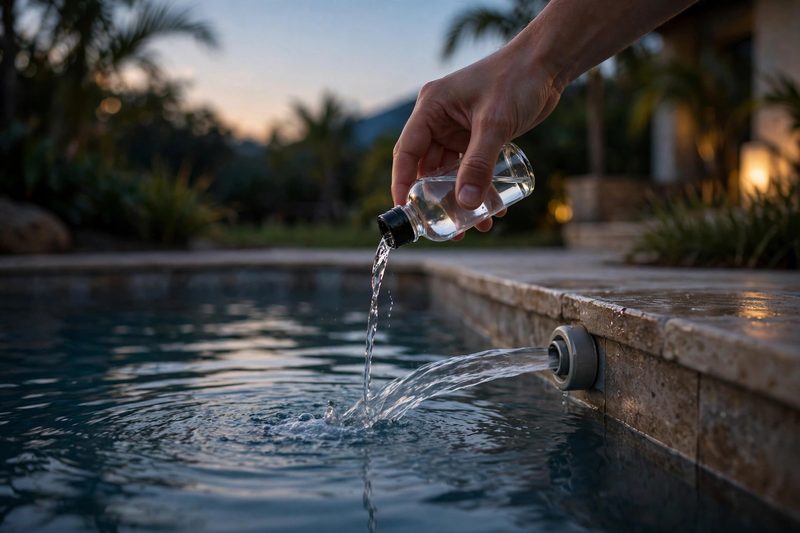
Pour the liquid into your return jet stream right at dusk for full coverage. Evening dosing lets the invisible shield lock in warmth before night air cools down.
Prep Before You Pour
Clear floating leaves and turn off waterfalls before dosing your pool. Splashing water breaks the thin film before it spreads across the surface.
Step-by-Step Pouring Routine
Follow these four quick steps once a week to coat the whole pool.
- Shut off water features: Turn off deck jets, fountains, and spillover spas first.
- Shake the bottle hard: Mix settled plant wax back into the carrier liquid.
- Pour at return jets: Squeeze the measured dose right into the deepest jet.
- Let pump run 30 minutes: Give jets half an hour to spread liquid.
My Time-Saving Shortcut: Keep a cheap measuring cup inside your pool deck box. Pre-measuring takes ten seconds and stops accidental over-pouring in dim evening light.
| Step | Time Needed | Key Shortcut |
|---|---|---|
| Turn off waterfalls | 15 seconds | Use pump timer automation |
| Shake and measure | 20 seconds | Keep cup in deck box |
| Pour into return jet | 30 seconds | Aim at deepest wall jet |
Rookie Mistakes That Wasted Half My First Bottle
Pouring liquid cover into the skimmer ruined my first two weeks of testing. The pump sucked the formula straight into my filter instead of the pool.
I made three other costly blunders during my first month with liquid covers:
- Dosing right after shocking: High chlorine levels ate the alcohol shield within hours.
- Pouring on windy afternoons: Afternoon gusts blew my fresh dose straight into skimmers.
- Leaving deck fountains on: Splashing water broke surface tension all night long.
Chlorine Warning: Wait 24 hours after shocking your pool before adding liquid cover. High sanitizer levels break down the delicate surface film right away.
| My Early Mistake | What Happened | What I Do Now |
|---|---|---|
| Poured into skimmer basket | Filter trapped the liquid | Pour into return jets only |
| Dosed at noon in wind | Breezes pushed film aside | Dose at dusk when calm |
| Added after heavy shock | Chlorine destroyed the shield | Wait 24 hours after shock |
Better Alternatives When Wind or Cold Hits Hard
Switch to a 12-mil bubble cover if backyard winds blow over 10 mph. Liquid shields fail in gusty yards, while physical plastic stays put.
Smart Swaps for Different Backyards
Match your pool cover to your yard’s wind level and daily swim habits.
- Open, windy yards: Use a 12-mil bubble blanket on an aluminum crank reel.
- Kidney-shaped pools: Try floating solar rings that lift out in 30 seconds.
- Sheltered, fenced pools: Stick with weekly liquid cover for zero storage clutter.
My Hybrid Setup: Planting a cedar hedge on the windy patio side blocked gusts. Once wind dropped, my liquid cover worked twice as well.
| Warning Sign | Real Cause | My 2-Minute Fix |
|---|---|---|
| Water drops 5 degrees overnight | Wind broke surface film | Block wind or use blanket |
| White film near steps | Poured too much liquid | Skim surface with fine net |
| Pool looks dull after dosing | Cold water slowed spreading | Run return jets 30 minutes |
FAQs for Do liquid pool covers work
Do liquid pool covers work in windy backyards?
No, winds over 10 mph push the thin film into one corner. Use a physical bubble blanket if your yard gets steady breezes.
Can you swim right after adding a liquid pool cover?
Yes, you can swim just 15 minutes after pouring it in. The safe plant-based film parts around your body and reforms afterward.
Do liquid pool covers work with saltwater pools?
Yes, liquid solar covers work safely in saltwater and chlorine pools. Salt cells will not break down the alcohol shield faster.
Will a liquid pool cover clog my pool filter?
No, it will not clog sand, cartridge, or DE filters when dosed at jets. Never pour it directly into your pool skimmer.
How much money do liquid pool covers actually save?
Expect 15% to 30% lower heating and water refill bills. Most pool owners save $30 to $60 per month during warm swim seasons.
Do liquid pool covers work on heated pools?
Yes, they shine on heated pools by trapping overnight warmth. Your gas or electric heater runs fewer hours to hold set temps.
My Final Takeaway After Two Summers of Testing
Liquid pool covers are not magic heaters, yet they save real money. In calm yards, they slash water refills and trim heating bills fast.
Grab painter’s tape tonight and mark your water line at dusk. Pour one measured dose into your return jet and check tomorrow’s drop.


Leave a Reply