
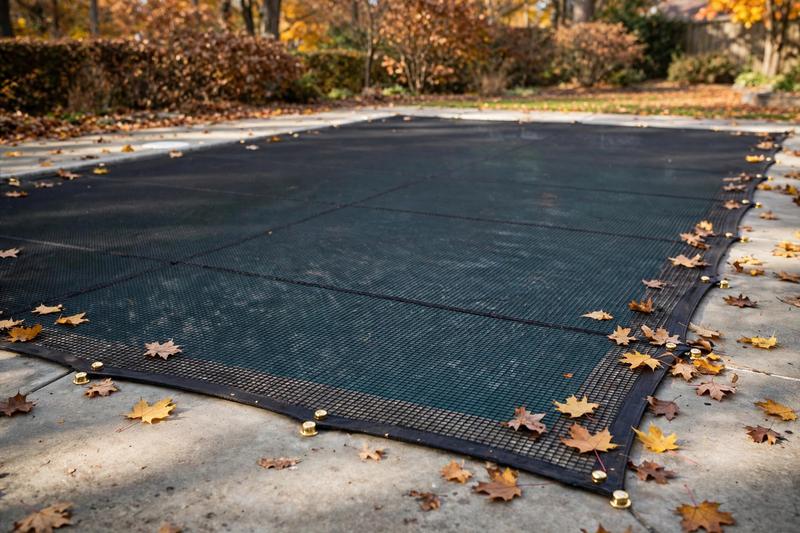
I stared at my murky green pool water every April for three straight years. My old bargain tarp ripped in high winds and dumped soggy oak leaves right into my deep end.
When I finally priced out a serious upgrade, one name kept coming up at local pool shops. Are Latham pool covers good enough to justify their steep price tag? I bought and installed their gear myself to find out.
My First Time Testing Latham Covers & Quick Verdict
Yes, Latham pool covers are very good, offering commercial-grade hardware and ASTM F1346 safety ratings, though your results depend heavily on proper dealer measuring. I have used both their 7000MS mesh safety cover and their Coverstar automatic track system across four harsh winters.
My first impression out of the box was the sheer weight of the brass anchors and stainless springs. Cheap covers use thin aluminum that bends under heavy wet snow. Latham uses ultrasonic-hardened brass anchors that sit flush in my concrete deck.
The cover fabric only tells half the story—Latham’s triple-stitched straps and box-tack reinforcements are what actually stop heavy snow loads from tearing seams apart.
Still, Latham is not magic if your installer rushes the tape measure. One neighbor had a custom Latham cover arrive two inches short around his diving board because his builder guessed the angles.
| Option I Tried | Best Use Case | My Honest Verdict |
|---|---|---|
| Latham 7000MS Mesh | Heavy snow and tree-filled yards | Blocks 99% of sun with zero pumping |
| Latham 1000HS Solid | Warm states prone to spring algae | Cleanest spring water, requires cover pump |
| Coverstar Autocover | Daily summer heat and kid safety | Best daily convenience, high upfront cost |
Why Latham Covers Work (Or Backfire) in Real Life
Latham covers excel at blocking sunlight and resisting seam tears, yet they backfire if installed over weak mortared stone or neglected during winter storms. Understanding both sides saved me thousands in avoidable repairs.
What Impressed Me Most in Daily Use
99% Sunlight Blockage: My 7000MS mesh cover filters dirt down to 40 microns. My pool opened crystal clear last May instead of looking like a swamp.
Non-Marking Coping Strips: White vinyl chafing strips line the underside of the straps. They protect my bullnose brick coping from ugly black rubber scuff marks.
Invis-A-Drain Panels: On their solid covers, tiny quarter-inch holes sit above a mesh filter. Rainwater drains straight through without letting leaves enter the pool.
Flush Brass Anchors: When summer arrives, I screw the brass inserts flat into the concrete. Nobody stubs a bare toe while walking around the deck.
Hidden Risks and Frustrations I Found
Direct Customer Service Walls: Latham sells strictly through local dealers. If a strap frays, you cannot call the factory for an overnight replacement.
Stone Wall Anchor Failures: Tensioned safety springs pull with massive force. Never let an installer drill Latham anchors into thin mortared stone veneers or hollow cinder blocks.
Autocover Track Debris: My Coverstar automatic tracks jammed twice in October when tiny acorns wedged inside the aluminum guide channels.
| Warning Sign | Real Cause | My 2-Minute Fix |
|---|---|---|
| Springs popping off anchors | Water level dropped over 18 inches | Top up pool water under cover |
| Autocover motor straining | Pine needles jammed in side tracks | Blast tracks with a garden hose |
| Green water in April | Bought 5000M mesh (only 91% shade) | Upgrade to 7000MS or 9000MX weave |
Exact Models, Sizing & Safe Limits I Tracked
Choosing the right Latham model comes down to fabric weight, sun blockage, and your local snow load. Picking the wrong tier wastes money or leaves you scrubbing green walls in spring.
I measured and compared Latham’s core lineup before spending a dime. Here is how their main winter safety models stack up in real-world weight and warranty coverage.
| Size / Scenario | Exact Amount | How Often |
|---|---|---|
| 9000MX Max Shade | 7.9 oz mesh, 99% sun block | 25-year warranty (5 full) |
| 7000MS High Shade | 7.0 oz mesh, 40-micron filter | 20-year warranty (5 full) |
| 5000M Standard | 5.0 oz mesh, 91% sun block | 15-year warranty (3 full) |
| 1000HS Solid Vinyl | 12.0 oz solid, 100% sun block | 15-year warranty (3 full) |
Safe Tension and Water Level Rules
Keep Water High: Never drain your pool more than 12 to 18 inches below the skimmer. The water supports the cover under heavy snow loads.
Compress Springs Halfway: Each stainless spring should compress by 50% when hooked onto the brass anchor. Over-tightening snaps webbing during freeze-thaw cycles.
Clear Heavy Wet Snow: Brush off wet snow once it exceeds 10 inches deep. Even a 9000MX cover stretches if ice builds up for weeks.
Never walk across a snow-covered mesh cover just to test its strength—Latham builds them to meet ASTM F1346 emergency safety codes, not as a backyard patio.
My Step-by-Step Latham Cover Setup & Closing Routine
Installing a tensioned Latham safety cover takes two people about 45 minutes once your brass deck anchors are drilled. Having a set order keeps the fabric centered and prevents twisted straps.
Prep Work Before Unrolling
Brush and Vacuum First: Remove every single leaf from the pool floor before closing. Trapped leaves stain plaster and eat up your winter chlorine.
Raise Brass Anchors: Use a standard hex key to turn every brass deck anchor counter-clockwise until it sits half an inch proud of the concrete.
Lubricate Anchor Threads: Spray a tiny drop of silicone lubricant onto each brass thread so winter salt and grit never seize them up.
Stretching and Securing the Cover
Lay the Cover Flat: Unfold the cover lengthwise alongside the pool with the white chafing strips facing down toward the coping.
Hook the Four Corners: Attach the four corner springs first using your steel installation rod. This centers the cover over the water.
Work Opposite Sides: Hook one spring on the left side, then immediately hook the matching spring on the right side. Alternating keeps tension even.
Check Strap Alignment: Walk the perimeter and make sure every strap runs straight from the D-ring to its anchor without twisting.
| Step | Time Needed | Key Shortcut |
|---|---|---|
| Raise brass anchors | 10 minutes | Use a cordless drill on low torque |
| Unfold and center cover | 10 minutes | Mark the shallow end corner with tape |
| Hook perimeter springs | 20 minutes | Hook opposite sides in pairs |
| Final tension check | 5 minutes | Verify 50% spring compression |
Rookie Mistakes I Made Early On With Latham
Even top-tier pool gear fails fast when you rush spring storage or ignore basic strap alignment. I made three expensive blunders during my first two years with Latham covers.
Storing a damp mesh cover in a sealed plastic bin over summer creates a mildew factory—always hose it down and sun-dry it for two hours before bagging.
Dragging the Cover Across Brick Coping: I pulled my 7000MS cover across rough brick edges by myself during my first spring opening. That rough drag frayed two perimeter straps before I learned to lift and fold it accordion-style.
Leaving Vinyl Spring Sleeves Off: I tossed the little black vinyl sleeves aside because they looked cosmetic. Without them, metal springs scratched my stamped concrete every time the wind blew.
Using a Pressure Washer on the Mesh: I blasted pollen off my cover with a 3,000 PSI pressure washer. The jet tore tiny holes in the 40-micron weave that required a patch kit.
| My Early Mistake | What Happened | What I Do Now |
|---|---|---|
| Dragged cover over coping | Frayed perimeter webbing | Lift and accordion-fold with a helper |
| Skipped vinyl spring sleeves | Scratched stamped concrete deck | Slide sleeves over every spring |
| Used high-pressure washer | Cut tiny holes in fine mesh | Wash gently with a soft broom and hose |
Better Alternatives & Smart Swaps to Consider
Latham is a top choice for durability, yet rival brands like Loop-Loc or Merlin make more sense for unusual freeform pools or direct factory support. Comparing them side-by-side clarifies where your money goes.
When I Reach for a Different Brand
Loop-Loc Ultra-Loc III: If your pool has a raised stone spa or tricky rock waterfall, Loop-Loc’s custom computer-aided templates fit odd angles slightly tighter than Latham.
Merlin SmartMesh: Merlin offers very similar 99% shade mesh at a slightly lower price point through many independent pool builders.
Basic Water-Bag Tarp: If you plan to remodel your pool deck next year, skip drilling brass anchors. Use a $150 solid tarp with water tubes until your new concrete cures.
| Common Advice | My Real-World Test | Better Move |
|---|---|---|
| “All mesh covers let algae grow” | 99% shade mesh stays clear | Pick 7000MS or 9000MX over 5000M |
| “Autocovers replace winter covers” | Heavy snow bends aluminum tracks | Layer a winter safety cover on top |
| “Buy online and DIY drill anchors” | One crooked hole ruins tension | Hire a pro for initial anchor drilling |
FAQs for Are Latham pool covers good
Are Latham pool covers good for heavy snow?
Yes, Latham 9000MX and 7000MS covers handle heavy snow easily, using triple-stitched straps and stainless springs to meet strict ASTM F1346 safety standards.
How long does a Latham pool cover last?
A Latham safety cover lasts 12 to 20 years in real use, backed by pro-rated factory warranties ranging from 15 years on solid vinyl to 25 years on 9000MX mesh.
Are Latham pool covers better than Loop-Loc?
Latham and Loop-Loc offer nearly identical safety and lifespan, though Latham’s 7000MS high-shade mesh often costs 10% to 15% less than comparable Loop-Loc models.
Do Latham mesh covers let rain through?
Yes, Latham mesh covers drain rain and melting snow automatically, filtering dirt down to 40 microns so you never need a cover pump during winter storms.
How much does a Latham safety pool cover cost?
Expect to pay $2,200 to $4,500 installed for a Latham safety cover, while their Coverstar automatic track systems range from $12,000 to $22,000 total.
Can you walk on a Latham safety pool cover?
No, never walk on a Latham pool cover casually, as they are engineered strictly as emergency fall barriers for kids and pets rather than load-bearing decks.
My Final Take on Buying a Latham Pool Cover
Buying a Latham cover stopped my annual April swamp cleanup dead in its tracks. If you pair their 7000MS high-shade mesh or Coverstar automatic system with an experienced installer who measures carefully, you get a decade-plus of rock-solid safety and clean spring openings.
Before you request a quote today, take five minutes to walk around your pool deck with a tape measure. Check whether you have at least three feet of solid, uncracked concrete around the entire perimeter so those flush brass anchors have a rock-solid foundation to grip.


Leave a Reply