
Published: July 7, 2026 | Last updated: July 7, 2026 | 7 min read
TL;DR
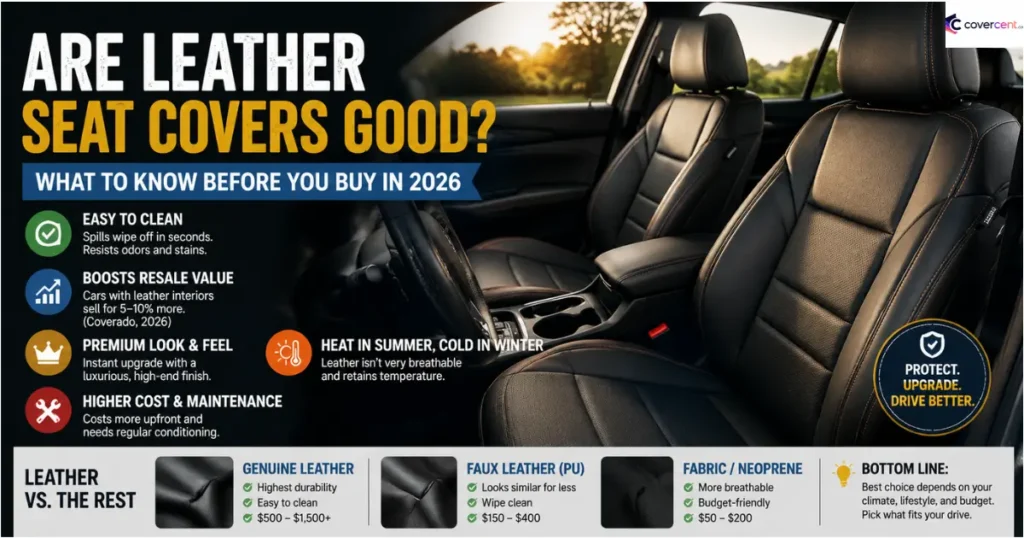
- Leather seat covers are good for easy cleaning, odor resistance, and a premium look, but they trap heat in summer and cold in winter.
- Genuine leather covers cost $500-$1,500+ per set, while fabric alternatives run $50-$200 (Coverado, 2026).
- Cars with leather interiors can sell for 5-10% more than comparable cars with fabric seats (Coverado, 2026).
- Genuine leather needs conditioning several times a year, or it dries out and cracks.
- Faux leather (PU leather or leatherette) gives you the look for less money but wears out faster than fabric under heavy daily use (TigerTough, 2024).
What Are Leather Seat Covers?
Leather seat covers are removable covers made from genuine leather, faux leather (PU leather), or leatherette that fit over a car’s factory seats. Drivers use them to protect the original upholstery, upgrade the look of a cabin, or add a layer of comfort.
They come in two main types: genuine leather, cut from tanned cattle hides, and synthetic leather, made from polyurethane or vinyl designed to mimic leather’s texture. Both cover the seat surface, but they behave very differently over the years of use.
Are Leather Seat Covers Actually Good? The Short Answer
Yes, for most drivers, leather seat covers are a solid choice if easy cleanup and a premium interior matter more than temperature comfort or upfront cost. <cite index=”7-1″>Leather is naturally resistant to odors and doesn’t trap smells the way woven fibers do</cite>, which makes it a practical pick for anyone who eats in the car, hauls pets, or drives with kids.
The tradeoff is comfort in extreme weather. <cite index=”8-1″>Leather is not very breathable, which can cause it to become hot and sticky during the summer and cold in the winter</cite>. If you park outside in a hot climate, that matters more than it might seem on paper.
The Real Pros of Leather Seat Covers
Cleanup and Spill Resistance
Wiping down a leather seat cover takes seconds. <cite index=”8-1″>Leather is relatively easy to clean as it does not absorb liquids the way fabric does, and most spills can be wiped off with a cloth</cite>. That’s a real advantage over cloth, which soaks up coffee, juice, and pet accidents into the fibers.
Resale Value
Leather interiors carry weight at trade-in time. <cite index=”7-1″>According to automotive resale data, cars with leather interiors can sell for 5-10% more than similar models with fabric seats</cite>. If you plan to sell or trade the car within a few years, that bump can offset part of what you spent on covers.
Look and Feel
Leather covers give a cabin an upgraded, finished appearance instantly, closing the gap between a base trim and a luxury trim without a full upholstery job. <cite index=”6-1″>Real leather can develop a patina over time, a gradual wear pattern that many owners feel makes the material look more distinguished as it ages</cite>, rather than simply looking used.
Odor and Allergen Resistance
Unlike cloth, leather doesn’t hold onto pet hair, dust, or trapped moisture the same way. That makes it a common pick for anyone managing allergies or long-term pet hair buildup in a daily driver.
The Real Cons of Leather Seat Covers
Temperature Sensitivity
This is the biggest complaint from leather owners. <cite index=”12-1″>The leather can get very hot in the summer, making it hard to sit down immediately, and in hot weather the skin also tends to stick to the leather, which can be uncomfortable</cite>. In cold weather, the same lack of breathability makes leather feel stiff and cold until the cabin warms up.
Maintenance Requirements
Genuine leather is not a “set it and forget it” material. <cite index=”8-1″>Genuine leather needs conditioning a few times a year to stay soft and prevent cracking; skip that step, and the surface dries out and starts to split</cite>. Fabric covers, by comparison, need little more than vacuuming.
Upfront Cost
Leather is the priciest seat cover option by a wide margin. <cite index=”7-1″>Genuine leather seat covers often range from $500 to $1,500 or more depending on the vehicle and customization, while fabric covers can cost as little as $50 to $200</cite>. Some full custom-fit genuine leather jobs run even higher; <cite index=”12-1″>covering a new car’s seats in genuine leather can cost up to $2,500</cite>.
Faux Leather’s Durability Gap
Cheaper synthetic leather covers look good on day one but don’t always hold up. <cite index=”5-1″>Faux leather can start to show cracking, peeling, or fading with the wear and tear of daily use, especially compared to more durable alternatives</cite>, according to TigerTough (2024). If you go the synthetic route, expect a shorter usable life than genuine leather or heavy-duty fabric.
Leather vs. Fabric vs. Neoprene: Quick Comparison
| Factor | Genuine Leather | Faux Leather (PU) | Fabric/Neoprene |
|---|---|---|---|
| Cost per set | $500-$1,500+ | $150-$400 | $50-$200 |
| Cleanup | Wipe clean, minimal effort | Wipe clean, minimal effort | Often needs washing/scrubbing |
| Temperature comfort | Hot in summer, cold in winter | Similar to genuine leather | Stays closer to room temperature |
| Maintenance | Conditioning several times a year | Little to none | Little to none |
| Long-term durability | High if maintained | Moderate, cracks/peels over years | High-quality synthetics |
| Resale value impact | Adds 5-10% to resale (Coverado, 2026) | Minimal effect on resale | Minimal effect on resale |
Who Should Buy Leather Seat Covers
Leather seat covers make the most sense for drivers who eat and drink in the car often, own pets, plan to sell or trade the vehicle in a few years, or simply want a more upscale cabin without a full reupholstery job. <cite index=”14-1″>Choose leather if you want a high-end, professional look and easy hair removal</cite>, according to CalTrend (2026).
Drivers in hot climates, or anyone who wants near-zero maintenance, may be better served by a breathable fabric or neoprene cover instead. <cite index=”7-1″>Fabric is generally more breathable and comfortable for everyday use and does not trap heat the way leather does</cite>, making it the more practical pick for consistently hot summers.
Do Seat Covers Protect Leather Seats Underneath?
Yes, when the cover material is right. <cite index=”9-1″>Seat covers are generally seen as a protective layer, guarding leather seats against daily wear and tear, spills, and sun damage</cite>. The main risk is trapping moisture against the original leather, so it’s worth choosing a breathable cover and cleaning the seats before installation.
Common Mistakes to Avoid with Leather Seat Covers
- Skipping conditioning: Genuine leather that isn’t conditioned two to four times a year dries out and cracks well before its time.
- Installing foam-backed covers on freshly conditioned leather: The conditioner and foam backing can react and damage both surfaces; wait a few days after conditioning before covering.
- Buying the cheapest faux leather available: Ultra-budget synthetic covers tend to peel and crack within a year or two of daily use.
- Ignoring climate: Drivers in consistently hot regions often regret leather covers within the first summer.
Frequently Asked Questions About Leather Seat Covers
Are leather seat covers worth the money?
For most drivers, yes, if easy cleanup, odor resistance, and resale value matter more than staying cool in summer heat. The cost is higher than fabric, but genuine leather holds up well for years if conditioned regularly.
Do leather seat covers get too hot in summer?
Yes. Leather is not very breathable, so it absorbs radiant heat and can become uncomfortably hot in direct sun. Ventilated or perforated leather covers reduce this effect but add to the cost.
How long do leather seat covers last?
Genuine leather that’s conditioned regularly can last many years without major cracking or fading. Faux leather typically shows wear, cracking, or peeling sooner, especially under daily heavy use.
Do leather seat covers damage the original seats?
No, in most cases. A properly fitted, breathable seat cover protects the original upholstery from UV rays, spills, and dirt rather than damaging it. Trapped moisture under a poorly ventilated cover is the main risk to watch for.
Is faux leather as good as genuine leather for seat covers?
Faux leather costs less and looks similar out of the box, but it doesn’t match genuine leather’s long-term durability. It’s a reasonable choice for a budget upgrade, less so for anyone expecting a decade of daily use.
Key Takeaways
- Leather seat covers excel at easy cleanup, odor resistance, and resale value, but struggle with heat and cold.
- Genuine leather costs more upfront and needs regular conditioning, while faux leather is cheaper but less durable long-term.
- Climate and lifestyle, not just budget, should drive the decision between leather, faux leather, and fabric.

Leave a Reply