
Published: [July 22, 2026] | Last updated: [July 22, 2026] | 8 min read
TL;DR
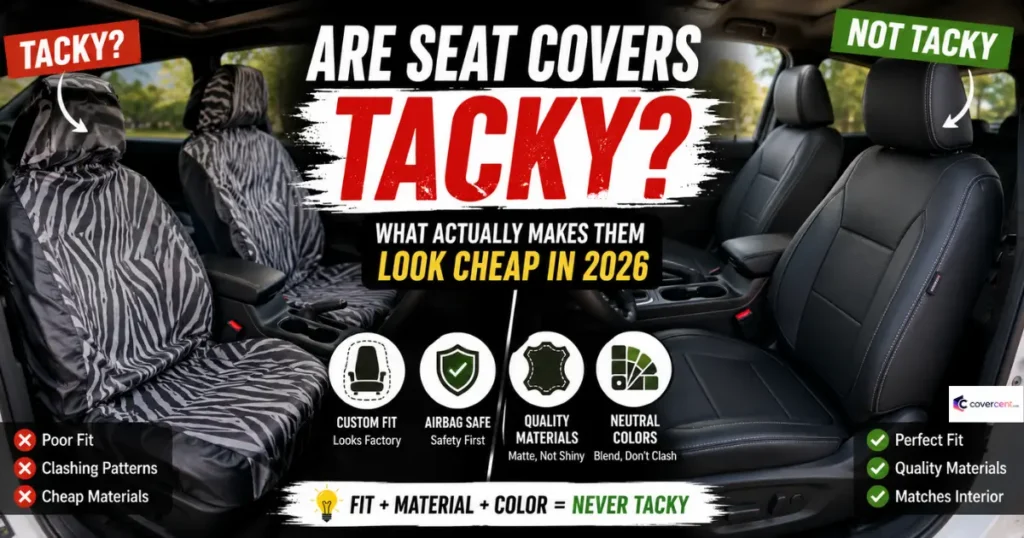
- Seat covers aren’t inherently tacky – poor fit, mismatched patterns, and cheap material are what make them look bad.
- Custom-fit covers molded to your exact seat model look nearly factory-installed; universal “one-size-fits-most” covers are the main source of the tacky look.
- Neutral colors and factory-adjacent textures (leather-look, tight-weave fabric) read as upgrades. Bright patterns, fake fur, and glossy vinyl read as cheap.
- Covers not rated for your airbags are a real safety issue, not just a style one – check for OEM-certified, airbag-compatible covers before buying.
- The aftermarket replacement cycle for seat covers averages 4 to 5 years, so most drivers replace them at least once per vehicle (Dataintelo, 2025).
What Makes a Seat Cover Look Tacky?
A seat cover looks tacky when it doesn’t fit the seat’s actual shape, uses a material that doesn’t match the rest of the interior, or forces a print or color that clashes with the car. It’s not the presence of a cover that reads as cheap – it’s a bad match between the cover and the vehicle.
Reviewers who compared owner experiences consistently point to the same culprit: fit. One buyer’s guide described a friend who bought discounted grey leather covers that ended up looking dated, comparing the result to something from an old sitcom rather than a factory seat (Cover Advice, 2023). The material wasn’t the problem – the mismatch was.
Loose covers that ride up, bunch at the seams, or sag between the headrest and backrest create the visual signal people associate with “aftermarket cheapness.” Tight, properly tailored covers largely avoid that signal entirely.
Universal vs. Custom-Fit Covers: Where the Tacky Reputation Comes From
Universal covers are built to stretch over a wide range of seat shapes, and that flexibility is exactly what causes the tacky look. A cover cut to fit dozens of seat models can’t hug the bolsters, headrest, or seam lines of any single one precisely.
Custom-fit covers are patterned to a specific make, model, and year. They follow the factory seam lines, leave cutouts for side airbags and levers, and sit flush against the seat contour. The difference in appearance between the two categories is often larger than the difference between materials.
If budget allows only one upgrade, buy custom-fit over universal, even in a cheaper material. A well-fitted fabric cover looks more intentional than an ill-fitting leather-look one.
| Type | Typical Fit | Visual Result |
|---|---|---|
| Universal | Stretches over multiple seat shapes | Loose, baggy, visible slack at edges |
| Semi-custom | Matches general seat category (bucket, bench) | Moderate fit, some wrinkling |
| Custom-fit | Patterned to exact make/model/year | Close to factory appearance |
Which Materials Read as Premium vs. Cheap
Material choice affects perception almost as much as fit does. Materials that mimic the car’s factory finish tend to disappear visually; materials that clash announce themselves as an add-on.
Materials that tend to look premium:
- Tight-weave microfiber or suede-look fabric in a factory-matching tone
- Vegan or genuine leather with a matte, not glossy, finish
- Neoprene in solid black, charcoal, or a factory-adjacent shade
Materials that tend to look tacky:
- Thin, shiny vinyl that catches glare
- Bright prints, cartoon graphics, or novelty patterns in an otherwise plain interior
- Faux fur or plush covers, which read as personalization rather than protection
Color choice matters as much as texture. A cover in the same or a slightly darker shade than the factory seat blends in; a cover in a contrasting or saturated color stands out and reads as an obvious cover rather than a seat.
The Safety Issue Nobody Mentions: Airbag Compatibility
Most modern vehicles have side-impact airbags built into the seat itself, and a cover that isn’t designed around that deployment path can block or redirect the airbag in a crash. This is a functional problem, not a cosmetic one, and it should factor into any purchase decision before style does.
Buy only covers explicitly listed as airbag-compatible for your specific seat model. Manufacturers typically mark this on the product page, and the seam over the airbag zone is stitched with a breakaway thread designed to separate on deployment (New Again Auto Detail, 2024).
If a listing doesn’t mention airbag compatibility at all, treat that as a reason to skip it, regardless of how the cover looks in photos.
When Seat Covers Are the Right Call
Seat covers make sense any time the alternative is faster wear on the factory upholstery: pets, kids, long commutes in work clothes, or a used car with seats that are already worn. In these cases a well-chosen cover is protective, not decorative.
Covers also make sense as a temporary fix before resale. Reviewers note covers can preserve original upholstery underneath and be removed before a sale, protecting resale value rather than reducing it (Motor Snitch, 2024).
They make less sense on a newer car in excellent condition, where covering intact leather or cloth mainly adds bulk and heat without solving a real problem.
Common Mistakes That Make Seat Covers Look Bad
- Buying universal when custom-fit exists for your model: the fit gap is the single biggest driver of the tacky look.
- Choosing a pattern that clashes with the dash and door panels: covers should match the interior’s existing palette, not compete with it.
- Skipping the airbag-compatibility check: this is a safety failure disguised as a style choice.
- Installing covers over already-damaged seats without cleaning first: trapped dirt and pet hair work like sandpaper against the factory surface underneath (New Again Auto Detail, 2024).
- Picking glossy vinyl for a car with a matte or fabric factory interior: the finish mismatch is visible from outside the car.
Frequently Asked Questions About Seat Covers
Are seat covers tacky on a new car?
Not inherently, but a new car with intact factory upholstery rarely needs one. If the cover is added for protection against kids, pets, or spills, a custom-fit cover in a neutral tone won’t look out of place.
Do seat covers hurt resale value?
No – a well-installed, airbag-compatible cover protects the factory seats underneath and can be removed before a sale, which typically helps rather than hurts resale condition.
What is the difference between universal and custom-fit seat covers?
Universal covers are designed to stretch over many seat shapes and generally fit loosely. Custom-fit covers are patterned to a specific make, model, and year, and sit close to the factory seam lines.
Are leather seat covers tacky?
Genuine or vegan leather covers with a matte finish and a color close to the factory seat generally read as an upgrade. Glossy, low-grade vinyl marketed as “leather” is the version that tends to look cheap.
How long do seat covers typically last before needing replacement?
The aftermarket replacement cycle for passenger vehicle seat covers averages 4 to 5 years, driven by wear, fading, and functional deterioration (Dataintelo, 2025).
Key Takeaways
- Fit, not the presence of a cover, determines whether it looks tacky.
- Custom-fit covers in a factory-matching color and texture are the closest thing to a guaranteed non-tacky choice.
- Confirm airbag compatibility before buying – this is a safety requirement, not a style preference.
- Covers protect resale value when installed correctly and removed before a sale.
Sources:
- New Again Auto Detail – “Seat Covers: The Good, Bad, Ugly” (2024): https://www.newagainautodetail.com/seat-covers-the-good-bad-ugly/
- Dataintelo – “Car Seat Covers Market Research Report 2034” (2025): https://dataintelo.com/report/car-seat-covers-market

Leave a Reply