
[Published: July 6, 2026 | Last updated: July 6, 2026]
TL;DR
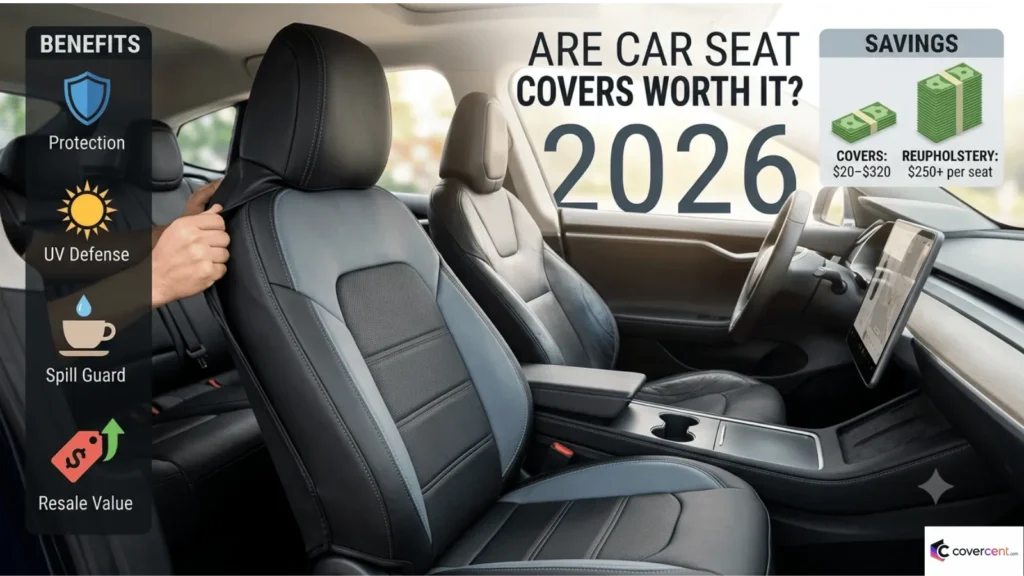
- Seat covers are worth it for most drivers because they cost $20-$320 for a full set (Synchrony, 2025), while professional reupholstery runs $250-$750 per seat (Synchrony, 2025).
- The biggest risk isn’t skipping seat covers – it’s UV fading, dye transfer from jeans, and spills, all of which start within the first year of ownership.
- Custom-fit covers protect resale value better than universal ones, since a loose fit can look worse than bare factory seats.
- Quality covers are engineered around seat-mounted airbags and won’t block deployment; poorly made universal covers are the ones that cause problems.
- If you plan to keep the car under a year or your seats are already worn past the point of protection, covers matter less.
What Seat Covers Actually Do
Seat covers are a removable layer of fabric, leather-look material, or neoprene that fits over your factory seats. They sit between your body and the original upholstery, absorbing the damage that would otherwise hit your seats directly.
Four things wear down factory seats over time: UV exposure, spills, friction, and dye transfer from clothing like denim. A seat cover interrupts all four. It won’t make an old seat look new, but it stops a new seat from aging the way an unprotected one does.
Do Seat Covers Save Money Compared to Reupholstery
Yes, in almost every case. A set of seat covers costs $20 to $320 depending on quality and material (Synchrony, 2025). Professional reupholstery costs $250 to $750 per seat, and a full sedan interior redo runs about $2,500 (JD Power; Synchrony, 2025).
That gap is the core math behind the “are seat covers worth it?” question. Prevention costs a fraction of the repair. The exception is a car you’re already planning to sell or trade within the next few months – in that case, the return on a new set of covers is smaller.
Do Seat Covers Hurt or Help Resale Value
Seat covers help resale value when they’re removed before a sale, and the seats underneath are clean. Buyers and dealership appraisers look at seat condition as one of the first signals of how a car was maintained. Cracked bolsters, sun-faded fabric, and denim stains read as neglect even on a mechanically sound vehicle.
Because most seat covers are removable, you get the benefit both ways: protection during ownership and original-condition seats at trade-in time. A cheap, ill-fitting cover can work against you here – loose or wrinkled covers look worse to an appraiser than plain, undamaged factory seats.
Do Seat Covers Interfere with Airbags or Safety Features
Properly designed seat covers do not interfere with seat-mounted airbags. Manufacturers of quality covers build in stitched seams that are designed to tear open cleanly when the airbag deploys, so the cover doesn’t block or redirect it.
The risk comes almost entirely from cheap universal-fit covers that weren’t engineered around your specific seat’s airbag location. If your seats have side airbags, buy a cover the maker states is compatible with your make and model, not a generic one-size-fits-all cover.
Custom-Fit vs. Universal Seat Covers
Custom-fit covers are cut to your exact seat shape, model year, and features like heating elements or armrests. Universal covers are a stretch-to-fit design meant to work across many vehicles.
Custom-fit costs more up front but sits tight, doesn’t bunch up at the seams, and looks close to a factory finish. Universal covers are cheaper and faster to install, but they slide, wrinkle, and often need readjusting after a few weeks of use. If your goal is protecting resale value or comfort on long drives, custom-fit is the better return on the extra cost.
When Seat Covers Are Not Worth It
Seat covers make less sense in a few specific situations. If your seats are already torn, cracked, or stained beyond what a cover can hide, a cover just conceals damage that a buyer or appraiser will still notice on inspection.
They’re also a weaker investment if you’re selling within a few weeks, since you won’t own the car long enough to benefit from the protection. And if your factory seats are a durable, dark, stain-resistant material and you rarely eat, drink, or transport pets in the car, the risk a cover protects against is already low.
Common Mistakes to Avoid When Buying Seat Covers
- Buying universal instead of custom-fit: A universal cover that slides around causes more visible wear at the seams than no cover at all.
- Ignoring airbag compatibility: Covers not rated for your seat’s airbag location can interfere with deployment.
- Choosing the cheapest option available: Budget covers under $20-$30 often need replacing within months, which erases the cost savings over time.
- Installing over already-damaged seats and forgetting about it: A cover hides damage temporarily but doesn’t stop underlying tears or foam breakdown from worsening.
Frequently Asked Questions About Seat Covers
Are seat covers worth it for a new car?
Yes. New seats are the easiest to protect, since UV fading and dye transfer from denim can start within the first few weeks of ownership, before any damage is visible.
Do seat covers reduce a car’s resale value?
No, not when they’re fitted correctly and removed before a sale. Worn or stained original seats hurt resale value far more than the presence of seat covers ever does.
How much do seat covers cost compared to reupholstery?
A set of seat covers runs $20 to $320 depending on material and fit (Synchrony, 2025). Reupholstery costs $250 to $750 per seat, or about $2,500 for a full interior (JD Power; Synchrony, 2025).
Do seat covers work with heated seats or seat-mounted airbags?
Yes, if you buy a cover made for your specific seat type. Look for covers listed as compatible with heating elements and side airbags for your make and model rather than a generic universal fit.
Should I use seat covers if I have kids or pets?
Yes. Waterproof and stain-resistant covers handle spills, pet hair, and everyday mess far better than factory fabric or leather, and they’re removable for washing.
Are cheap seat covers under $50 a bad idea?
They’re a mixed bag. Cheap covers provide basic protection but tend to wear out, bunch up, or fit poorly within months, which can end up costing more than one mid-range custom-fit set.
Key Takeaways
- Seat covers cost a fraction of reupholstery and prevent the damage that leads to it.
- Custom-fit covers protect resale value better than universal ones.
- Quality covers don’t interfere with airbags – cheap, ill-fitting ones are the actual risk.
- Skip covers only if your seats are already worn past saving, or you’re selling within weeks.

Leave a Reply