
[Published: September 1, 2026 | Last updated: September 1, 2026]
TL;DR
- Bed bugs cannot feed, breed, or nest on a properly sealed plastic mattress encasement – the smooth surface and lack of a blood source make it uninhabitable for them.
- A fully zipped, tear-free encasement traps any bugs already inside the mattress and starves them, but this takes time: adults can survive 20 to 400+ days without food (UC IPM, 2024).
- The cover only protects the mattress itself. Bed bugs can still live in the box spring, headboard, baseboards, and nearby furniture while the mattress is sealed.
- A thin plastic sheet or tarp is not the same as a bed bug encasement – gaps, tears, and unsealed edges let bugs in and out freely.
- Encasements work best as one part of a treatment plan, combined with steam, heat, or a licensed pest control service.
What Happens When Bed Bugs Touch Plastic
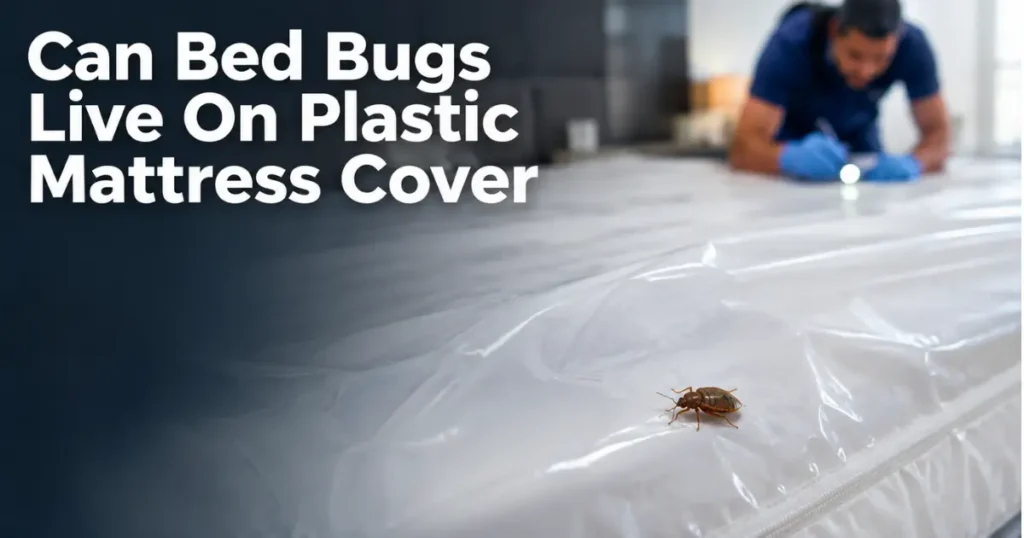
Bed bugs cannot live on the surface of a plastic mattress cover in any meaningful sense. They can’t feed through it, they can’t dig into it to nest, and the smooth, non-porous material gives them nothing to grip or hide in.
That’s different from asking whether they can survive inside a mattress that’s been encased in plastic. If bugs were already living in the mattress before the cover went on, they’re now sealed in with no way out and no access to a host. They don’t die immediately. Bed bugs can go without feeding for 20 to 400 days, depending on temperature and humidity, and older nymphs and adults have survived more than 400 days in laboratory conditions at low temperatures (UC IPM, 2024).
So a plastic encasement doesn’t kill bed bugs on contact. It creates a trap that eventually starves them, but “eventually” can mean the better part of a year.
Why the Plastic Surface Itself Repels Them
A mattress cover doesn’t need to poison or crush bed bugs to make life hard for them. The material itself works against basic bed bug behavior.
Bed bugs rely on rough, porous surfaces to grip and burrow into – fabric seams, wood grain, foam. A smooth plastic surface makes it difficult for them to cling on, and the absence of absorbent layers limits any nesting sites. Without cracks or seams to hide in, the surface offers no cover and no food.
This is a physical deterrent, not a biological one. Bed bugs that land on plastic simply move somewhere else. They don’t sicken or weaken from contact with it.
Encasements vs. Loose Plastic Sheets: Why the Difference Matters
Not all plastic is equal here. A dedicated bed bug encasement and a loose sheet of plastic produce very different results, and mixing them up is one of the most common mistakes people make.
A true encasement is a fitted cover, sealed on all sides with a zipper, designed specifically to be bite-proof and escape-proof. The encasement slips onto the mattress and closes with a zipper, so bugs escaping from inside encounter the barrier of the cover and can’t reach someone sleeping on it. Quality matters: even a narrow opening at the end of the zipper can leave a gap large enough for a bed bug to crawl through and escape, so look for covers rated for bed bugs specifically, not generic waterproof protectors.
A loose plastic sheet or tarp, by contrast, has open edges by design. Bugs can crawl underneath it, and it does nothing to trap or starve an existing population. If a listing doesn’t call the product a “mattress encasement” with a sealed zipper, treat it as decoration, not protection.
What a Plastic Cover Does Not Protect You From
This is the part most people miss. Sealing the mattress handles one hiding spot out of many, and bed bugs are opportunists that simply relocate when their usual spot becomes inaccessible.
Bed bugs are opportunistic survivors – when they can’t live in plastic, they simply relocate to common hiding places nearby, including the box spring, bed frame, headboard, baseboards, and cracks in nearby furniture. Encasement only deals with the bug population inside the mattress and box spring itself, and statistically only about 60% of bed bugs live within the mattress and box spring – the rest are already living elsewhere in the room.
That means an encased mattress can still sit in an actively infested bedroom. The cover stops bugs from biting you through the mattress, but it doesn’t clear the room.
Practical Steps to Cover a Mattress Correctly
Follow these to get real protective value from a plastic cover instead of a false sense of security.
- Buy a certified bed bug encasement, not a waterproof mattress protector or a plastic tarp. Look for a fully sealed zipper design.
- Inspect the mattress before sealing it. Vacuum seams and tufts first to remove any bugs and eggs you can reach.
- Zip it completely and check the end of the zipper. This is the most common escape point.
- Leave the encasement on for at least a year. Given that adults can survive 20 to 400+ days without feeding (UC IPM, 2024), removing the cover early risks releasing bugs that are still alive.
- Treat the rest of the room separately. Steam-clean the box spring and furniture, vacuum baseboards, and seal cracks – the mattress cover doesn’t do this work for you.
- Combine with professional treatment for active infestations. A cover contains the problem; it doesn’t eliminate an established infestation on its own.
Common Mistakes to Avoid with Plastic Mattress Covers
- Using a thin plastic sheet instead of a real encasement: Sheets and tarps have gaps at the edges that bugs use to get in and out. Buy a product specifically labeled as a bed bug mattress encasement with a sealed zipper.
- Removing the cover too soon: Bed bugs can survive many months without food. Taking the cover off after a few weeks can release bugs that are still alive.
- Assuming the cover treats the whole room: The box spring, frame, and nearby furniture need their own treatment. A sealed mattress alone won’t stop bites if bugs are living in the headboard or baseboards.
- Ignoring zipper gaps: A partially closed or worn zipper track leaves an opening bugs can use to escape, even on a quality encasement.
Frequently Asked Questions About Bed Bugs and Plastic Mattress Covers
Can bed bugs live on a plastic mattress cover?
Not on the surface itself. Bed bugs can’t feed on plastic or nest in it. If they’re sealed inside an encasement with the mattress, they can survive for months without food before eventually starving.
Will a plastic mattress cover kill bed bugs?
Yes, but slowly. A fully sealed encasement traps bugs inside and cuts off their access to a host, which eventually starves them. Since adults can survive without feeding for 20 to 400 days or more depending on temperature (UC IPM, 2024), this can take close to a year to be reliable.
How long should I leave a mattress encasement on?
At least a year, per most pest control guidance, to account for the upper range of bed bug survival without food. Removing it early risks releasing bugs that are still alive.
Does a plastic cover protect the whole bedroom from bed bugs?
No. It only protects the mattress it’s wrapped around. Roughly 60% of bed bugs live within the mattress and box spring, leaving the rest elsewhere in the room – furniture, baseboards, and the bed frame still need separate treatment.
What’s the difference between a mattress encasement and a regular mattress protector?
A bed bug encasement fully surrounds the mattress and box spring and seals shut with a zipper rated to resist bed bug escape. A standard waterproof protector is designed for spills and dust mites, not sealed edges, and won’t reliably contain or block bed bugs.
Can bed bugs bite through a plastic mattress cover?
No. A dense, intact encasement blocks bed bugs from biting through to someone sleeping on it. Damage or wear to the material, or a partially open zipper, can create weak points, so inspect the cover periodically for tears.
Key Takeaways
- Plastic mattress covers don’t let bed bugs live, feed, or nest on their surface.
- A proper encasement traps and eventually starves bugs already inside the mattress, but this can take up to a year given how long bed bugs survive without food.
- The cover doesn’t protect the rest of the room – box springs, furniture, and baseboards need their own treatment.
- Use a certified bed bug encasement with a sealed zipper, not a loose plastic sheet.
Sources:
- UC Statewide IPM Program (UC ANR) – Bed Bugs, Home and Landscape
- Mississippi State University Extension Service – Bed Bugs and What to Do About Them
- ClearDefense Pest Control – How Long Do Bed Bugs Live Without a Host?

Leave a Reply