
[Published: July 10, 2026 | Last updated: July 10, 2026]
TL;DR
- Sheepskin seat covers can get wet without ruining them, but they are not waterproof and shouldn’t be soaked or left damp.
- Small spills and light moisture wipe off the surface fibers before they reach the leather backing (ShearComfort, 2023).
- If a cover gets fully soaked, air-dry it flat away from heat – never use a dryer or direct sun (Overland, 2017).
- Prolonged dampness around the stitching can weaken the seams over time (Covers and Camo, 2025).
- Wet wool naturally uncurls, then springs back into shape once you brush it dry (Wilson & Dorset).
Can Sheepskin Seat Covers Get Wet?
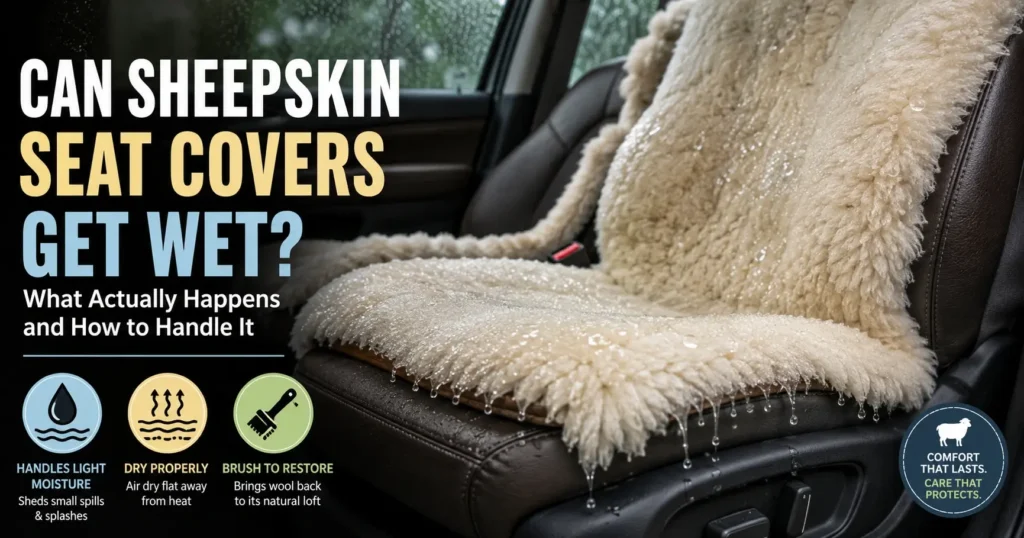
Yes, but only in a limited way. Sheepskin sheds light moisture like rain splashes or spilled coffee off the surface of the wool before it soaks through (ShearComfort, 2023). What it can’t handle is prolonged saturation – sitting wet for hours, repeated soaking, or storage in a damp car.
Sheepskin seat covers offer some natural water resistance due to lanolin in the wool fibers, but that resistance is limited. Rain and humidity can still work their way into the fibers over time and damage the material with repeated exposure (Cover Advice).
The leather backing on the underside is the part most at risk. Leather that stays wet for too long can deteriorate, stiffen, or develop mold in humid conditions. That’s the part you’re protecting, not the wool on top.
What Happens When Sheepskin Gets Wet
A spill or splash on sheepskin behaves differently than on fabric or vinyl. Here’s what actually happens at the fiber level.
Surface stage: Liquid sits on top of the curly wool fibers first. You can blot or shake most of it off before it penetrates (ShearComfort, 2023).
Absorption stage: If moisture isn’t removed quickly, it works into the wool. The fibers uncurl and lie flat when wet, then return to their natural curl once fully dry and brushed (Wilson & Dorset).
Backing stage: In a full soak, water reaches the leather (or suede) backing underneath the wool. This is where lasting damage happens – hardening, shrinking, or cracking if it dries too fast or near heat.
The takeaway: quick spills are a non-issue. Standing water, a soaked cover left in a hot car, or repeated rain exposure is what causes real damage.
How to Dry Sheepskin Seat Covers Properly
Drying technique matters more than the wetting itself. Get this step wrong and you’ll do more damage than the water did.
Start by removing excess moisture without wringing. Press or roll the cover in a dry towel to pull out water, since twisting can distort the leather backing (SheepskinShop.com).
Lay the cover flat, wool-side up, in a shaded, well-ventilated spot. Direct sun and heat sources – radiators, car heaters, hair dryers – cause the leather backing to stiffen and shrink (Overland, 2017).
Once completely dry, brush the wool with a wire pet brush or carding brush. This restores the loft and curl that flattened out during drying (US Sheepskin, 2017).
Never use a clothes dryer with heat. If you want extra fluff, tumble on a no-heat “air” setting with a couple of tennis balls, and clean the lint trap twice during the cycle (It Still Runs, 2019).
When Wet Sheepskin Becomes a Problem
Not all wetness is equal. A few specific situations turn a minor spill into real damage.
Standing water around the stitching. Moisture that sits near seams for an extended period can weaken the thread and stitching over time (Covers and Camo, 2025).
Drying near a heat source. Heat forces moisture out too fast, hardening the leather backing and making the wool stiff and brittle.
Humid storage. Storing a damp cover in a closed car or a plastic bag traps moisture against the leather, which raises the risk of mold growth (Cover Advice).
Skipping the brush step. Wool that dries without brushing mats down and stays flat instead of returning to its natural loft.
Sheepskin vs. Other Seat Cover Materials in Wet Conditions
| Material | Water Resistance | Best For |
|---|---|---|
| Sheepskin | Moderate – sheds light moisture, damaged by soaking | Comfort and temperature regulation, dry-to-moderate climates |
| Waterproof vinyl | High – wipes clean, fully water resistant | Pet owners, messy jobs, frequent spills |
| Canvas (600 denier nylon) | High – built for outdoor exposure | Hunters, anglers, outdoor work vehicles |
Sheepskin trades water resistance for comfort and insulation. If you’re regularly hauling wet gear, muddy boots, or pets, a vinyl or canvas cover handles moisture with far less maintenance (Covers and Camo, 2025).
Frequently Asked Questions About Sheepskin Seat Covers and Water
Can sheepskin seat covers get wet in the rain?
Yes, a brief rain exposure won’t ruin them. Shake off standing water and let the cover air-dry away from heat as soon as possible (Overland, 2017).
What happens if you don’t dry a wet sheepskin seat cover fast enough?
The leather backing can stay damp long enough to develop mold or mildew, especially in a closed, humid car (Cover Advice).
Can you machine wash sheepskin seat covers?
No. Machine agitation damages the wool and leather backing. Hand washing in cool water with a wool-safe detergent is the recommended method (Cover Advice).
Is it safe to dry sheepskin seat covers in the sun?
No. Direct sunlight fades dyed sheepskin and dries the leather backing unevenly, leading to stiffness or cracking (Wilson & Dorset).
How do you fix flattened wool after a sheepskin seat cover gets wet?
Once the cover is completely dry, brush it with a wire pet brush or carding brush to lift the fibers back into their natural curl (US Sheepskin, 2017).
Are sheepskin seat covers a good choice if I live somewhere rainy?
They can work, but expect more maintenance. If your seats face frequent moisture, wet gear, or high humidity, a waterproof vinyl or canvas cover requires less upkeep (Covers and Camo, 2025).
Key Takeaways
- Sheepskin seat covers handle light moisture and spills fine but aren’t built for soaking or prolonged dampness.
- Dry them flat, out of direct heat and sun, then brush the wool to restore its loft.
- Standing water near stitching and humid storage are the two biggest risks to watch for.
- If your car regularly deals with wet conditions, a vinyl or canvas cover will need far less maintenance than sheepskin.
References:

Leave a Reply