
[Published: July 18, 2026 | Last updated: July 18, 2026]
TL;DR
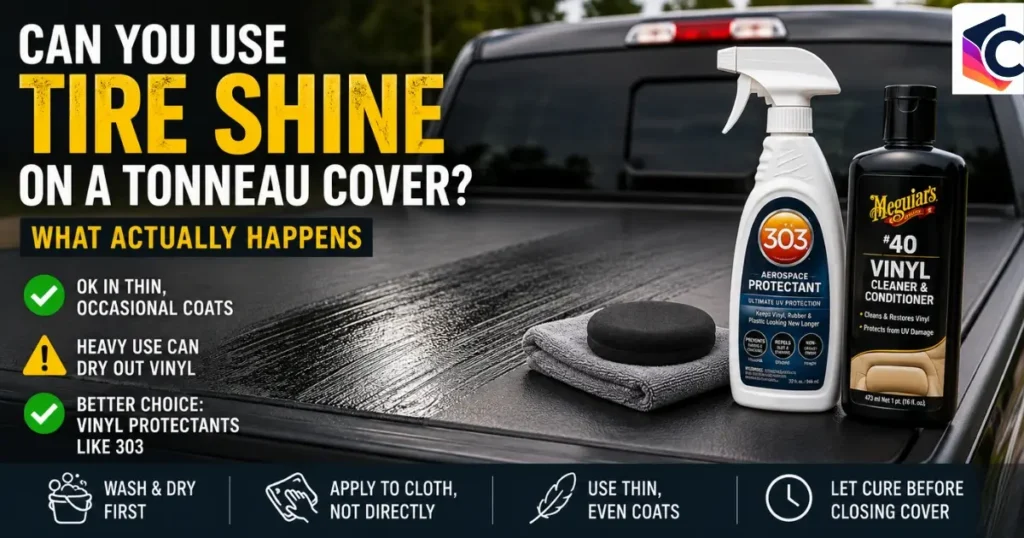
- Tire shine can go on a tonneau cover, but only in thin, occasional coats – most petroleum and silicone-based formulas dry out vinyl over time.
- Vinyl and soft covers need a UV protectant, not a tire dressing built for rubber.
- 303 Aerospace Protectant and Meguiar’s #40 Vinyl Cleaner & Conditioner are the two products most tonneau cover makers actually recommend.
- Armor All-style protectants are the bigger risk – several manufacturers say they shrink vinyl and rot stitching.
- Apply any product to a clean, dry cover, work it in thin, and let it cure before closing the tailgate.
Can You Use Tire Shine on a Tonneau Cover?
Yes, but it’s not the ideal product for the job. Tire shine is formulated for rubber tires, not the vinyl, fabric, or coated aluminum used on most tonneau covers. A thin, occasional layer usually won’t damage a cover, but repeated heavy coats can leave a sticky residue that attracts dust and, over months, dries out the material.
The safer path is a product built for vinyl and UV protection, like 303 Aerospace Protectant. It does the same job – shine and sun protection – without the risks tire shine carries on a surface it wasn’t designed for.
Why Tire Shine Isn’t Built for Your Tonneau Cover
Tire shine and tonneau cover protectant solve different problems, and using one for the other’s job is where trouble starts.
What Tire Shine Is Actually Made For
Tire shine is designed to sit on thick, dense rubber and resist water spray-off while driving. Many formulas are silicone or petroleum-based, which gives tires that wet, glossy look. Vinyl and canvas tonneau covers are thinner and more porous than tire rubber, so they absorb these ingredients differently – and not always well. Petroleum-based dressings act more like a degreaser than a protectant, which is why applying them directly to a cover is generally discouraged (F150 Lab, 2023).
What Happens With Repeated Use
A thin, even coat of tire shine typically won’t cause problems, but a thick or heavy application can leave residue on vinyl that peels or cracks over time (Tonneau Cover Guide, 2022). The fix isn’t to avoid the product entirely – it’s to apply less, less often. Most guides recommend treating a cover about once every six months, the same logic as applying lotion occasionally rather than daily (Tonneau Cover Guide, 2022).
Where Manufacturers Draw the Line
Tonneau cover brands are more specific about what to avoid than what to use. At least one manufacturer’s care instructions warn that Armor-All-type protectants can shrink the cover material and damage the seams (My Truck Needs This, 2021). That warning targets petroleum-heavy dressings broadly, which is why most cover makers point owners toward dedicated vinyl protectants instead of automotive tire products.
Vinyl, Canvas, or Hard Cover: The Material Changes the Answer
The right product depends on what your tonneau cover is actually made from – treating a hard aluminum cover like soft vinyl (or the reverse) causes most of the complaints you’ll find in truck forums.
| Cover Material | Tire Shine Safe? | Better Option |
|---|---|---|
| Soft vinyl | Occasional thin coat only | 303 Aerospace Protectant |
| Canvas/fabric | Avoid – can stain or leave sheen marks | Fabric-specific UV protectant |
| Coated aluminum/hard folding | Not needed – low UV exposure risk | Mild soap and water |
| Fiberglass | Avoid silicone-heavy formulas | Automotive vinyl and plastic conditioner |
Soft vinyl is the material most tire shine questions are about, since it’s the most sun-exposed and prone to fading. Getting tire shine directly on painted trim or certain vinyl finishes can cause staining or fading (Fission Auto, 2022), so keep application to the cover itself and away from paint edges.
The Better Alternative: Purpose-Built Tonneau Protectants
If UV fading and dryness are the actual problems you’re solving, a protectant made for vinyl outperforms tire shine on every measure that matters for a cover.
303 Aerospace Protectant is the product most frequently named by tonneau cover owners and forum threads as the go-to choice. It’s marketed specifically for powerful UV blockers that help prevent fading and cracking (5thGenRams Forum, 2020), and it dries to a low-shine, non-greasy finish rather than the wet gloss tire shine produces.
Meguiar’s #40 Vinyl Cleaner & Conditioner works well on harder vinyl tonneau covers with more rigid plastic trim, cutting through grime before conditioning the surface.
Brand-specific protectants – like Extang’s Tonno Tonic or Truxedo’s Pro-Tex – are formulated for that manufacturer’s exact vinyl blend, so they’re worth checking first if your cover came with one.
Check the [full product roundup and current Amazon pricing here] to compare these side by side.
How to Apply Protectant to a Tonneau Cover the Right Way
Getting the technique right matters more than which product you pick – even the best protectant streaks or beads off if applied over dirt or in a thick layer.
- Wash the cover first. Use mild soap and water to remove dirt, dust, and hand oils. Applying any protectant over grime traps it under the coating.
- Let it dry completely. Trapped moisture under a protectant coat can cause cloudy spots.
- Apply to a cloth, not directly to the cover. Spraying straight onto vinyl makes it hard to control coverage and increases the chance of pooling in seams.
- Work it in with even, long strokes. Thin coverage beats a thick one every time – you can always add a second light pass.
- Let it cure before closing the cover. Most protectants need 30-60 minutes to set. Closing the tailgate too soon can transfer product onto contact points.
Common Mistakes to Avoid With Tonneau Cover Care
- Using Armor All as a substitute: It’s a degreaser, not a protectant, and several manufacturers link it to cracked or shrunken vinyl.
- Skipping the wash step: Protectant applied over dirt seals grime into the surface instead of protecting it.
- Applying too much, too often: Monthly heavy coats build up residue faster than the product can wear off, leading to a sticky film.
- Spraying near paint or trim: Overspray on adjacent painted surfaces can cause discoloration that’s hard to reverse.
Frequently Asked Questions About Tire Shine and Tonneau Covers
Can I use tire shine on a tonneau cover?
Yes, in a thin and infrequent layer, but a dedicated vinyl protectant like 303 Aerospace does the same job with less risk of drying out the material over time.
Will tire shine damage my tonneau cover?
Occasional thin use rarely causes visible damage. Repeated thick coats are the actual risk – they can leave residue that peels, cracks, or attracts dust.
Is Armor All safe for a tonneau cover?
Most tonneau cover manufacturers advise against it. It’s built as a degreaser, and heavy or repeated use has been linked to shrinking vinyl and deteriorating stitched seams.
How often should I treat my tonneau cover?
Every six months is the interval most guides and cover owners recommend, timed to match your regular wash schedule.
What’s the best product for a vinyl tonneau cover?
303 Aerospace Protectant is the most commonly recommended option for soft vinyl covers, largely for its UV protection and non-greasy finish.
Does tire shine work on hard folding or aluminum covers?
It’s not necessary. Hard covers have far less UV exposure risk than soft vinyl, and mild soap and water is usually enough to keep them clean.
Key Takeaways
- Thin, occasional tire shine won’t ruin most vinyl tonneau covers, but it’s a workaround, not the right tool.
- Petroleum-heavy dressings and Armor All-style products carry the highest risk of cracking or shrinking vinyl.
- 303 Aerospace Protectant and similar vinyl-specific products protect against UV fading without the residue buildup tire shine can cause.
- Always wash and dry the cover before applying any protectant, and apply in thin coats.
References:

Leave a Reply