
[Published: July 10, 2026 | Last updated: July 10, 2026]
TL;DR
- Seat covers do not damage leather seats when the material, fit, and installation are right – the wrong cover can (TigerTough, 2026).
- Foam-backed and rubber-backed covers cause the most problems because they trap heat and moisture against the leather (TigerTough, 2026).
- Breathable woven fabrics like canvas protect leather from UV rays, spills, and scratches without trapping moisture (TigerTough, 2026).
- A loose-fitting cover shifts during entry and exit, and the friction from that movement wears the leather faster than no cover at all (CalTrend, 2021).
- Wait a few days after conditioning leather before installing a foam-backed cover, since the conditioner and foam can react and damage both surfaces (TigerTough, 2026).
Do Seat Covers Damage Leather Seats?
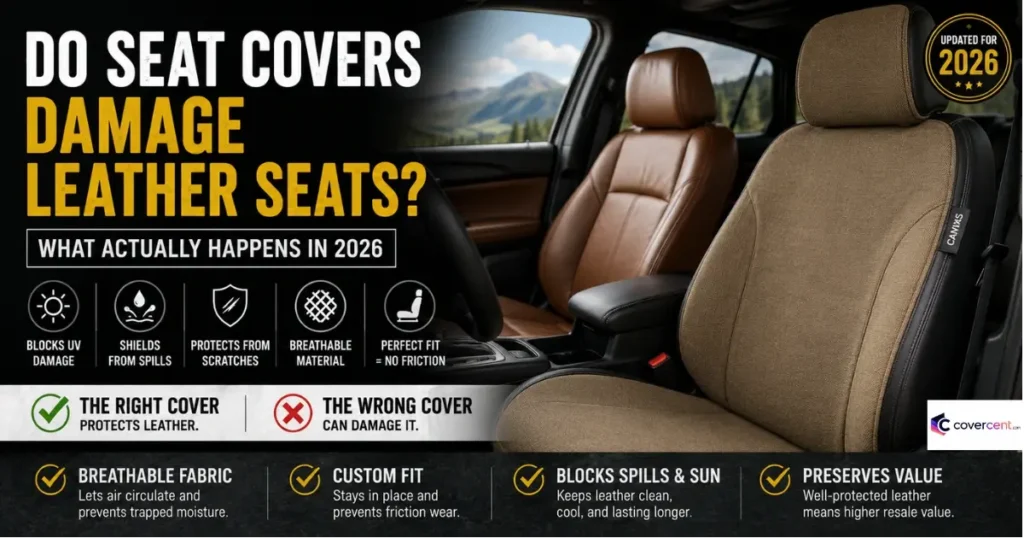
The right seat cover protects leather. The wrong one can damage it. Material, breathability, and fit decide which outcome you get, not the simple act of covering the seat.
Leather is porous. It absorbs oils, spills, and odors, and it dries out under UV light (TigerTough, 2026). A cover that blocks sun and spills without trapping moisture underneath extends the life of the leather. A cover that seals in heat and humidity, or slides around every time someone gets in and out, does the opposite.
The seat cover industry has debated this question for years, and the split answer in the research reflects a real split in product quality. Cheap, foam-backed, or poorly fitted covers cause the exact damage people install covers to prevent.
Why Some Seat Covers Cause Damage
Three mechanisms explain almost every case of a seat cover harming leather: trapped moisture, friction from poor fit, and chemical reactions between materials.
Trapped Heat and Moisture
Leatherette and rubber-backed covers do not breathe. Heat and humidity build up between the cover and the seat, and over time that moisture softens the leather’s finish and can lead to cracking (TigerTough, 2026). This is the single most common complaint from leather seat owners on car forums, where multiple drivers report leather drying out and cracking under neoprene or rubber-backed covers.
Friction from a Loose Fit
A seat cover that does not match the seat’s exact contours shifts every time someone sits down, twists, or exits the vehicle. That constant movement rubs against the leather surface. Custom-fit covers, built for a specific make and model, eliminate this problem because they stay in place (CalTrend, 2021).
Chemical Reactions with Conditioner
Leather conditioner and foam backing can interact. If you condition your seats and then immediately install a foam-backed cover, the two materials can react and degrade both the cover and the leather’s finish (TigerTough, 2026). Waiting a few days after conditioning solves this.
What Seat Covers Protect Leather From
A well-chosen cover blocks the four things that age leather fastest: sun, spills, scratches, and everyday wear.
UV rays. Sun exposure dries out leather and causes it to crack and fade. A quality cover blocks UV rays before they ever reach the seat (TigerTough, 2026).
Spills. Leather is porous and hard to fully clean once a stain sets in. A cover intercepts the spill so it never touches the leather underneath.
Scratches and cuts. Keys, jewelry, and pet claws can gouge leather permanently. A tough woven cover absorbs that impact instead (TigerTough, 2026).
Daily wear. Getting in and out of a vehicle causes surface abrasion over years of use. A properly fitted cover takes that friction instead of the leather.
How to Choose a Seat Cover That Won’t Damage Leather
Pick a breathable, well-fitted, non-reactive material, and the risk of damage drops close to zero.
| Criterion | Why It Matters |
|---|---|
| Breathability | Woven fabrics like canvas let air circulate, so moisture doesn’t build up against the leather (TigerTough, 2026) |
| Fit | Custom, make-and-model-specific covers stay put and prevent friction damage (CalTrend, 2021) |
| Backing material | Avoid foam or rubber backing on leather, since both can trap moisture or react with conditioner |
| Dye stability | Cheap dyed covers can bleed color onto leather if the fabric gets wet and stays in contact |
Canvas and heavy woven fabric are the safest general choices for leather seats. Leatherette looks close to leather but doesn’t breathe, which makes it a better fit for cloth seats than for protecting an existing leather interior (TigerTough, 2026).
Common Mistakes That Lead to Leather Damage
- Installing a foam-backed cover right after conditioning: The conditioner and foam backing can chemically interact. Wait several days before covering freshly treated leather.
- Buying an ill-fitting universal cover: A loose cover bunches and shifts, creating friction every time someone sits down. Buy a cover fitted to your specific seat model.
- Choosing rubber or neoprene for daily use: These materials trap heat and moisture, which can dry and crack leather over months of use. Save them for short-term, high-exposure situations like a wet swimsuit day at the beach.
- Ignoring dye quality: Low-cost dyed fabric covers can transfer color to leather if they get wet and stay pressed against the seat for a period of time.
Frequently Asked Questions About Seat Covers and Leather Seats
Do seat covers damage leather seats?
Only if the cover is the wrong type. Foam-backed, rubber-backed, or ill-fitting covers can trap moisture or create friction that damages leather. Breathable, well-fitted covers protect leather instead (TigerTough, 2026).
What type of seat cover is safest for leather?
Heavy-duty canvas or woven fabric is the safest choice. It breathes, resists UV rays, and doesn’t chemically react with leather’s finish (TigerTough, 2026).
Can I put seat covers on heated leather seats?
Yes, in most cases. Thinner, breathable fabrics transfer heat efficiently, while thicker materials reduce how much heat you feel without damaging the heating element (TigerTough, 2026).
How soon after conditioning leather can I install a seat cover?
Wait a few days. Fresh conditioner can react with foam backing and damage both the cover and the leather’s surface finish (TigerTough, 2026).
Do seat covers help leather seats keep their resale value?
Yes. Covers that block UV damage, spills, and scratches keep the leather in better condition, which helps preserve trade-in and resale value over time.
Key Takeaways
- Damage comes from the wrong cover, not from covering leather in general.
- Breathable canvas or woven fabric is the safest material for leather seats.
- A snug, model-specific fit prevents the friction that wears leather down.
- Give freshly conditioned leather a few days before adding a foam-backed cover.
Sources:
- TigerTough – “Will Seat Covers Ruin Leather Seats?” (2026) – https://www.tigertough.com/blogs/learning-center/will-seat-covers-ruin-leather-seats
- CalTrend – “Are Seat Covers Good for Leather Seats?” (2021) – https://www.caltrend.com/are-seat-covers-good-for-leather-seats/
- Black Duck – “Will Seat Covers Damage Leather Seats? An Expert Guide” – https://www.blackduck.com.au/news/will-seat-covers-damage-leather-seats-what-you-need-to-know/

Leave a Reply