
[Published: July 29, 2026 | Last updated: July 29, 2026] | 7 min read
TL;DR
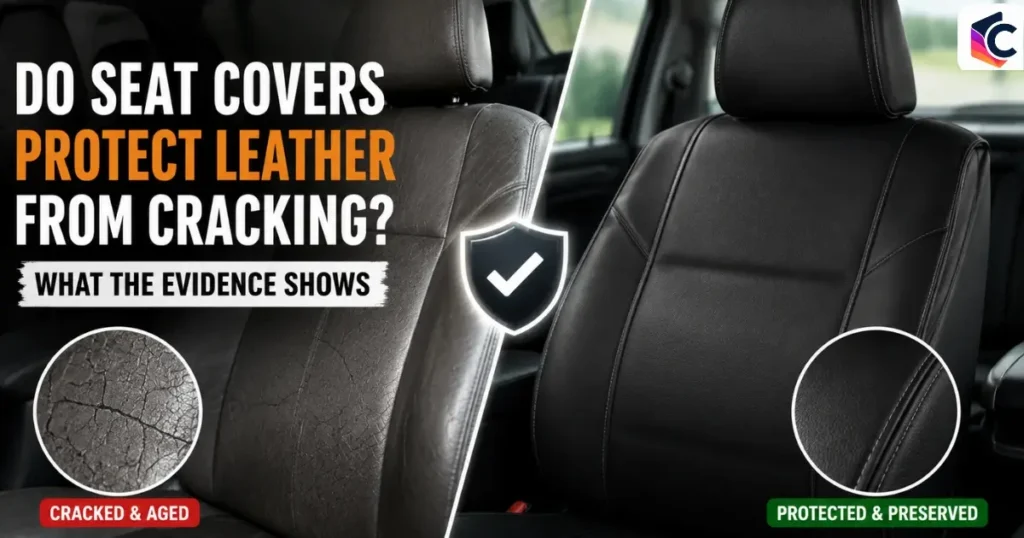
- Yes, seat covers reduce leather cracking by blocking the two main causes: UV exposure and dry-out from heat and abrasion.
- Leather cracks when it loses natural oils and moisture, usually from sun exposure, heat, and friction (Leather Research Laboratory, 2023).
- Seat covers alone are not enough – leather still needs conditioning every 3 to 6 months underneath the cover.
- Neoprene and breathable fabric covers work best; vinyl covers can trap moisture and cause other damage.
- Covers work best as prevention. They will not repair leather that has already cracked.
What Causes Leather Seats to Crack?
Leather cracks when the natural oils in its fibers dry out and the surface loses flexibility. Once leather stiffens, everyday movement – getting in and out of the car – puts stress on the surface until it splits.
Three factors drive this process. UV rays break down the collagen fibers in leather over time (Leather Research Laboratory, 2023). Heat speeds up moisture loss, which is why cracking shows up faster on dashboards and seats that sit in direct sun. Friction from daily use wears down the finish layer that protects the leather underneath.
Cheaper “bonded” or “genuine” leather with a thin top coat cracks faster than full-grain leather, because the protective finish is thinner to begin with.
Do Seat Covers Actually Prevent Cracking?
Seat covers protect leather from cracking by blocking UV rays and reducing surface friction, the two biggest contributors to dry, brittle leather. A cover acts as a physical barrier between the sun and the seat.
This matters most for cars parked outside or in hot climates. A seat that sits under direct sunlight for hours each day can show sun damage within a year. A cover cuts that direct UV exposure significantly.
Covers also reduce the friction from getting in and out of the car, from seatbelts rubbing against the seat, and from keys or belt buckles scratching the surface. Less surface wear means the leather’s finish layer stays intact longer.
What Seat Covers Do Not Fix
A cover cannot replace conditioning. Leather needs oils replenished from within, and a cover sitting on top does nothing for oil that has already dried out underneath.
Covers also cannot reverse existing cracks. Once the fibers have separated, no cover will close that gap. At that point, the leather needs a repair kit or a professional recoloring and refinishing job.
Some covers create new problems. Non-breathable materials like PVC or thick vinyl trap heat and moisture against the leather. That trapped moisture can lead to mold, mildew, or a different kind of surface damage over time.
Which Seat Cover Materials Work Best
Not all seat covers protect leather equally. The material determines whether the cover helps or slowly causes new damage.
| Material | UV Protection | Breathability | Best For |
|---|---|---|---|
| Neoprene | High | Moderate | Daily drivers, all climates |
| Breathable fabric (cotton blend) | Moderate | High | Hot, humid climates |
| Vinyl/PVC | High | Low | Occasional use only, not daily |
| Sheepskin | Moderate | High | Cold climates, comfort priority |
Neoprene covers block UV rays effectively while still letting some airflow through, which prevents moisture buildup. Breathable fabric covers work well in humid regions where trapped heat is more of a risk than sun exposure. Vinyl covers block UV rays well but trap heat, so they work better for cars parked outside occasionally rather than daily drivers.
How to Protect Leather Seats: The Full Approach
A seat cover is one part of leather protection, not the whole solution. Combining it with regular care extends the leather’s life significantly longer than a cover alone.
- Clean the leather first. Wipe down seats with a leather-specific cleaner before installing any cover. Trapping dirt under a cover leads to surface abrasion.
- Condition every 3 to 6 months. Use a leather conditioner to replace lost oils. This step matters even with a cover installed, since the cover does not add moisture back into the leather.
- Choose a breathable cover. Neoprene or cotton-blend covers let the seat breathe while still blocking UV rays.
- Park in shade when possible. A cover reduces UV exposure, but parking in direct sun for hours daily still stresses the material underneath.
- Remove the cover periodically. Check the leather every few months for early signs of dryness or discoloration, so problems get caught before they turn into cracks.
Common Mistakes to Avoid with Seat Covers and Leather
- Using a non-breathable cover in a hot climate: Vinyl and PVC trap heat, which can dry out leather faster than no cover at all in some conditions. Choose neoprene or fabric instead.
- Skipping conditioning because a cover is installed: A cover blocks external damage but does nothing for internal moisture loss. Condition the leather on a schedule regardless of whether a cover is on.
- Installing a cover over dirty or damp leather: Trapped dirt acts like sandpaper under the cover. Clean and dry the seat first.
Frequently Asked Questions About Seat Covers and Leather Cracking
Do seat covers protect leather from cracking?
Yes. Seat covers block UV rays and reduce surface friction, which are the two main causes of leather cracking. They work best as prevention, not repair.
Can seat covers cause leather to crack?
Non-breathable covers like thick vinyl can trap heat and moisture, which may lead to a different kind of damage over time. Breathable materials like neoprene avoid this issue.
How often should I condition leather seats even with a cover?
Every 3 to 6 months, regardless of whether a cover is installed. A cover does not replace the oils that leather loses over time.
Will a seat cover fix leather that has already cracked?
No. A cover only prevents further damage. Existing cracks need a leather repair kit or professional recoloring to fix.
What is the best seat cover material to prevent cracking?
Neoprene offers the best balance of UV protection and breathability for daily use. Breathable fabric works well in humid climates, and vinyl is better suited to occasional-use vehicles.
Key Takeaways
- Seat covers reduce leather cracking by blocking UV exposure and surface friction.
- Conditioning every 3 to 6 months is still necessary, cover or no cover.
- Neoprene and breathable fabric covers protect leather without trapping moisture.
- Covers prevent future damage. They do not repair leather that has already cracked.

Leave a Reply