
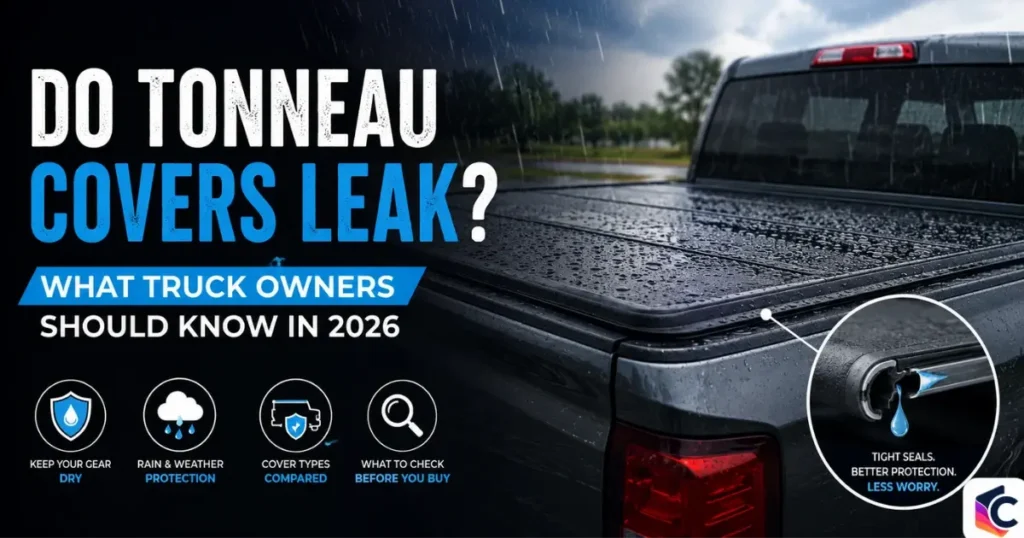
[Published: July 19, 2026 | Last updated: July 19, 2026] | 8 min read
TL;DR
- Yes, most tonneau covers let in some water – none are 100% waterproof, including premium hard covers (Pickups Plus Cars, 2026).
- Hard folding and retractable covers offer the best water resistance; soft roll-up covers offer the least (Texas Diamond Garage, 2026).
- Most leaks happen at the tailgate seam and front corners, not across the panel surface.
- Proper installation, clean seals, and drain tubes cut leaks to a few drops in most conditions.
- A cargo liner or dry bag adds a second layer of protection for gear that must stay bone-dry.
What Is a Tonneau Cover and Why Does Leaking Matter?
A tonneau cover is a rigid or flexible panel that fits over a pickup truck bed to protect cargo from rain, snow, and road debris. It clamps or bolts onto the bed rails and opens by rolling, folding, or retracting.
Truck beds themselves aren’t sealed from the factory. They have drainage gaps and a tailgate seam that let some moisture through even with a cover installed. That’s why the real question isn’t “does it leak” but “how much, and where.”
Do Tonneau Covers Leak? The Direct Answer
Yes. Every tonneau cover style lets in some water under the right conditions – heavy rain, a car wash, or a pressure washer aimed at the seals. <cite index=”18-1″>Neither soft nor hard covers are fully waterproof, and the seal quality depends on how the bed is loaded and how tightly the cover is installed.</cite>
The difference between cover types isn’t “waterproof vs. not waterproof.” It’s how much water gets through and where it ends up. <cite index=”16-1″>Hard one-piece and retractable covers come closest to keeping water out, while roll-ups and soft covers block light rain but aren’t fully sealed.</cite>
Where Tonneau Covers Actually Leak
Real-world reports from truck owners point to the same few weak spots, regardless of brand or price:
- Tailgate seam: The gap where the tailgate meets the cover is the most common entry point, especially on roll-up and soft-folding styles.
- Front corners near the cab: These bolt-down points can develop small gaps if clamps aren’t torqued evenly.
- Bed rail seals: Dust, dirt, or grit on the rubber gasket stops it from compressing fully, letting water seep along the sides.
- High-pressure spray: A car wash or power washer forces water sideways into seams that normal rain would never reach.
Most of this water sits at the edges of the bed rather than pooling in the center, so cargo placed away from the rails usually stays dry.
Which Tonneau Cover Type Leaks the Least?
Water resistance depends heavily on the cover’s build and how it seals against the bed rails. <cite index=”15-1″>Hard folding and hard tri-fold covers generally provide the best water resistance because they seal tightly and use durable materials, while retractable covers also offer strong protection with weather seals that block moisture.</cite> Soft roll-up covers sit at the other end of the spectrum.
| Cover Type | Water Resistance | Common Leak Point |
|---|---|---|
| Hard one-piece / retractable | Best | Drain tube clogs, seam gaps |
| Hard folding / hard tri-fold | Very good | Tailgate seal, bolt-down corners |
| Hard roll-up | Good | Panel overlap seams |
| Soft folding | Moderate | Hinge points, rail seal |
| Soft roll-up | Fair | Tailgate gap, rail tension |
Brands commonly sold on Amazon such as BAKFlip, TruXedo, Extang, and Retrax fall across these categories – hard folding and hard roll-up models from these brands tend to test better for water resistance than entry-level soft roll-ups.
Common Mistakes That Cause Leaks
- Skipping the break-in adjustment period: New covers often need clamp or tension adjustments in the first few weeks. Skipping this step leaves gaps at the rails.
- Ignoring dirty seals: Dust and grit on the rubber gasket stop it from compressing. Wipe seals down every few months.
- Aiming a pressure washer at the tailgate seal: Direct high-pressure spray pushes water where normal rain wouldn’t reach. Wash from a distance instead.
- Overtightening or undertightening front clamps: Overtightening bows the cover; undertightening leaves it loose enough to let water in. Follow the torque spec in the install guide.
How to Reduce Leaking on Any Tonneau Cover
- Re-torque clamps and bolts two weeks after installation, once the material has settled.
- Clean bed rail seals with mild soap and water every 2-3 months.
- Check and clear drain tubes on hard folding and retractable covers before rainy seasons.
- Add a bed liner or dry bag for cargo that can’t get wet at all.
- Wash the truck with a garden hose or low-pressure setting instead of a high-pressure wand near the tailgate.
Frequently Asked Questions About Tonneau Cover Leaks
Do tonneau covers leak in heavy rain?
Yes, most covers let in some water during heavy or sustained rain, usually at the tailgate seam and front corners. Hard-folding and retractable covers handle heavy rain better than soft roll-up styles.
Is any tonneau cover completely waterproof?
No. <cite index=”17-1″>No tonneau cover is completely waterproof, though hard covers with drain tubes provide the strongest protection against water getting into the truck bed.</cite>
Which tonneau cover leaks the least?
Hard one-piece, retractable, and hard folding covers with rubber gaskets and drain channels leak the least. Soft roll-up covers are the most likely to let water through during storms.
Can I fix a leaking tonneau cover myself?
Often, yes. Re-tightening clamps, cleaning the rail seals, and clearing drain tubes solves most leaks. Persistent leaks along a factory seam may need a warranty claim with the manufacturer.
Does a tonneau cover leak more after a car wash than in rain?
It can. High-pressure water from a car wash or power washer hits seals sideways at angles regular rain never reaches, which is why owners sometimes see water after a wash but not after a storm of similar intensity.
Do I still need a bed liner if I have a tonneau cover?
If you’re storing gear that can’t get wet at all – electronics, tools, moving boxes – a liner or dry bag adds a second barrier. Most owners skip this for everyday cargo like ladders or coolers.
Key Takeaways
- No tonneau cover, regardless of price, is 100% waterproof.
- Hard-folding and retractable covers offer the best real-world water resistance.
- Most leaks trace back to the tailgate seam, front corners, or dirty rail seals – not the panel itself.
- Regular maintenance (clamp checks, seal cleaning, clear drain tubes) prevents the majority of leaks.

Leave a Reply