
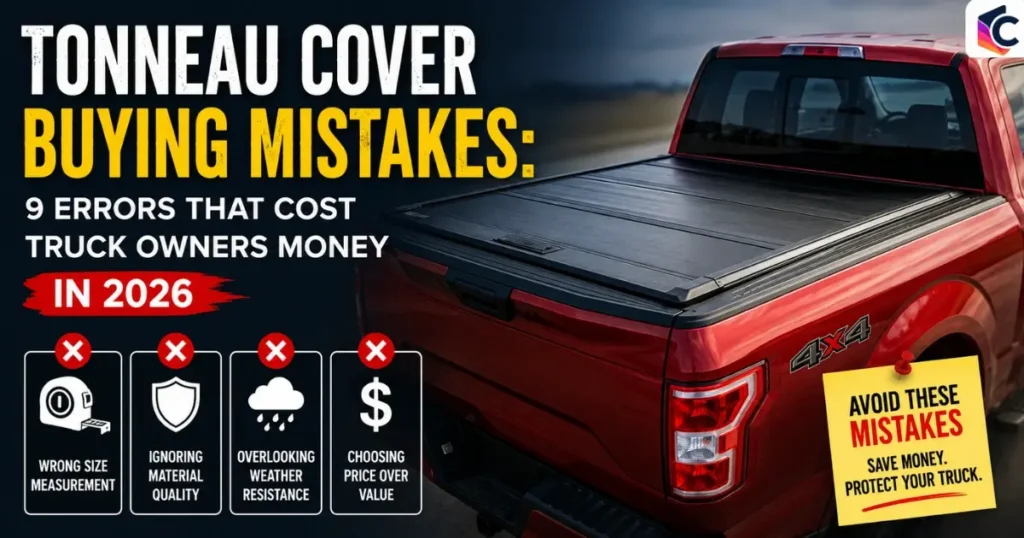
[Published: July 29, 2026 | Last updated: July 29, 2026] | 8 min read
TL;DR
- The most common tonneau cover mistake is ordering by truck model instead of measuring the actual bed floor (Finding Dulcinea, 2026)
- RamBox and CarbonPro bed configurations exclude many standard covers, so check the compatibility list for your exact trim
- Soft vinyl covers cost less and install faster, but they can be cut open with a knife, so they’re a poor fit for high-value cargo
- A properly installed tonneau cover can improve fuel efficiency by roughly 1-2% (AutoZone, 2026)
- Retractable covers run $2,000-3,500 and justify that price only if you need frequent partial bed access (Bison Tonneau Covers, 2026)
Why Tonneau Cover Mistakes Are So Common
Most buyers shop by brand or looks first and check fit, security, and weather sealing last. That order is backwards, and it’s why so many covers get returned or replaced within a year.
A tonneau cover (also called a bed cover or box cover) encloses the truck bed to protect cargo from weather and theft. The category includes soft roll-ups, hinged hard folding covers, and retractable aluminum designs, and each type solves a different problem. Buying the wrong type for your use case is the root cause behind most of the mistakes below.
Mistake 1: Ordering by Truck Model Instead of Measuring the Bed
Buyers frequently order a cover sized for their truck model without confirming the exact bed length, and this is <cite index=”6-1″>the single most common error reported across owner forums</cite>. An F-150, for example, ships with a 5.5-foot, 6.5-foot, or 8.0-foot bed depending on trim, and a cover made for one length will not fit another.
Measure the bed floor from the inside of the bulkhead to the inside of the tailgate lip before ordering anything. Don’t rely on the cab style or trim name alone.
Mistake 2: Ignoring Bed-Specific Configurations Like RamBox or CarbonPro
Some beds have features that block standard clamp systems entirely. Chevrolet’s CarbonPro composite bed and Ram’s RamBox storage system are the two most common exclusions, and RamBox alone <cite index=”9-1″>adds roughly two inches to the effective bed width</cite>, which standard rail systems aren’t built to clamp onto.
Check the product’s compatibility list for your specific model and trim year, not just the general truck name. Newer Ram DT-generation models (2025+) also use taller bed rails that need different clamp hardware than older trucks (Bison Tonneau Covers, 2026).
Mistake 3: Choosing Soft Vinyl When You Need Real Security
Soft roll-up and folding covers are made from marine-grade vinyl, cost less, and install in about 25 minutes with side clamps (Bison Tonneau Covers, 2026). They’re a reasonable choice for tools, groceries, or gear that isn’t worth stealing.
The tradeoff is that a soft cover can be cut open with a utility knife in seconds. If you regularly haul equipment, electronics, or anything valuable, a hard folding or retractable cover with a locking tailgate is the safer choice, even at a higher price.
Mistake 4: Skipping the Weight Capacity Check
Every hard folding cover has a maximum load rating, and buyers often assume “hard” automatically means “can stand on it or stack cargo on top.” A common budget hard folding option, the BAKFlip G2, carries a 300 lb weight capacity (Truck Bed Supplies, 2026), and other models vary widely.
Check the manufacturer’s stated weight limit before you plan to use the closed cover as a work platform or camping deck.
Mistake 5: Assuming All Covers Handle Rain the Same Way
Weatherproofing varies more than most buyers expect. Entry-level soft covers typically use adjustable straps and perimeter seals that <cite index=”9-1″>handle light-to-moderate rain</cite> but aren’t built for sustained downpours or high-pressure car washes. Hard folding and retractable covers use gasket or slam-latch seals that hold up better in heavy weather (Bison Tonneau Covers, 2026).
If you park outside in a wet climate, prioritize a cover with a full perimeter gasket seal over one that relies on straps alone.
Mistake 6: Overbuying a Retractable Cover You Won’t Use
Retractable aluminum covers are the most expensive category, typically running $2,000 to $3,500 (Bison Tonneau Covers, 2026), and they justify that price when you need partial bed access at any length while towing or hauling long items.
If you rarely need mid-bed access and mostly want basic protection and security, a hard folding cover delivers similar security at a fraction of the cost. Buy for how you actually use the bed, not for the feature list.
Mistake 7: Buying a One-Piece Hinged Cover for Frequent Bed Access
One-piece flip-up hinged covers open as a single panel, which limits how often you’ll realistically use the bed. One truck accessory reviewer <cite index=”9-1″>recommends avoiding one-piece hinged covers unless you rarely access the bed</cite>, since they cost nearly as much as folding designs while offering far less flexibility.
If you load and unload the bed weekly, a folding or roll-up design that opens in sections is the more practical choice.
Mistake 8: Ignoring Fuel Efficiency as a Factor
Fuel savings shouldn’t be your main reason to buy a cover, but it’s a real side benefit worth factoring into total cost of ownership. A properly fitted, sealed tonneau cover can <cite index=”5-1″>improve fuel efficiency by about 1 to 2 percent</cite> by reducing wind drag over the open bed (AutoZone, 2026).
A cover that fits poorly or flaps at highway speed won’t deliver this benefit and may create more drag than an open bed.
Mistake 9: Skipping Verified Owner Reviews for Marketing Copy
Product pages consistently oversell ease of installation and durability. Look for models with a large volume of verified long-term reviews instead. The BAKFlip MX4 and Tyger Auto T1, for example, have <cite index=”6-1″>thousands of owners reporting two-plus years of reliable service, with Tyger’s T1 holding over 9,000 verified reviews and a consistent 4.6-star rating</cite>.
Check truck-specific owner communities, like model-specific forums or subreddits, for real installation and durability feedback before you buy.
Common Mistakes to Avoid: Quick Reference
| Mistake | Fix |
|---|---|
| Ordering by truck model, not bed measurement | Measure bulkhead to tailgate lip yourself |
| Ignoring RamBox/CarbonPro exclusions | Check compatibility list for exact trim and year |
| Choosing soft vinyl for valuable cargo | Use hard folding or retractable with a locking tailgate |
| Skipping weight capacity | Confirm the manufacturer’s load rating |
| Assuming all seals handle heavy rain | Choose gasket/slam-latch seals for wet climates |
| Overbuying a retractable cover | Match cover type to how often you need bed access |
| Choosing one-piece hinged for frequent use | Pick folding or roll-up if you load the bed often |
| Ignoring fuel efficiency | Prioritize a snug, sealed fit |
| Trusting marketing copy over reviews | Check verified long-term owner reviews |
Frequently Asked Questions About Tonneau Cover Buying Mistakes
What is the biggest mistake people make when buying a tonneau cover?
Ordering based on truck model instead of measuring the actual bed floor. Bed lengths vary by trim, and features like RamBox or CarbonPro beds can exclude standard covers entirely.
How do I know if a soft or hard tonneau cover is right for me?
Choose soft vinyl if you’re protecting low-value cargo and want an affordable, quick install. Choose hard folding or retractable if you need real theft resistance or plan to load weight on top of the closed cover.
Do tonneau covers actually improve gas mileage?
Yes, a properly sealed cover can improve fuel efficiency by roughly 1-2% by reducing drag over the open bed (AutoZone, 2026). A poorly fitted cover won’t deliver this benefit.
What’s the difference between a folding cover and a retractable cover?
Folding covers open in panel sections toward the cab and cost less. Retractable covers roll into a canister at the front of the bed and allow partial bed access at any length, but typically cost $2,000-3,500.
Are RamBox and CarbonPro beds compatible with standard tonneau covers?
Not always. RamBox adds about two inches to the effective bed width, and CarbonPro composite beds often need specific clamp designs, so always confirm compatibility for your exact trim and model year before ordering.
Key Takeaways
- Measure your bed floor directly instead of trusting truck-model sizing
- Match cover type (soft, hard folding, retractable) to how you actually use the bed, not the feature list
- Confirm compatibility for special bed configurations like RamBox or CarbonPro before ordering
- Check verified owner reviews, not product page claims, for real durability data
References
- AutoZone, “Best Tonneau Covers for Your Truck: Buying Guide 2026” – https://www.autozone.com/diy/truck-and-towing/tonneau-cover-buying-guide-best-tonneau-covers
- Finding Dulcinea, “12 Best Tonneau Covers for Trucks (July 2026) Expert Tested” – https://findingdulcinea.com/best-tonneau-covers-for-trucks
- Bison Tonneau Covers, “RAM 1500 Tonneau Cover Buying Guide 2026” – https://bisontonneaucovers.com/blogs/tonneau-covers/ram-1500-tonneau-cover-buying-guide

Leave a Reply