
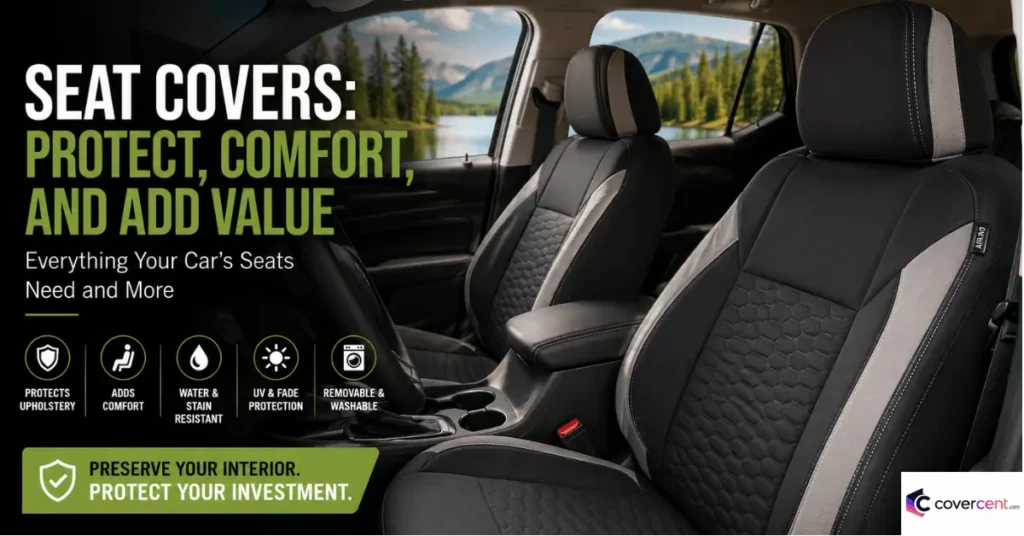
[Published: July 22, 2026| Last updated: July 22, 2026] | 7 min read
TL;DR
- Seat covers protect original upholstery from stains, wear, UV damage, and spills – extending the resale value of your vehicle.
- They add comfort through padding, temperature regulation, and ergonomic support.
- Universal-fit covers cost $20-$80; custom-fit covers range from $150-$600+ per seat (ConsumerAffairs, 2025).
- The right material depends on your use case – neoprene for wet conditions, leather for aesthetics, memory foam for long drives.
- Seat covers are removable and washable, making them far cheaper to replace than original upholstery repairs.
What Seat Covers Do for Your Car’s Interior
Seat covers protect the original upholstery underneath from daily damage – spills, pet hair, UV fading, sweat, and friction wear. Beyond protection, they change how a seat feels and looks, giving drivers control over comfort and style without permanent modifications.
Most car seats use fabric, vinyl, or leather that degrades over the years of use. A quality seat cover acts as a barrier between the original material and everything that shortens its life.
How Seat Covers Protect Upholstery from Damage
Seat covers block the four main causes of car seat deterioration:
Physical wear – Friction from getting in and out wears down fabric and cracks leather over time. A cover takes that friction instead of the seat itself.
Liquid damage – Coffee, water, pet accidents, and food spills soak through unprotected fabric into the foam padding below. Once the foam is wet, mold and odor follow. Waterproof covers prevent liquid from reaching the seat at all.
UV fading – Sunlight bleaches and dries out car upholstery. Leather cracks. Fabric fades. Covers rated for UV resistance slow this down significantly, especially in sunny climates.
Pet and child damage – Claws, muddy paws, crumbs, and sharp objects from car seats all scratch and stain original upholstery. A removable cover handles all of this and goes in the washing machine.
Vehicles with well-maintained interiors sell for 10-15% more than comparable models with worn seats (Kelley Blue Book, 2024). Seat covers are one of the cheapest ways to protect that value.
What Seat Covers Do for Comfort
Seat covers change how a seat physically feels during a drive. The effect depends on the material and thickness.
Memory foam covers add 1-2 inches of pressure-distributing padding, which reduces fatigue on long drives. They’re especially useful in trucks and older vehicles where the original foam has compressed over the years of use.
Heated seat covers are an aftermarket option for cars without factory heating. They use low-voltage wiring connected to the 12V socket and warm the seat surface within 3-5 minutes.
Cooling seat covers use perforated or breathable fabrics – mesh and neoprene being the most common – to reduce heat buildup in summer. Leather seats without covers can reach 150°F (65°C) in direct sunlight (American Automobile Association, 2023), making cooling covers a practical safety consideration.
Lumbar and bolster support covers add side padding that holds the body in position on corners, reducing lower back strain on longer trips.
Seat Cover Materials: What Each Type Does Best
Different materials serve different purposes. Here’s how the main options compare:
| Material | Best Use Case | Waterproof | Easy to Clean | Avg. Price Range |
|---|---|---|---|---|
| Neoprene | Outdoor use, wet climates, surfing/sports | Yes | Yes | $80-$200 |
| Leather / Faux Leather | Aesthetics, easy wipe-down | Partial | Yes | $100-$400 |
| Canvas / Ballistic | Heavy work use, farm/construction | Yes | Yes | $80-$250 |
| Memory Foam | Comfort, long drives | No | Moderate | $50-$150 |
| Mesh/Breathable Fabric | Hot climates, summer driving | No | Moderate | $30-$100 |
| Sheepskin | Winter warmth, comfort | No | Difficult | $150-$500 |
Neoprene is the most widely used material for active lifestyles because it repels water, resists odor, and holds its shape after machine washing. Canvas is the go-to for work trucks because it withstands abrasion and heavy loads without tearing.
Universal Fit vs. Custom-Fit Seat Covers: What’s the Difference
Universal fit covers are pre-cut in standard sizes and use elastic, hooks, or straps to fit most seats. They’re cheaper but leave gaps around headrests, armrests, and side airbag panels.
Custom-fit covers (also called seat-specific covers) are cut and sewn to the exact dimensions of a specific vehicle’s seats. They sit flush, don’t bunch or shift, and preserve access to side airbags – which is a genuine safety concern with poorly fitted universal covers.
Side airbag compatibility is the most important factor to check before buying any seat cover. Covers that block side-mounted airbags can prevent deployment in a collision. Look for covers labeled “airbag compatible” or “airbag-friendly” with sewn-in seam breaks that allow airbag pass-through.
What Seat Covers Do Not Do
Seat covers don’t fix existing damage. They hide it – but cracked foam, torn fabric, or broken seat mechanisms need repair before a cover goes on top, otherwise the cover wears unevenly and degrades faster.
They also don’t guarantee heat resistance. In extreme heat, the material underneath the cover can still warp or off-gas chemicals. Parking in the shade or using a windshield sunshade remains important regardless of what covers the seat.
Finally, not all covers are machine washable. Sheepskin and thick leather covers typically require dry cleaning or specialist care – factor that into cost comparisons before buying.
Common Mistakes When Buying Seat Covers
- Ignoring airbag compatibility: Fitting a cover that blocks a side-impact airbag is a safety risk. Always confirm that the product label says “airbag-compatible” before purchasing.
- Buying universal covers for bucket seats: Bucket seats have contoured bolsters and headrest openings that universal covers bunch around. A loose cover shifts during driving and reduces grip on sharp turns.
- Skipping material research for climate: Leather and faux leather covers get extremely hot in summer and cold in winter without seat heating: mesh or perforated covers suit hot climates far better.
- Not checking washing instructions before buying: A cover that can’t be machine washed becomes unhygienic fast, especially with pets or children in the car.
- Choosing covers based on looks only: Thin decorative covers offer almost no protection against spills or wear. Check the material thickness and waterproofing rating before deciding.
Frequently Asked Questions About Seat Covers
What do seat covers actually do?
Seat covers protect car upholstery from spills, friction wear, UV fading, and damage from pets or children. They also change how a seat feels by adding padding, breathability, or temperature regulation depending on the material.
Do seat covers affect car seat safety or airbags?
Poorly fitted covers can block side-impact airbags built into the seat. Always buy covers labeled “airbag compatible” – these have a sewn seam break that lets the airbag deploy through the cover without obstruction.
Are seat covers worth it for a new car?
Yes. New car upholstery is at its highest value the moment you drive off the lot. Fitting covers immediately keeps the original seats in near-new condition, which matters when trading in or selling. A set of quality covers costs far less than a single upholstery repair.
Can seat covers make seats more comfortable?
They can, depending on the type. Memory foam seat covers add pressure relief and reduce fatigue. Heated covers warm the seat from cold. Mesh and perforated covers reduce heat buildup. The base seat’s structural support doesn’t change – covers work on the surface layer of comfort.
How long do seat covers last?
Quality covers made from neoprene, canvas, or thick faux leather last 3-7 years with regular washing and proper fitting. Cheap fabric covers typically degrade within 12-18 months under daily use. Custom-fit covers generally outlast universal covers because they don’t shift and wear unevenly.
Can you use seat covers with heated seats?
Yes, but with restrictions. Thin covers – mesh, neoprene, or fabric under 5mm thick – allow heat to pass through well. Thick covers like sheepskin or memory foam insulate the seat and block heat transfer, reducing the effectiveness of factory seat heaters.
Key Takeaways
- Seat covers protect original upholstery from the four main damage sources: friction wear, liquid damage, UV fading, and pet/child damage.
- The right material depends on your conditions – neoprene for wet and outdoor use, leather for easy cleaning, memory foam for comfort on long drives.
- Always confirm airbag compatibility before buying any cover for a seat with side-mounted airbags.
- Custom-fit covers cost more but fit cleanly, don’t shift during driving, and last longer than universal options.
- Preserving seat condition directly affects resale value – well-maintained interiors sell for 10-15% more than worn ones (Kelley Blue Book, 2024).
References
- Kelley Blue Book – Vehicle Trade-In Value and Interior Condition: https://www.kbb.com
- American Automobile Association (AAA) – Vehicle Interior Heat Safety: https://www.aaa.com
- ConsumerAffairs – Car Seat Cover Buying Guide: https://www.consumeraffairs.com

Leave a Reply