
[Published: July 7, 2026 | Last updated: July 7, 2026] | 7 min read
TL;DR
- Seat covers protect against stains, UV fading, and everyday wear, and cost only 5-10% of a full upholstery replacement (MarketIntelo, 2025).
- Worn upholstery can cut a vehicle’s resale value by 10-15% (MarketIntelo, 2025).
- 70% of U.S. car owners buy accessories like seat covers for comfort and protection, and 60% cite resale value as their main reason (Allied Market Research, 2024).
- Materials range from budget polyester ($50-$150) to premium leather ($350-$800+), each suited to different needs (Seat Cover Solutions, 2024).
- Pet owners and parents get the most day-to-day value, since seat covers turn spills and pet hair into a wipe-down instead of a deep clean.
What Are Seat Covers and Why Do They Matter?
Seat covers are fitted layers of fabric, leather, or synthetic material that go over a car’s factory seats. They exist to absorb the damage – spills, sun exposure, dirt, pet claws – that would otherwise wear down the original upholstery.
The seat cover market was valued at $69.2 billion globally in 2023 and is projected to reach $138.7 billion by 2034 (Allied Market Research, 2024). That growth reflects a simple fact: replacing damaged upholstery costs far more than preventing the damage in the first place.
Factory seats are not built to survive years of daily use. Every time someone gets in or out, friction from clothing seams wears down fabric fibers. Add sun exposure, food, drinks, and pets, and even a well-kept car shows its age within a couple of years. Seat covers put a removable, replaceable barrier between all of that and the seat itself.
How Seat Covers Protect Your Vehicle
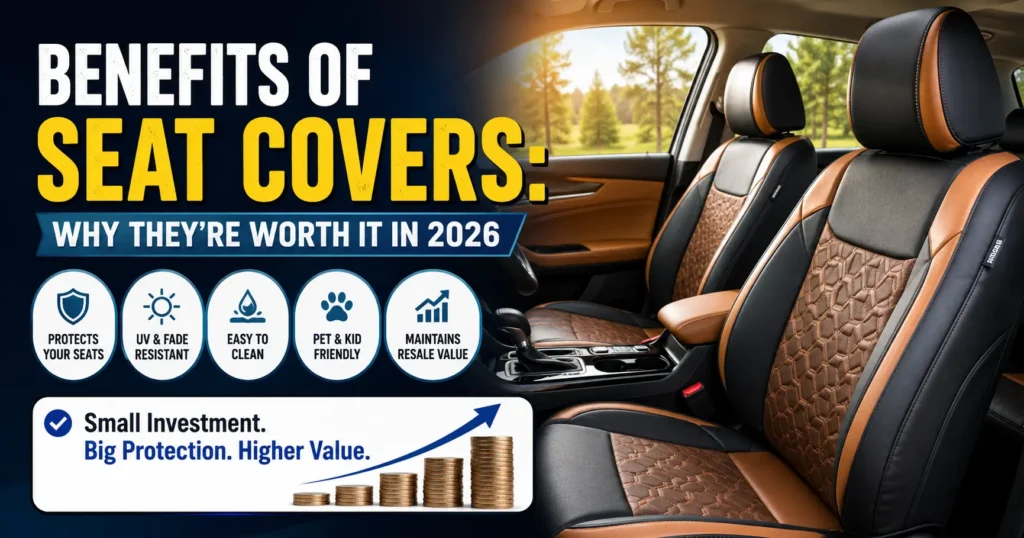
Seat covers work through three simple mechanisms: barrier protection, UV resistance, and easy cleaning. Each addresses a specific type of wear that would otherwise hit the seat directly.
Barrier protection: The cover takes the physical wear – friction, scuffs, claws, buckles – instead of the seat underneath it.
UV resistance: Covers with UV inhibitors block the sunlight that fades and cracks factory upholstery over time, especially in hot climates.
Easy cleaning: Most covers can be removed and washed or wiped down, which turns a potential stain into a five-minute fix instead of a professional detailing job.
| Wear Type | What Happens Without a Cover | How a Cover Prevents It |
|---|---|---|
| Friction from getting in/out | Fabric fibers break down, seams fray | Cover absorbs the rubbing instead of the seat |
| Sun exposure | Fading, cracking, brittle leather | UV-inhibiting material blocks direct exposure |
| Spills and stains | Permanent discoloration, odor | Liquid-repellent covers wipe clean or machine wash |
| Pet hair and claws | Punctures, embedded hair, scratches | Tough materials like neoprene resist punctures |
Seat Covers and Resale Value
A protected interior directly affects what a car is worth at resale. Worn upholstery can reduce a vehicle’s resale value by 10-15% (MarketIntelo, 2025), while a set of seat covers typically costs just 5-10% of what full upholstery replacement would run (MarketIntelo, 2025).
60% of U.S. drivers say maintaining resale value is a key reason they buy seat covers (Allied Market Research, 2024). That lines up with how buyers actually shop: a clean, unmarked interior signals careful ownership, while stained or cracked seats raise questions about how the rest of the car was treated.
Leather seat covers hold the largest share of the market at 35.8% in 2025, commanding $800-$2,000 per vehicle, largely because luxury vehicle owners see them as protecting both comfort and resale value (MarketIntelo, 2025). Budget and mid-range covers protect the same way at a fraction of the cost – they just use less premium materials.
Comfort and Practical Everyday Benefits
Beyond protection, seat covers add comfort features that factory seats often lack. Materials like neoprene and memory foam add cushioning, while some covers include built-in lumbar support or heating elements.
For families with kids, seat covers turn a dropped juice box or a car-sickness incident into a quick wipe-down instead of a ruined seat. For pet owners – roughly 50% of U.S. households own at least one pet (Allied Market Research, 2024) – a tough, washable cover means claws, shedding, and mud stay off the original upholstery entirely.
Installation is usually straightforward. Universal covers can go on in under 30 minutes, while custom-fit covers take longer but provide a tighter, more tailored fit around headrests, armrests, and side airbags.
Common Mistakes to Avoid with Seat Covers
- Skipping the seat cleaning step: Installing a cover over dirty seats traps abrasive dirt underneath, which grinds into the upholstery over time. Vacuum or clean the seat first.
- Ignoring side-airbag compatibility: Many modern seats have side airbags built into the seat itself. Use covers specifically designed to let those airbags deploy properly – the wrong cover can block deployment.
- Choosing the wrong material for your climate: Vinyl and leather can get uncomfortably hot in direct sun, while breathable fabrics like cotton or mesh handle heat better.
- Installing in extreme temperatures: Very hot or cold conditions can make cover material too stretchy or too stiff to fit correctly. Install at room temperature when possible.
Frequently Asked Questions About Seat Covers
What is the main benefit of seat covers?
The main benefit is protecting the factory upholstery from stains, wear, and UV fading, which preserves both comfort and resale value over the life of the vehicle.
Do seat covers really increase resale value?
Seat covers themselves don’t add value directly, but they prevent upholstery damage that would otherwise reduce resale value by 10-15% (MarketIntelo, 2025).
Are seat covers worth it for a new car?
Yes. Protecting seats from day one means the original upholstery stays in near-factory condition, which matters most if the car will eventually be sold or traded in.
What material of seat cover lasts the longest?
Neoprene and leather covers tend to hold up best against punctures, spills, and daily wear, though both cost more than budget polyester or nylon options (Seat Cover Solutions, 2024).
Can seat covers be used with side airbags?
Yes, but only covers specifically designed for airbag-equipped seats should be used. These have special stitching that allows the airbag to deploy without being blocked by the cover.
How much should I budget for seat covers?
Budget covers run $50-$150 per set, mid-range covers run $150-$350, and premium custom-fit covers run $350-$800 or more, depending on material and vehicle size (Seat Cover Solutions, 2024).
Key Takeaways
- Seat covers protect against friction, UV fading, spills, and pet damage at a fraction of the cost of upholstery replacement.
- Worn upholstery can cut resale value by 10-15%, making seat covers a low-cost way to protect a bigger investment.
- Material choice – from budget polyester to premium leather – should match both the climate and how the vehicle is used day to day.
- Proper installation, especially around side airbags, matters as much as the cover itself.
References:

Leave a Reply