

TL;DR
- To clean a memory foam mattress cover, read the care label, vacuum, spot-treat stains, wash on a gentle cycle in cold or lukewarm water with mild detergent, then dry it fully before refitting.
- Wash only the cover. Memory foam itself should not go through a washing machine or be soaked in water (Angi, 2026).
- Most covers need washing every 1 to 2 months. One guide says at least once a month (CNET, 2026), while another says at least every two months (Purple, 2026).
- Heat is the main cause of damage. Hot water can deform plastic in the cover and weaken its waterproofing (Persil, 2026).
- Check your warranty first. Removing the Nectar cover voids its warranty even though the cover is advertised as machine washable (Reviewed, 2026).
What You Need Before You Clean a Memory Foam Mattress Cover
You need a vacuum with an upholstery attachment, mild detergent, clean cloths, and a drying rack or a spot with good airflow. Plan on about 30 minutes of hands-on work, plus drying time. In this guide, “mattress cover” means the removable outer layer of the mattress (also called a mattress protector when it is a separate waterproof layer).
- A vacuum with an upholstery attachment removes dust from the foam and the cover before any water is involved.
- A mild laundry detergent cleans the fabric without the damage that bleach causes.
- Two or three clean cloths let you blot stains instead of rubbing them.
- A drying rack or a clear spot outdoors lets the cover dry flat and fully.
Step 1: Read the Care Label and Warranty
Read the care label first, because memory foam mattress covers are built differently. Some are machine washable, some are hand wash only, and some should stay on the mattress. The label and the warranty decide which method is safe for your bed.
Some removable covers come with instructions that advise against taking them off, and others allow removal but say not to clean the foam afterward (Which?, 2026). A wrong wash setting can also shrink the cover until it no longer fits the mattress (Which?, 2026). Some labels allow hand washing only (Homes & Gardens, 2026).
Step 2: Strip the Bed and Vacuum the Mattress
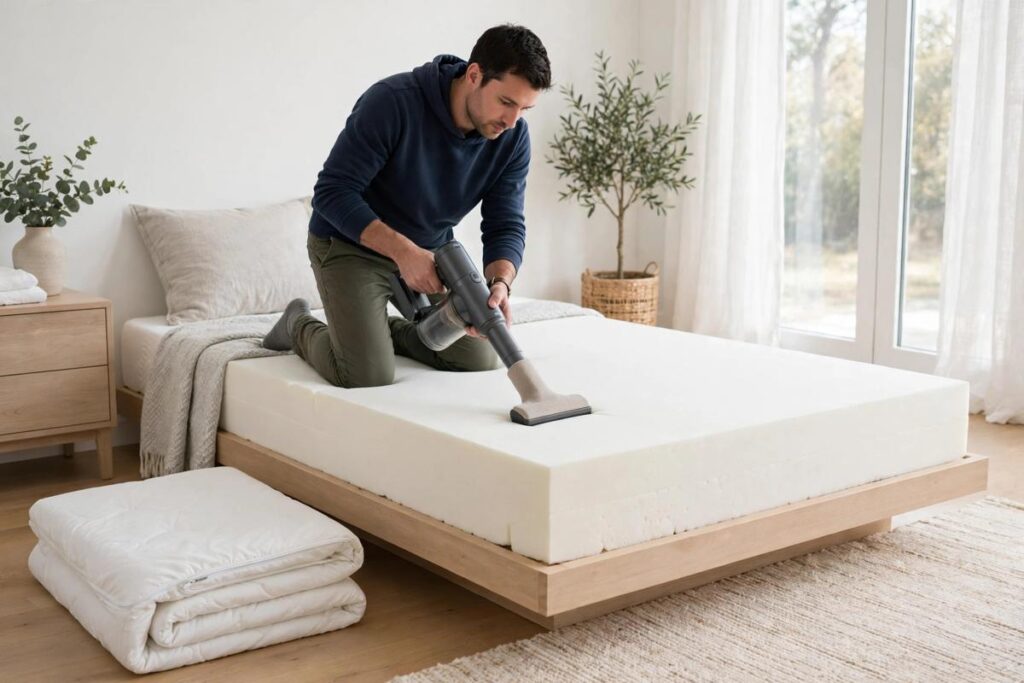
Strip the bed and vacuum before you wash anything. Vacuuming lifts dust and loose debris while the foam is still dry. If the cover zips off, vacuum it on the mattress first, then remove it and vacuum the foam underneath.
GhostBed (2025) describes this order: vacuum with the cover on, unzip it to vacuum the foam, then put the cover in the washing machine. Which? (2026) also lists stripping the bed and gently vacuuming the surface as the first cleaning steps.
Step 3: Spot-Treat Stains Before Washing
Treat stains before the wash, and use as little liquid as possible. Blot the stain with a clean cloth, then dab on mild detergent. Do not rub or scrub, because that can damage the foam and spread the stain.
Rubbing or scrubbing can damage the foam and shorten the mattress’s life (Homes & Gardens, 2026). For blood, dab with a little cold water and avoid soaking a foam mattress (Which?, 2026). If a stain persists, repeat the treatment until it is faint or gone, then wash and air dry (Sleep Foundation, 2026).
Step 4: Wash the Cover on a Gentle Cycle in Cold or Lukewarm Water
Wash the cover on the gentle or delicate cycle, in cold or lukewarm water, with mild detergent and no bleach. Hot water and harsh chemicals are the most common reasons covers fail. A cover that does not fit your machine can be hand washed or sent to a cleaner.
Covers are thin and fragile, so a gentle cycle with mild detergent works best, and bleach or chlorine can damage the fabric (Tom’s Guide, 2026). Hot washing can also cause delamination and shrinkage (Romper, 2026). For king-size covers, a bulk cycle works well (CNET, 2026).
To hand wash, soak the cover for 15 to 30 minutes, drain, rinse in cold clean water, gently squeeze out the water, and hang it to dry (Sleep Foundation, 2026).
Step 5: Dry the Cover Completely Before Refitting
Dry the cover fully, preferably by air. A damp cover on foam traps moisture against the mattress. Spread the cover on a rack or hang it in a ventilated spot. If the label allows a dryer, use the lowest heat.
Memory foam can trap moisture, which leads to mold and mildew (Reviewed, 2026). Tumble drying on low or air drying are both acceptable, but high heat can damage the waterproof lining (Amerisleep, 2026). Skip dryer sheets and fabric softener, because they reduce the cover’s absorbency and can weaken its waterproofing (Romper, 2026).
Step 6: Refit the Cover and Add a Mattress Protector
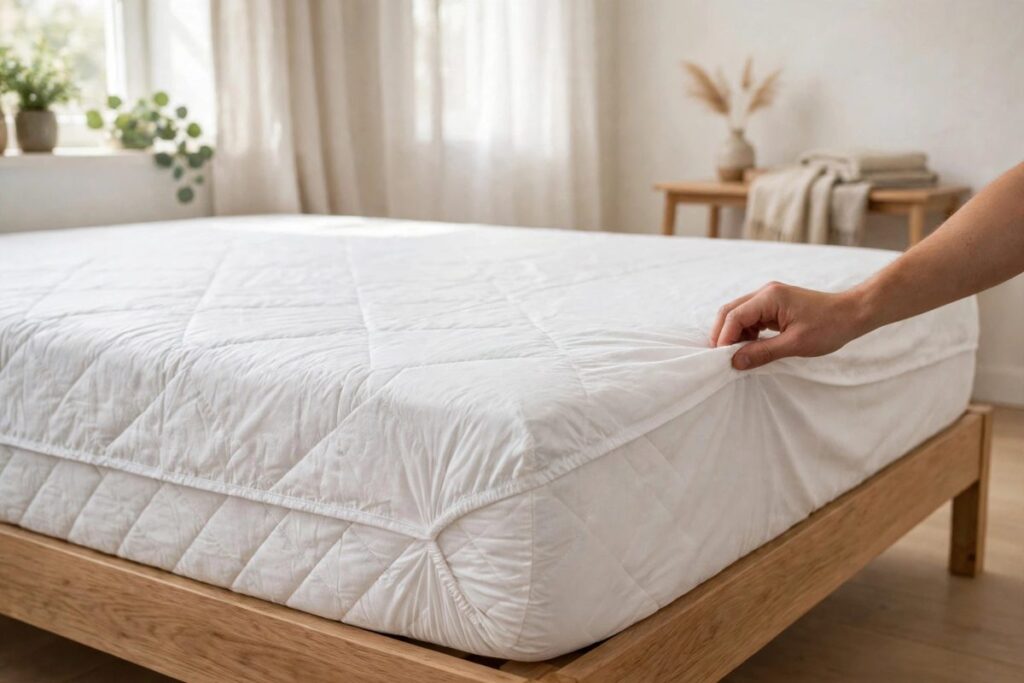
Put the dry cover back on and consider adding a separate mattress protector.
A quality mattress cover stops stains and moisture from seeping into the foam and can extend the bed’s life (Martha Stewart, 2026). Purple (2026) recommends replacing a protector every one to two years, even without visible wear.
Common Problems When Cleaning a Memory Foam Mattress Cover
Most cleaning problems trace back to heat, softener, or incomplete drying. The table below lists the usual causes and fixes.
| Problem | Likely Cause | Solution |
|---|---|---|
| Cover shrank and no longer fits | Hot water or high dryer heat | Wash cold and tumble dry low or air dry next time (Romper, 2026). |
| Waterproof layer is peeling | Hot wash or high heat | Switch to cold or lukewarm water (Persil, 2026). |
| Cover no longer repels liquid | Fabric softener or dryer sheets | Stop using both, since they reduce absorbency (CNET, 2026). |
| Musty smell after refitting | Cover or foam not fully dry | Remove the cover and air out both, because trapped moisture feeds mold (Reviewed, 2026). |
| Stain remains after washing | Stain set before treatment | Repeat spot treatment, then wash and air dry (Sleep Foundation, 2026). |
Frequently Asked Questions About Cleaning a Memory Foam Mattress Cover
Yes, if the care label allows it. Use a gentle cycle, cold or lukewarm water, and mild detergent. Not every removable cover is machine washable, so check the label and warranty first (Which?, 2026).
Only if the label says so, and only on low heat. Air drying is the safer option because high heat can damage the waterproof lining (Amerisleep, 2026).
Every 1 to 2 months is a sound schedule for most households. Purple (2026) says to factor in how often the bed is used. Wash more often if children or pets sleep on the bed.
No. The foam should not be put through a washing machine or soaked (Angi, 2026). Vacuum it and spot clean with minimal liquid.
Cold or lukewarm. Hot water can deform plastic parts and weaken waterproofing (Persil, 2026).
Spot clean it. Do not soak a foam mattress, and use an upholstery cleaner only if the care label allows it (Which?, 2026).
Quick Recap: 6 Steps to a Clean Memory Foam Mattress Cover
- Read the care label and warranty before starting.
- Strip the bed and vacuum the mattress.
- Blot stains and dab on mild detergent without rubbing.
- Wash gently in cold or lukewarm water with no bleach.
- Dry the cover completely, preferably by air.
- Refit the cover and add a protector to reduce future cleaning.
References
- Which?, “How to clean a mattress”: https://which.co.uk/reviews/mattresses/article/how-to-clean-a-mattress
- Sleep Foundation, “How to Wash a Mattress Protector”: https://www.sleepfoundation.org/mattress-information/how-to-wash-mattress-protector
- Angi, “How to Clean Memory Foam: From Mattresses to Pillows”: https://angi.com/articles/how-to-clean-memory-foam.htm



Leave a Reply