
TL;DR
- A mattress cover (also called a mattress protector) is a thin, removable fitted layer that sits under your fitted sheet and blocks dirt, sweat, dust mites, and moisture.
- The average mattress lasts 7-10 years (Raymour & Flanigan, 2026), and a cover helps keep the surface clean for that whole span.
- A cover protects, a mattress pad adds light cushioning, a topper changes how the bed feels, and an encasement seals the mattress on all sides.
- Most people should buy a waterproof or water-resistant, machine-washable cover that matches their mattress depth.
What Is a Mattress Cover?
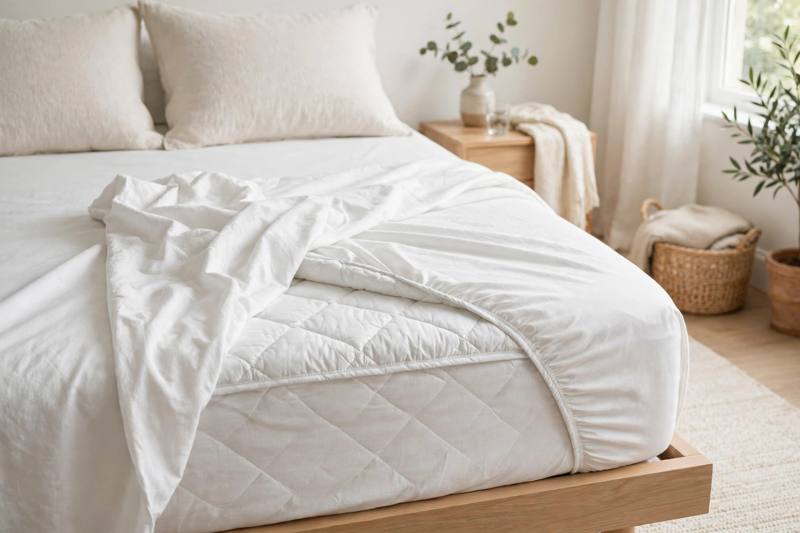
A mattress cover is a removable, fitted layer that goes on your mattress before your sheets. Its job is protection, not comfort. It keeps spills, body moisture, skin cells, and allergens out of the mattress, so the mattress stays cleaner and lasts longer.
Retailers use “mattress cover” and “mattress protector” for the same product, and this article does too. A few brands use “mattress cover” differently. Serta, for example, uses it for the fabric that comes built into the mattress and is not meant to be removed or washed. This article uses “mattress cover” only for the removable accessory.
How a Mattress Cover Works
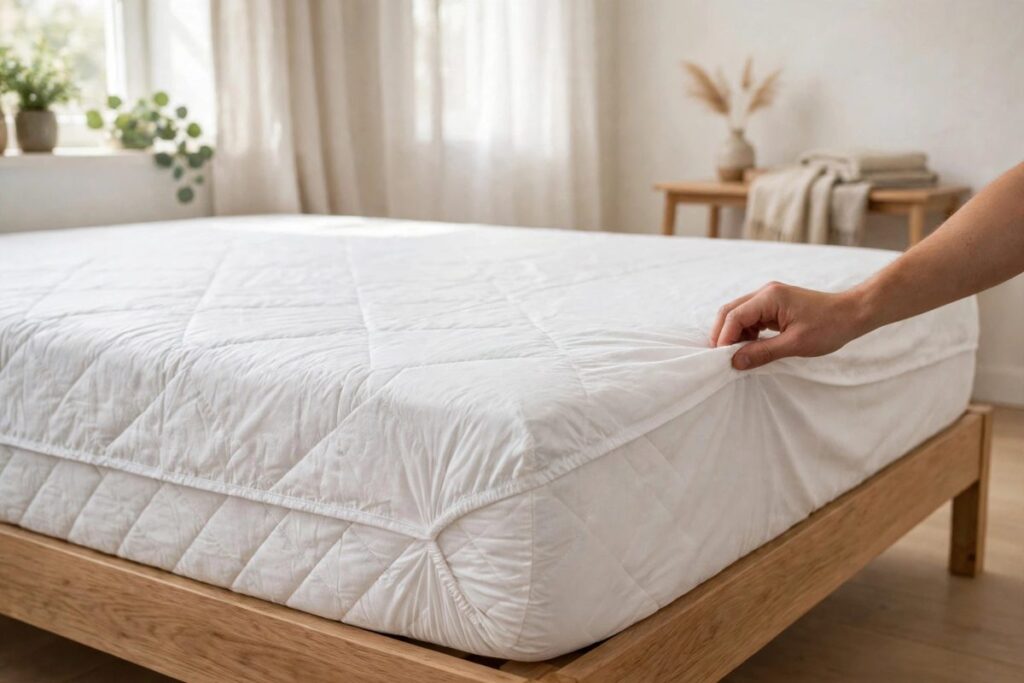
A mattress cover works by putting a barrier between you and the mattress. Most have a soft top fabric for contact with your skin and a thin waterproof layer underneath. Stretchy fabric at the edges holds the cover in place like a fitted sheet.
Most covers pair a thin, breathable waterproof membrane (a thin waterproof film) with a soft top layer, often cotton, bamboo, or Tencel. The membrane stops liquid from reaching the mattress. The top fabric decides how the cover feels and how well it lets heat escape.
Fit comes from the skirt, the stretchy side panels that wrap around the mattress. Measure your mattress depth before buying, because a cover that is too shallow will pop off the corners.
Mattress Cover vs Mattress Pad vs Mattress Topper vs Mattress Encasement
A mattress cover protects, a mattress pad adds light padding, a mattress topper changes the firmness of the bed, and a mattress encasement zips around the whole mattress. One bedding brand sums it up this way: the protector defends, the pad nudges, and the topper overhauls.
| Product | Main job | Waterproof? | Where it sits |
|---|---|---|---|
| Mattress cover (protector) | Blocks spills, sweat, and allergens | Often | Over the mattress, under the sheet |
| Mattress pad | Adds light cushioning and warmth | Rarely fully | Over the mattress, under the sheet |
| Mattress topper | Changes firmness and feel | Usually not | Over the mattress, under a cover or sheet |
| Mattress encasement | Seals the mattress against allergens and bed bugs | Varies by product | Zips around all sides of the mattress |
A pad may resist some sweat and spills, but putting a protector beneath a pad keeps the mattress dry (TechRadar). If you want both comfort and protection, layer a pad or topper over a cover.
What Are the Main Types of Mattress Covers?
The main types are waterproof covers, water-resistant covers, breathable cooling covers, and zippered allergen encasements. Pick the type that matches your main problem: spills, heat, or allergies.
Waterproof covers have a full liquid barrier. They suit children, pets, and anyone who wants a dry mattress after an accident.
Water-resistant covers handle sweat and small spills but may soak through in a large accident.
Breathable covers use lighter fabrics and thinner membranes to keep airflow moving, which helps hot sleepers.
Zippered encasements wrap the entire mattress. Modern zippered protectors close around the mattress and are easy to remove for cleaning (Angi).
Why Use a Mattress Cover?
A mattress cover protects against four problems: liquid damage, stains, dust mites, and sweat buildup. These are the main causes of a mattress wearing out early or smelling stale.
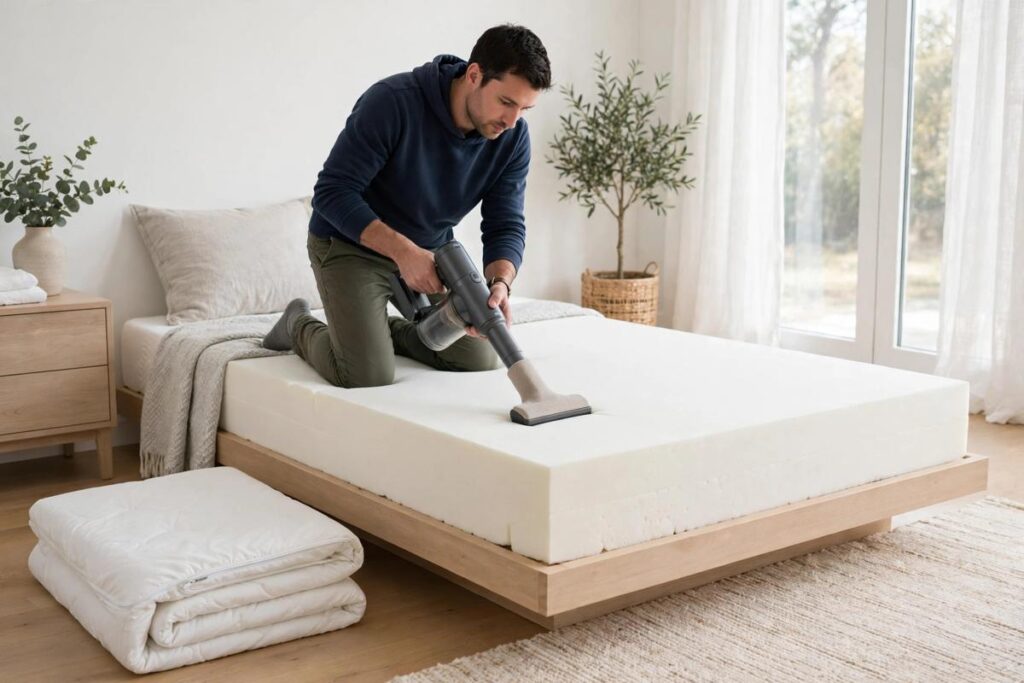
Dust mites are the biggest concern for allergy sufferers. Dead skin cells attract dust mites, which can cause sneezing, watery eyes, sinus pressure, and a runny nose (Sleep Foundation). The same source says that vacuuming or using a mattress protector may help keep dust mites out.
Stains matter for another reason. Many mattress warranties exclude damage from stains or spills, so check your warranty terms. A cover also makes cleanup quick, because you strip the cover instead of scrubbing the mattress.
Do You Need a Mattress Cover?
Yes, in most cases. A mattress is a large purchase, and a cover costs far less than a replacement. You need one most if you have allergies, kids, pets, or a habit of eating in bed, or if you sweat heavily at night.
You can skip a cover only if you already own an encasement or a mattress with a built-in washable top. Even then, a cover is easier to launder than a full mattress surface.
How to Choose the Right Mattress Cover
Choose a cover by matching five features to your needs: size, depth, waterproofing, breathability, and washability. Check each one before you buy.
| Feature | What to check |
|---|---|
| Size | Match your mattress size exactly (Twin, Full, Queen, King, California King) |
| Depth | Measure your mattress height and pick a cover with a skirt that is deeper than that number |
| Waterproofing | Choose waterproof for kids and pets, water-resistant for light sweat |
| Breathability | Pick cotton, bamboo, or Tencel tops if you sleep hot |
| Washability | Confirm the care label allows machine washing |
Noise is the other factor. Cheaper plastic-backed covers can crinkle when you move. Read reviews for comments about sound and heat.
How to Care for a Mattress Cover
Wash the cover according to its care label, and wash it right after any spill. Most covers are machine washable, but high heat can damage the waterproof layer.
Sleep Foundation advises washing sheets and pillowcases at least weekly, or more often if pets sleep with you. Treat the cover as a second layer of bedding and launder it on a regular schedule too. Let it dry fully before you put it back on the bed, since damp fabric can lead to mildew.
Common Mistakes to Avoid with Mattress Covers
- Buying a mattress pad when you need protection. A pad adds softness but is rarely fully waterproof, so liquid can still reach the mattress.
- Ignoring mattress depth. A cover that is too shallow slips off the corners and leaves gaps.
- Skipping the cover on a new mattress. Stains and moisture start building on day one, and a stained mattress may void part of its warranty.
- Washing on high heat. Heat can break down the waterproof layer, so follow the care label.
- Stacking several thick layers. Too many layers trap heat and change how the mattress feels.
Frequently Asked Questions About Mattress Covers
A mattress cover is a thin, removable fitted layer that goes over your mattress and under your sheet. It blocks spills, sweat, dust mites, and stains. It is also called a mattress protector.
Yes, in most stores. The two terms refer to the same product and are used interchangeably. Some brands use “cover” for a mattress’s built-in outer fabric, so read the product description to confirm what you are buying.
It goes under the fitted sheet. A protector fits onto the mattress beneath the fitted sheet (Sleep Foundation). Your sheet then keeps the cover clean and hides it.
Some can. Thick plastic-backed covers trap heat. Choose a breathable cover with a thin membrane and a cotton, bamboo, or Tencel top if you sleep hot.
A standard cover does not. It only covers the top and sides, so bed bugs can still reach the seams. A zippered mattress encasement is the product designed for bed bug prevention.
It depends on the material and how often you wash it. Replace it when the waterproof layer cracks, the fabric thins, or the elastic loses its grip. A cover that no longer protects needs replacing, even if it looks intact.
Summary: What to Remember About Mattress Covers
A mattress cover is the cheapest way to extend the life of a mattress that typically lasts 7-10 years (Raymour & Flanigan, 2026). Buy one that fits your mattress depth, matches your sleep habits, and survives the washing machine. Add a pad or topper only if you want a softer bed.
References
- Sleep Foundation: Mattress Protector Guidance – https://www.sleepfoundation.org/bedroom-environment/mattress
- Sleep Foundation: Mattress Pad vs. Mattress Protector – https://www.sleepfoundation.org/best-mattress-pads/mattress-pad-vs-mattress-protector
- TIME: How Long Does a Mattress Last? – https://time.com/shopping/article/how-long-does-a-mattress-last



Leave a Reply