

TL;DR
- Check the care label first, then wash the cover on a gentle cycle in cold or lukewarm water with mild detergent.
- Skip bleach, fabric softener, dryer sheets, ironing, and dry cleaning, because each can damage the waterproof layer.
- Tumble dry on low or air-dry, and take the cover out of the dryer promptly.
- Wash at least once every two months (Purple, 2022), and more often if kids or pets use the bed.
- The job takes about 15 minutes of hands-on work, plus drying time.
What You Need Before You Start
You need a washing machine, mild detergent, a stain remover, a soft cloth, and a dryer or clothesline. Most mattress protectors need only these few items, plus a brush if a stain is stubborn.
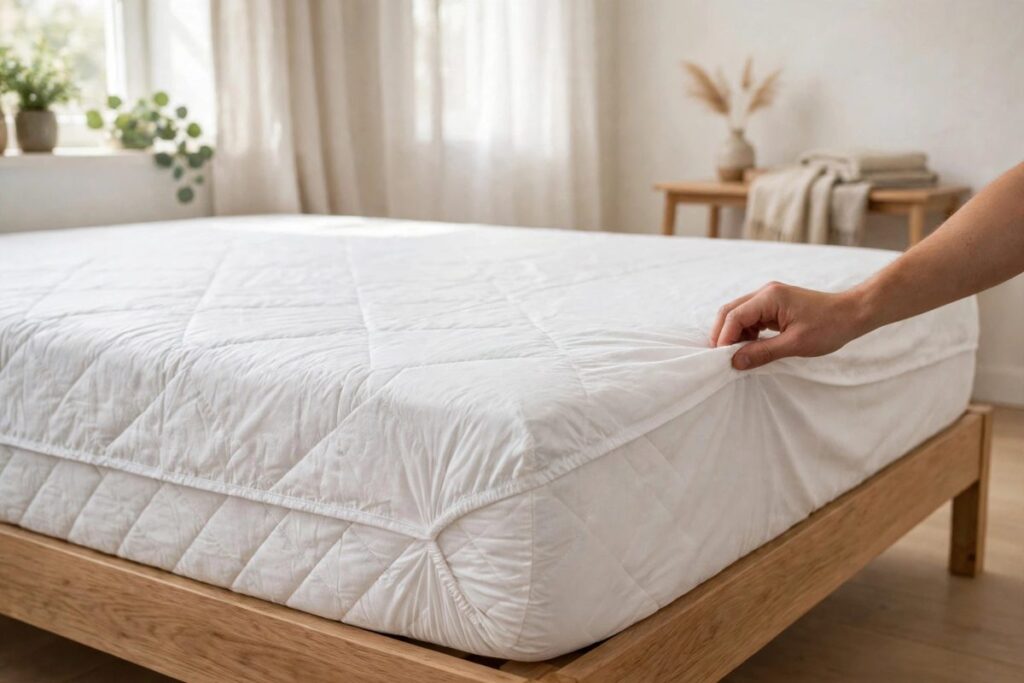
A waterproof mattress cover (also called a waterproof mattress protector) is a fitted layer that sits on top of your mattress. It has a waterproof backing that blocks spills, sweat, and accidents from reaching the mattress. This article uses “cover” for short.
Gather these before you strip the bed:
- Mild liquid detergent without bleach or added softeners.
- A spot stain remover that is safe for the cover’s fabric.
- A clean, soft cloth for dabbing stains.
- A bathtub or large basin, in case the label says hand wash only.
Step 1: Read the Care Label
Read the care label before you do anything else, because waterproof covers vary by material and brand. Waterproof covers in particular can have special instructions. The label gives the safe water temperature, dryer setting, and any banned products.
If the label has worn off, look up the product on the brand’s website. Care instructions are usually posted there.
Some brands also tie the warranty to the label. One manufacturer’s care card states that failing to follow its instructions will void the protector warranty.
Step 2: Strip the Bed and Treat Stains First
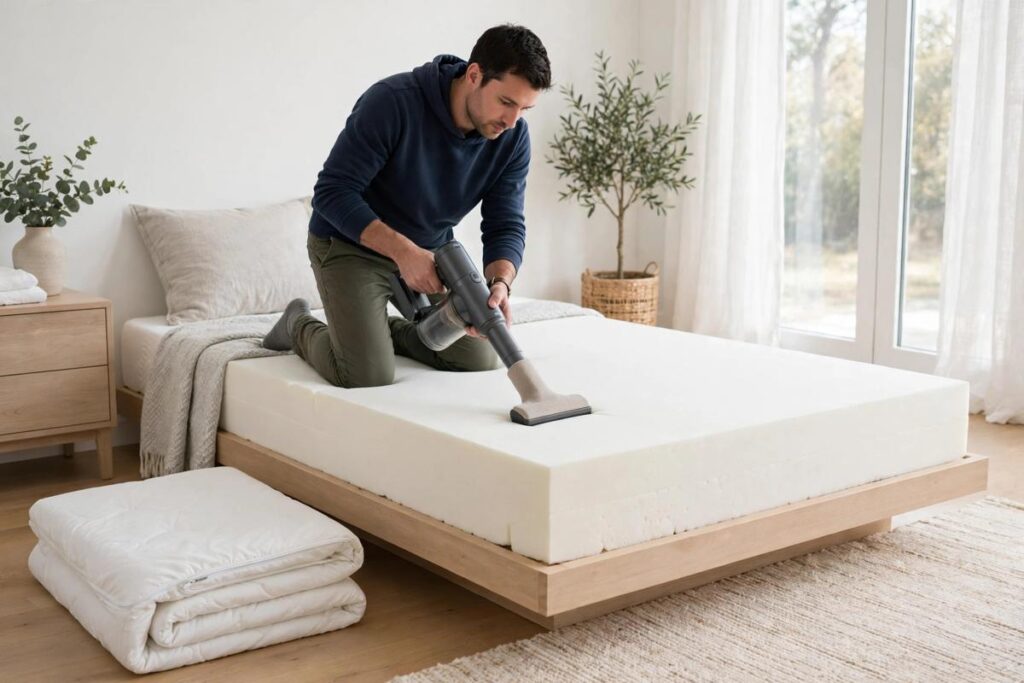
Remove the cover from the mattress and treat any stains before it goes in the washer. Checking for stains first stops them from setting in the dryer.
Apply a small amount of stain remover or diluted mild detergent to the mark. Let it sit for a few minutes, then dab the area with a clean cloth. Rinse the treated spot with water before washing.
Do not scrub hard. Aggressive rubbing can wear down the fabric on top and stress the waterproof backing underneath.
Step 3: Wash the Cover on a Gentle Cycle
Machine wash the cover on a gentle cycle in cold water with mild detergent. Casper’s guidance (2024) for machine-washable protectors is mild detergent, cold water, and a delicate cycle. Use the temperature on your label if it differs.
Wash the cover on its own or with a few soft items such as sheets. Washing it alone keeps the machine from being overcrowded. A packed drum cleans poorly and can leave detergent in the fabric.
Do not add bleach. Bleach and chlorine can damage the fabric. Leave out fabric softener too, which can coat the cover and affect its performance.
Step 4: Hand Wash if the Label Says No Machine
Hand wash the cover in a bathtub if the label bans the washing machine or the cover is too bulky to fit. Fill the tub with lukewarm water and add a couple of drops of mild detergent.
Submerge the cover, gently wash away dirt and stains, and rinse it thoroughly in clean water until the soap residue is gone.
Press the water out by hand instead of wringing the cover. Twisting can crack the waterproof layer.
Dry cleaning is not a good workaround. Dry cleaning chemicals can damage the materials in a waterproof bed cover.
Step 5: Dry the Cover Without Damaging the Waterproof Layer
Tumble dry the cover on low heat or air-dry it. Casper (2024) recommends tumble drying low or air-drying, and checking the manufacturer’s instructions. Heat is the most common cause of damage to the waterproof backing, so keep the setting low.
Take the cover out of the dryer as soon as the cycle ends. One brand’s care card says to remove it from the dryer promptly and not to iron it.
Skip dryer sheets. They can also reduce the performance of a cover. Make sure the cover is fully dry before you put it back on the mattress, since trapped moisture causes musty smells.
How Often Should You Wash a Waterproof Mattress Cover?
Wash the cover at least once every two months. Purple (2022) advises washing removable mattress covers at least that often, and adjusting for how much the bed is used.
Wash it more often in these situations:
- A child or pet sleeps on the bed regularly.
- Someone in the bed sweats heavily at night.
- A spill or accident has soaked through the sheets.
Washing the cover after an accident, not at the next scheduled wash, also keeps stains from settling in.
Common Problems and How to Fix Them
| Problem | Likely Cause | Solution |
|---|---|---|
| Stain still visible after drying | Heat set the stain before it was treated | Re-treat with stain remover, rewash, and air-dry |
| Musty smell after washing | Detergent left in the fabric or incomplete drying | Rewash with less detergent, dry fully, and let the cover air out |
| Cover leaks or the backing peels | Heat, bleach, softener, or dry cleaning damaged the waterproof layer | Replace the cover, since the backing cannot be repaired |
| Cover too bulky for the washer | Thick or oversized cover | Hand wash in a bathtub |
Frequently Asked Questions About Washing a Waterproof Mattress Cover
Yes, most waterproof covers are machine washable. Use a gentle cycle, cold water, and mild detergent. Always confirm with the care label first, because a few brands recommend hand washing for their waterproof models.
Usually yes, on low heat. Remove the cover promptly when the cycle ends. If the label says air-dry only, follow it, since high heat can damage the waterproof backing.
No. Bleach and chlorine can damage the fabric and the waterproof layer. Use a mild detergent and a spot stain remover instead.
Wash it at least once every two months, per Purple (2022). Wash it more often if children or pets use the bed, or after any spill.
Cold water is the safe default, per Casper (2024). Your care label sets the exact limit, so follow it if it differs.
No. Ironing and dry cleaning can both damage the waterproof backing. Some brands list “do not iron” and “do not dry clean” on their care cards.
Replace it when it leaks, peels, cracks, or no longer repels liquid after a normal wash. Damage to the waterproof layer cannot be repaired.
Summary
- Read the care label, then treat stains before washing.
- Wash on a gentle cycle in cold water with mild detergent, and skip bleach and fabric softener.
- Hand wash in a bathtub if the label bans machines or the cover is too bulky.
- Dry on low heat or air-dry, and never iron or dry clean.
- Wash at least every two months, or sooner after spills.
References
- Sleep Foundation, “How to Wash a Mattress Protector”: https://www.sleepfoundation.org/mattress-information/how-to-wash-mattress-protector
- Tom’s Guide, “How to wash and dry a waterproof mattress protector – and what to avoid”: https://www.tomsguide.com/wellness/mattresses/how-to-wash-and-dry-a-waterproof-mattress-protector-and-what-to-avoid
- Casper, “How to Wash a Mattress Protector” (updated 2024): https://casper.com/blog/how-to-wash-mattress-protector



Leave a Reply