

TL;DR
- Most people should buy a mattress cover. It is cheap insurance for a mattress that lasts 7-10 years and costs far more to replace.
- A cover blocks spills, sweat, dust mites, and stains. It does not add comfort like a pad or a topper, and it does not stop bed bugs unless it is a zippered encasement.
- Choose a cover by size, depth, waterproofing, breathability, and washability. Machine-washable and quiet covers are worth paying a little more for.
- Skip a cover only if you already own an encasement or a mattress with a built-in washable top layer.
What a Mattress Cover Actually Does
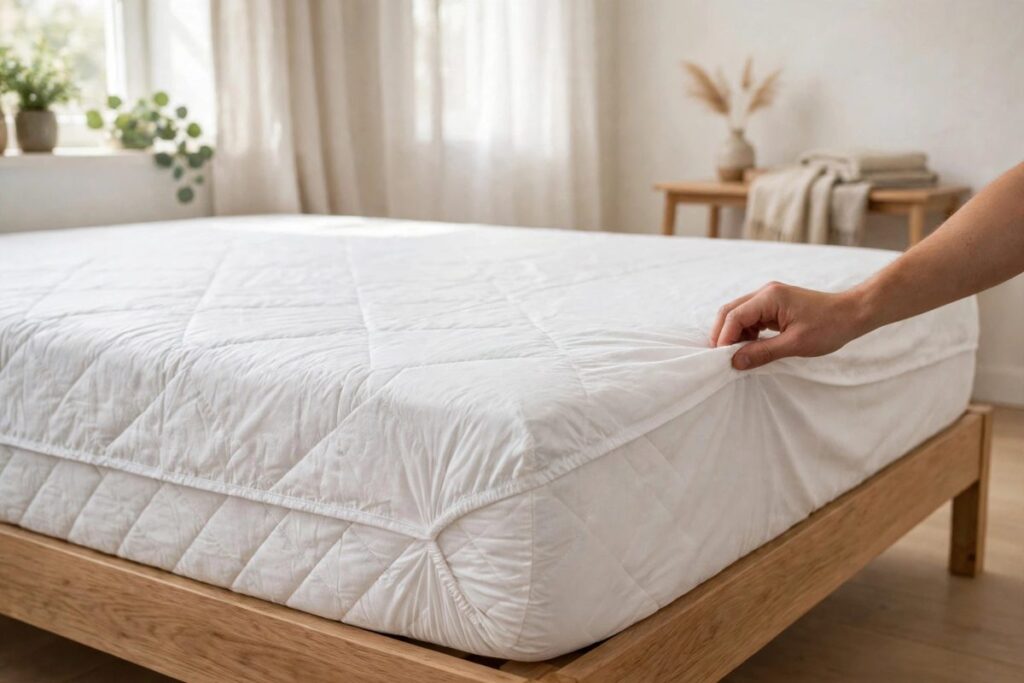
A mattress cover is a thin, removable fitted layer that sits under your fitted sheet. It blocks spills, sweat, dust mites, and skin cells from reaching the mattress (Sleep Foundation, 2026).
It protects, it does not comfort. If you want a softer bed, you need a pad or a topper on top of a cover, not instead of one.
What It Protects You From
- Spills and moisture. Liquids soak into foam and fabric quickly, and a wet mattress is hard to dry.
- Stains. A stained mattress can void part of its warranty and lower its resale value.
- Dust mites. Dead skin cells attract dust mites, which can trigger sneezing, watery eyes, and sinus pressure.
- Sweat and body oils. These build up in the mattress over years and cause odors.
- Pet accidents and kid messes. A cover turns a disaster into a laundry load.
Mattress Cover vs Mattress Pad vs Mattress Topper
A cover protects. A pad adds light cushioning. A topper changes how the bed feels. One bedding brand sums it up this way: the protector defends, the pad nudges, and the topper overhauls.
| Product | Main Job | Waterproof? | Where It Sits |
|---|---|---|---|
| Mattress cover (protector) | Blocks spills, sweat, and allergens | Often | Over the mattress, under the sheet |
| Mattress pad | Adds light cushioning and warmth | Rarely fully | Over the mattress, under the sheet |
| Mattress topper | Changes firmness and feel | Usually not | Over the mattress, under a cover or sheet |
| Mattress encasement | Seals the mattress against allergens and bed bugs | Varies by product | Zips around all sides of the mattress |
Who Should Definitely Get One
- Allergy sufferers. A cover reduces dust mite exposure, the most common indoor allergen trigger (Terreehorst et al., 2003).
- Parents of young kids. Spills and accidents are a matter of when, not if.
- Pet owners. Fur, dander, and the occasional accident stay out of the mattress.
- People who eat or drink in bed. Coffee and wine stains are permanent without a cover.
- Heavy sweaters. A waterproof cover keeps moisture out of the foam.
- Anyone with a new or expensive mattress. A $50 cover protects a $1,000 mattress.
Who Can Skip It
- You already own a zippered encasement. It does the same job and more.
- Your mattress has a built-in washable top. Some newer models include one.
- You replace mattresses every 2-3 years anyway. The protection window is short.
- You sleep on a guest bed used a few nights a year. The risk is low.
Even in these cases, a cover is still easier to launder than a mattress surface.
How to Choose the Right Mattress Cover
- Match the size exactly. Twin, Full, Queen, King, California King — no shortcuts.
- Measure the depth. Pick a cover with a skirt deeper than your mattress height, or it will pop off the corners.
- Decide on waterproofing. Waterproof for kids and pets. Water-resistant for light sweat. Bed bugs need a sealed encasement.
- Check breathability. Cotton, bamboo, or Tencel tops sleep cooler than plastic-backed covers.
- Confirm it is machine washable. If you cannot wash it easily, you will not wash it often enough.
- Listen for noise. Cheap plastic-backed covers crinkle when you move. Read reviews for comments about sound and heat.
Mattress Cover and Warranty
Many mattress warranties exclude damage from stains or spills. A cover keeps the mattress clean, which keeps the warranty intact. Check your warranty terms before you decide.
Tempur-Pedic recommends a cover for its mattresses. Its support page lists compatible protectors and notes that a stained mattress may not be covered.
Common Mistakes with Mattress Covers
- Buying a mattress pad when you need protection. A pad adds softness but is rarely fully waterproof.
- Ignoring mattress depth. A cover that is too shallow slips off the corners.
- Skipping the cover on a new mattress. Stains start on day one.
- Washing on high heat. Heat can break down the waterproof layer.
- Stacking several thick layers. Too many layers trap heat and change how the mattress feels.
| Your situation | Your best option |
|---|---|
| Allergies | Zippered encasement or allergen-proof cover |
| Kids or pets | Waterproof cover |
| Hot sleeper | Breathable cover with a thin membrane |
| Guest bed | Basic water-resistant cover |
| New expensive mattress | Waterproof cover, machine washable |
| Frequent accidents | Waterproof cover + a second spare cover |
Frequently Asked Questions About Mattress Covers
Not strictly, but most people should buy one. A cover costs far less than a mattress and protects it from spills, sweat, dust mites, and stains.
Yes, in most stores. The two terms refer to the same product and are used interchangeably.
It goes under the fitted sheet. The cover fits onto the mattress first, then the sheet goes on top.
Some can. Thick plastic-backed covers trap heat. Choose a breathable cover with a thin membrane and a cotton, bamboo, or Tencel top if you sleep hot.
A standard cover does not. It only covers the top and sides. A zippered mattress encasement is the product designed for bed bug prevention.
It depends on the material and how often you wash it. Replace it when the waterproof layer cracks, the fabric thins, or the elastic loses its grip.
Summary
A mattress cover is the cheapest way to extend the life of a mattress that typically lasts 7-10 years. Buy one that fits your mattress depth, matches your sleep habits, and survives the washing machine. Add a pad or topper only if you want a softer bed.
References
- Sleep Foundation, “Mattress Protector Guidance”: https://www.sleepfoundation.org/bedroom-environment/mattress
- Terreehorst et al., “Evaluation of Impairment Due to Allergic Rhinitis” (NEJM, 2003): https://doi.org/10.1056/NEJMoa022600
- Tempur-Pedic Help Center, “Mattress Protectors”: https://support.tempurpedic.com/hc/en-us/articles/360020123456-Mattress-Protectors



Leave a Reply