
TL;DR
- To make a drain cover look nice, clean it, repaint or replace it, and frame it with level, removable elements. Never seal or raise it.
- The process takes 6 steps and about one weekend for most yards and patios.
- You need to know your drain type first, because municipal storm drains usually cannot be altered, while private yard drains can.
- Water must always reach the drain, and anyone with a key or tool must be able to lift the cover in minutes.
- Blocked drains cause flooded roadways and sewer backups (Pennsylvania American Water, 2024), so appearance fixes must never trade away drainage.
What You Need Before You Start
Before you start, identify your drain type, gather basic cleaning and finishing supplies, and confirm who owns the drain. Ownership decides what you may change. A private yard drain is yours to modify. A drain owned by your city or utility usually is not.
- A wire brush, a stiff scrub brush, and a bucket of soapy water.
- Exterior metal paint with rust protection, if the cover is metal.
- A tape measure for replacement covers.
- Gloves and a lifting tool or key that fits the cover.
- Your city or utility contact details, in case you need permission.
Step 1: Identify the Drain Type and Who Owns It
Start by working out what you are looking at, because the answer sets your limits. A yard drain (also called a catch basin) collects rain from your lawn or patio. A storm drain inlet sits at the curb. A manhole cover gives access to a pipe chamber below.
Private yard drains can be repainted, replaced, or framed. Public storm drains and utility covers are normally off-limits for removal or replacement. If you are unsure, call your local public works office before changing anything.
Check the cover for a stamped name, a load rating, or a utility logo. Any of these usually signals public ownership.
Step 2: Clean and Repair the Existing Drain Cover
Cleaning is the cheapest way to make a drain cover look nice, and it often fixes most of the problem. Scrub off algae, mud, and rust flakes, then rinse the cover and the pit beneath it. Many covers look dated only because they are filthy.
Remove leaves, mulch, and silt from the openings. County stormwater guidance says to clear debris from the top of a grate with a rake and not to try removing the grate itself (Clackamas County, 2025).
If the cover is cracked, bent, or sits unevenly, replace it. A damaged cover is a trip hazard and no finish will hide that.
Step 3: Paint a Metal Drain Cover to Match Your Surroundings
Painting is a fast fix for a rusty or mismatched metal cover. Use exterior metal paint with rust protection, in a color close to your pavers, gravel, or lawn edge. Dark grey, bronze, and soil brown blend in better than black.
Follow this order:
- Wire-brush all loose rust and dry the cover completely.
- Apply a rust-inhibiting primer.
- Apply two thin coats of matte exterior paint, and keep the slots open.
Use a matte or textured finish on any cover that people walk across, since gloss paint gets slippery when wet. Do not paint covers that carry vehicle traffic or that belong to a utility.
Step 4: Replace It With a Decorative Drain Cover
A decorative replacement cover is the cleanest result when the old one is beyond saving. The new cover must match the frame size and the load rating (the weight the cover is built to carry). Pedestrian-rated covers fail under cars.
Measure the opening, note the load rating on the old cover, and choose a replacement in cast iron, stainless steel, or a composite material. Patterned and low-profile grates look better than plain slotted plastic and still pass water.
Another option is a recessed cover. This is a tray that holds pavers, tile, or gravel so the cover blends into the surface around it. The tray must lift out with a standard key.
Step 5: Frame and Disguise the Drain Cover Without Blocking It
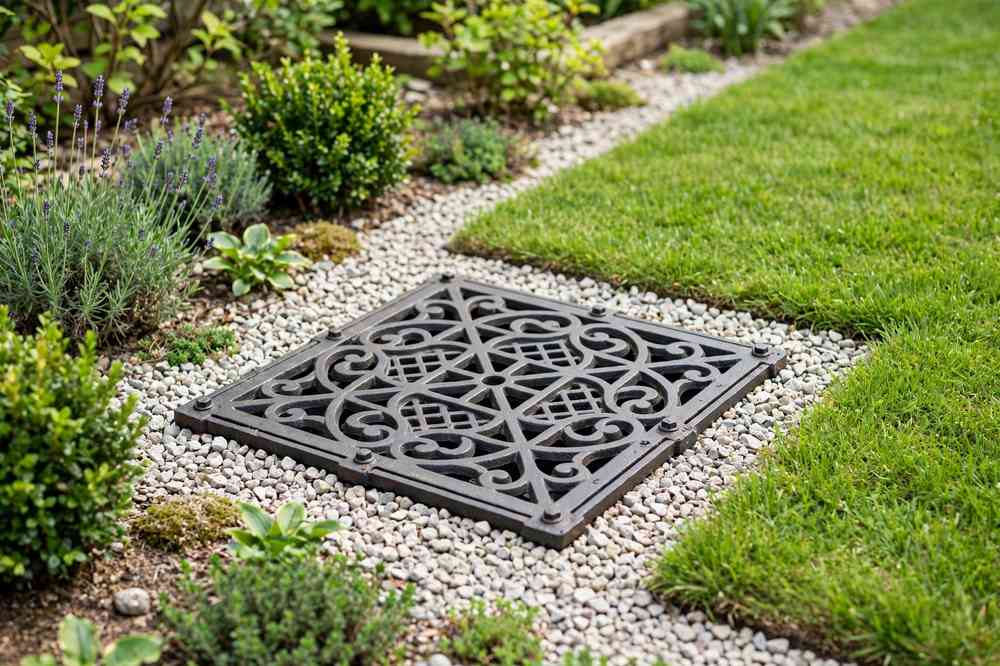
A drain cover is best disguised with something level, light, and removable. The cover must stay reachable and the water must keep flowing. Gravel rings, paver borders, and lift-off planters all meet that test.
Good options:
- A gravel or pebble ring set a couple of inches back from the cover edge, so you can lift the grate without scraping your knuckles.
- A lightweight planter with a drainage gap underneath, placed beside the drain and not on top of it.
- Low plants such as thyme or sedum around the border, not over the openings.
- A garden bench or statue placed next to the drain, as homeowners often suggest for yard drains.
Guidance on drain disguises says covers must lift without special tools beyond the normal key, and anything on top must come off fast (Gardening Beyond, 2025). Never glue a tray shut, never raise the surface above the surrounding ground, and never bury a vented cover under soil or mulch.
Step 6: Maintain the Drain Cover So It Keeps Looking Good
Regular upkeep keeps both the look and the function. A tidy drain stays tidy only if leaves, silt, and grass clippings do not collect on it. Check the cover before and after heavy rain and in autumn.
A short routine works well:
- Rake or brush debris off the cover each month in leaf season.
- Lift the cover twice a year and clear silt from the pit.
- Retouch chipped paint before rust spreads.
- Keep yard waste bagged, not swept toward the drain (Pennsylvania American Water, 2024).
Also keep the yard graded so water runs toward the drain, and consider a rain garden to absorb extra runoff (Delaware DNREC I-ADAPT).
Common Mistakes When You Make a Drain Cover Look Nice
The most frequent mistake is hiding the drain so well that it stops working or cannot be reached. Appearance fixes go wrong in a few predictable ways.
- Covering the drain with soil, mulch, or turf: this blocks the openings and floods the area around it.
- Gluing or grouting a decorative tray in place: this makes cleaning impossible, so the drain clogs.
- Using heavy fillers: if one person cannot lift it, you will put off maintenance.
- Painting slots shut: even a thin coat can narrow the openings and slow drainage.
- Altering a public drain: this can break local rules and may lead to a fine or a forced restoration.
Common Problems and How to Fix Them
| Problem | Likely Cause | Solution |
|---|---|---|
| Water pools around the cover | Debris or silt in the grate or pit | Rake the top, then lift the cover and clear the pit |
| Paint peels within months | Rust or moisture under the paint | Strip to bare metal, prime with rust inhibitor, repaint |
| Cover rocks or rattles | Worn frame or debris under the seat | Clean the frame seat or replace the cover |
| Plants creep over the openings | Planting too close | Trim back and move plants outside the border |
| Decorative tray is stuck | Grout, soil, or roots around the edge | Loosen with a flat bar and widen the gap |
Frequently Asked Questions About Making a Drain Cover Look Nice
Clean it thoroughly, then repaint a metal cover in a matte color that matches the surrounding surface. This takes under a day and costs very little. If the cover is cracked or badly rusted, replace it with a decorative grate of the same size and load rating.
No. Mulch, soil, and turf block the openings and stop water from entering, which can flood your yard or back up the pipe. Use a removable gravel ring, paver tray, or lift-off planter that sits level and leaves the openings clear.
It depends on who owns the drain. You can usually modify a private yard drain, but public storm drains and utility covers normally cannot be removed, altered, or buried. Call your city public works office or utility before changing anything you are unsure about.
The two terms often mean the same thing, and this article uses “drain cover” throughout. Strictly, a grate has slots or holes that let water in, while a solid cover seals an access point. Check which one you have before choosing a replacement.
A load rating is the maximum weight a cover is built to carry. A pedestrian-rated cover is fine for a garden path, but it can crack under a car. Match the rating of any new cover to the old one, or go higher if vehicles cross it.
Keep it level and reachable. Place a lightweight planter or decorative stone beside it, surround it with a small gravel border, and plant low groundcover nearby. Leave the grate itself uncovered so water enters and you can lift it for cleaning.
Summary
- Identify the drain type and owner before changing anything.
- Clean and repair the cover first, since many covers only look bad because they are dirty.
- Paint or replace the cover, and match the load rating on any replacement.
- Frame the drain with level, lift-off elements, and never seal or bury it.
- Check the drain monthly in leaf season and clear silt twice a year.
References
- Clackamas County, Oregon – “Clear storm drains to protect your property and our water” (2025): https://www.clackamas.us/news/2025-12-08/clear-storm-drains-to-protect-your-property-and-our-water
- Pennsylvania American Water – “Help Keep Storm Drains Clear of Leaves this Fall” (2024): https://newsroom.amwater.com/2024-10-17-Pennsylvania-American-Water-Reminds-Customers-to-Help-Keep-Storm-Drains-Clear-of-Leaves-this-Fall
- Delaware DNREC I-ADAPT – “Clear Debris from Nearby Storm Drains”: https://documents.dnrec.delaware.gov/I-ADAPT/AdaptationStrategies/Clear Debris from Nearby Storm Drains.pdf



Leave a Reply