
TL;DR
- A smelly drain cover is usually a dry P-trap (the curved pipe that holds a water seal), and refilling it with water fixes most cases in under five minutes.
- The full fix takes 5 steps: find the drain, refill the trap, clean the drain throat, lock in the seal with oil or a trap seal insert, and cover the drain.
- You need a bucket of water, a drain brush, and either cooking oil or a one-way trap seal (about $10-$25 at hardware stores).
- If the smell returns within a few days, the problem is likely a venting or sewer line issue and needs a plumber.
- Sewer gas contains methane and hydrogen sulfide (Plumbing Plus, 2026), so treat a persistent smell as a repair job, not a cosmetic one.
Why Does a Drain Cover Smell, and Can You Actually Seal It?
A drain cover smells because sewer gas is passing through the drain opening, most often after the water seal in the P-trap has evaporated. You can stop it by restoring that water seal and adding a barrier on top. Sealing the cover alone, without fixing the trap, only hides the problem.
Every drain has a P-trap, a U-shaped pipe that holds a small amount of water. That water blocks gas from rising out of the sewer line. Rarely used floor drains in garages, basements, and laundry rooms lose their seal first, since nothing refills the water as it evaporates (HomeServe, 2026).
The second most common cause is buildup. Soap scum, sludge, and bacteria in the drain throat can smell even when the trap still holds water (HomeServe, 2026).
What You Need Before You Start
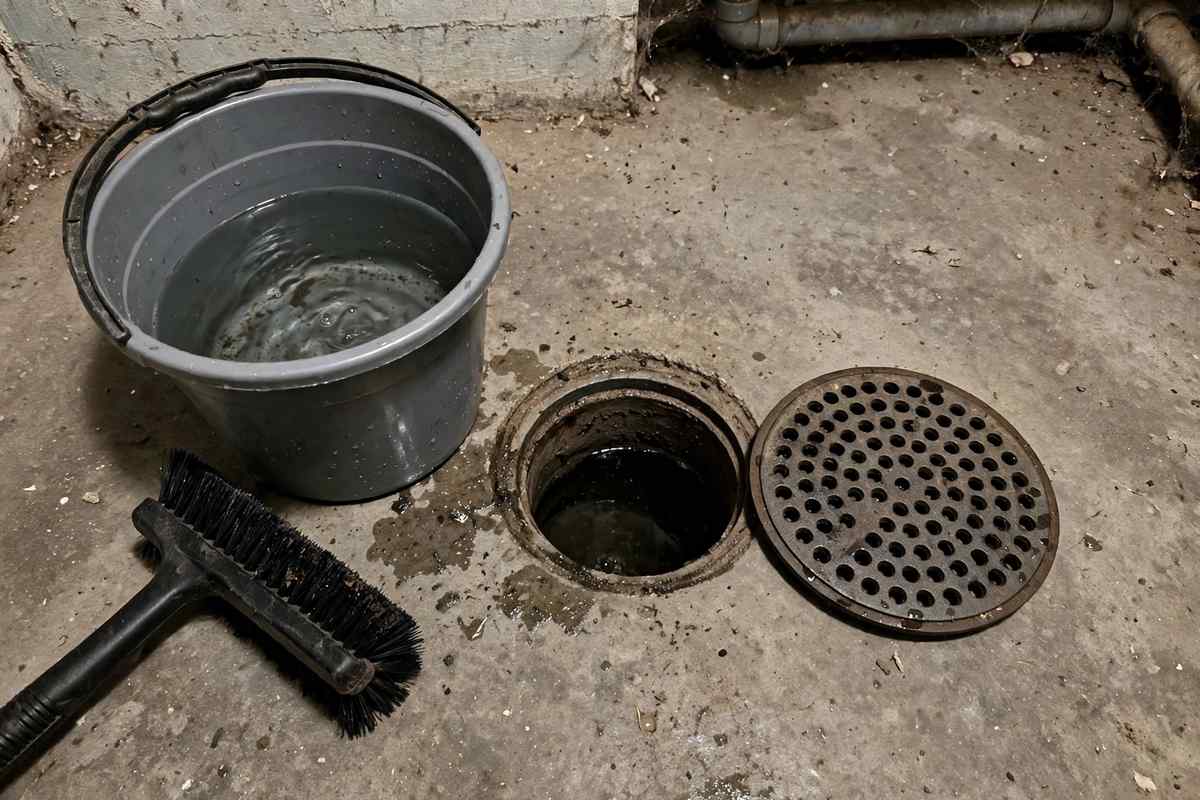
- A bucket or large pitcher of water (about one gallon)
- A stiff drain brush or old toothbrush
- Rubber gloves
- Vegetable oil, or a one-way floor drain trap seal
- Optional: a rubber or silicone drain cover with a gasket
Step 1: Find the Source of the Smell
Lift the drain cover and sniff the opening, then look down the pipe. If the smell is strongest at floor level and the drain sits in a rarely used spot, a dry trap is the likely cause. Shine a flashlight inside to check for standing water or visible buildup.
Rule out other sources before you continue. A broken toilet wax ring, a clogged plumbing vent, or a cracked drain pipe can also produce sewer smells (Summers Plumbing, 2026). If the odor is house-wide and not tied to one drain, skip to the FAQ and call a plumber.
Step 2: Refill the P-Trap With Water
Pour about a gallon of water down the drain to rebuild the water seal. This is the fastest fix and solves the most common cause of drain odor (HomeServe, 2026).
Use a full bucket for a deep basement floor drain, since the trap can sit several inches below the opening. Wait a minute, then sniff again. If the smell fades, the trap was dry and you can move on to making the seal last.
Step 3: Clean the Drain Throat
Scrub the inside of the drain opening and the underside of the cover with a brush and hot, soapy water. This removes the soap scum and sludge that cause odor even when the trap holds water.
Remove the cover first and wash it separately. Rinse everything with another bucket of water so the trap stays full when you finish.
Step 4: Keep the Water Seal From Evaporating Again
A layer of oil or a mechanical trap seal stops the water from evaporating, which is the reason the drain went dry in the first place. Pick one method based on how often the drain gets used.
| Method | How It Works | Best For | Cost |
|---|---|---|---|
| Oil layer | Floats on the water and slows evaporation | Drains used rarely or seasonally | Under $3 |
| One-way trap seal | Works like a check valve: liquid drains through, gas stays out (McMaster-Carr, 2026) | Drains that stay dry for months | $10-$25 |
| Monthly water refill | Restores the seal by hand | Drains with a reliable owner routine | Free |
For the oil method, pour in about a teaspoon of oil for each inch of pipe diameter after refilling the trap with water (Family Handyman, n.d.). A standard 3-inch floor drain takes about 3 teaspoons. The oil sits on top of the water and needs topping up every few weeks.
For a trap seal, press the rubber insert into the drain outlet below the cover, following the manufacturer’s sizing chart. Measure the pipe diameter first, since a loose seal leaks gas.
Step 5: Seal the Drain Cover Itself
Fit a snug cover over the drain so odor and pests cannot reach the room. Choose a rubber or silicone cover with a gasket edge, or an adjustable cover sized to the drain opening (McMaster-Carr, 2026).
Do not glue or permanently caulk a cover over a drain that serves a washing machine, a water heater, or a basement that could flood. A sealed drain cannot carry water away. Use a removable gasketed cover, so you can lift it for refills and cleaning.
Common Problems and How to Fix Them
| Problem | Likely Cause | Solution |
|---|---|---|
| Smell returns within days | Trap is siphoning dry from a venting problem | Call a plumber to check the vent |
| Smell is strongest after flushing | Toilet or tub draining pulls water from nearby traps (Plumbing Plus, 2026) | Have the vent inspected |
| Water drains slowly | Clog in the line | Use a drain snake, then repeat Steps 2-4 |
| Rotten egg smell throughout the house | Sewer line or wax ring problem | Hire a licensed plumber |
Frequently Asked Questions About Sealing a Smelly Drain Cover
The most common cause is a dry P-trap that lets sewer gas rise through the drain. Evaporation empties the trap when a drain goes unused for weeks. Pouring water down the drain usually restores the seal.
Refill unused drains about once a month, or more often in hot or dry weather. Heating systems dry indoor air in winter and can empty traps faster. Adding an oil layer or a trap seal extends the time between refills.
Yes, as a short-term fix. Oil floats on the trap water and slows evaporation (Family Handyman, n.d.). It needs replacing every few weeks, so a one-way trap seal is the better choice for drains you rarely check.
Sewer gas can contain methane and hydrogen sulfide (Plumbing Plus, 2026). Brief low-level exposure from a dry trap is an annoyance, but a strong or persistent smell needs prompt repair. Ventilate the room and call a plumber if anyone feels dizzy or ill.
You can cap a drain that you will never use again, but a plumber should do it to meet local code. A drain that serves an appliance or protects against flooding must stay open. A gasketed, removable cover is the safer option for most homes.
Call one if the smell returns within a week of refilling the trap, if multiple drains smell at once, or if you notice gurgling sounds. These signs point to vent blockages or damaged pipes, which a plumber must repair (Summers Plumbing, 2026).
Summary
- Refill the trap with about a gallon of water to restore the seal.
- Scrub the drain throat and cover to remove buildup.
- Add oil or a one-way trap seal so the water stays put.
- Fit a gasketed, removable cover over the drain.
- Call a plumber if the smell comes back or spreads.
References
- HomeServe – “How to Fix a Smelly Shower Drain: 5 Ways to Keep Drains Smelling Fresh” (2026): https://www.homeserve.com/blog/home-improvement/shower-drain-smells/
- Family Handyman – “Get Rid of Floor Drain Smell With Oil”: https://www.familyhandyman.com/article/get-rid-floor-drain-smell-with-oil/
- Summers Plumbing – “Sewer Gas Smell in the House? Causes & How to Fix It”: https://summersphc.com/bloomington/sewer-gas-smell-house/



Leave a Reply