
[Published: 2 October 2026 | Last updated: 2 October 2026]
Quick Summary
- A mattress cover turns yellow mainly because sweat and skin oils soak into the fabric and oxidize, the same way a cut apple browns.
- Humans can lose over a pint of sweat per night (Tom’s Guide, 2026), so the fabric gets wet with oils and moisture every night.
- Urine, spilled drinks, humidity, hard-water detergent residue, and aging waterproof coatings can also cause yellowing.
- Oxidation stains are mostly cosmetic. Yellow stains with a musty smell may mean bacteria or mold and need cleaning right away.
- Wash the cover every 1-2 months in warm water, dry it fully, and keep a washable protector under your sheets.
Why Does a Mattress Cover Turn Yellow?
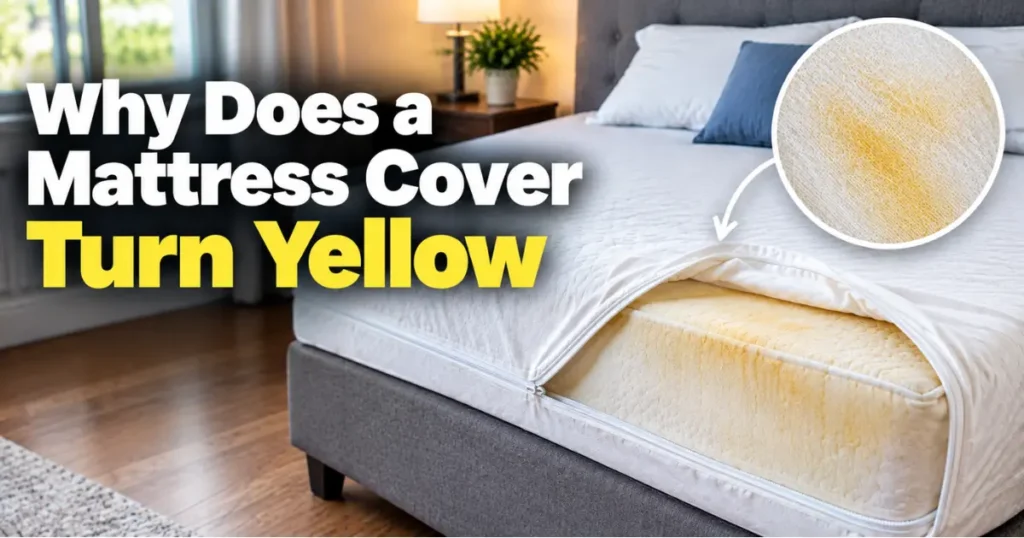
A mattress cover turns yellow because body sweat and natural skin oils soak into the fabric and react with oxygen. This reaction is called oxidation. The stains usually start colorless, then turn yellow or brown over time (Casper, 2026).
Oxidation is slow, which is why a yellow patch can seem to appear overnight. It had been building for months before you could see it (Tom’s Guide, 2026).
What Sweat and Body Oils Do to the Fabric
Sweat and body oils cause most yellow mattress cover stains. Sweat contains water, salts, urea, and lactic acid. Skin oil (sebum) is a mix of fats produced by glands on your face, scalp, and upper body.
Once these fluids sit in the fibers, oxygen changes their color. Heat from your body speeds this up (Mattress Miracle, 2026).
The stains show up where your body touches the cover most. That means the shoulders, hips, and lower back, and the head area if you sleep without a pillow protector (Sleep Foundation, 2026).
Other Causes of a Yellow Mattress Cover
Sweat is the most common cause, but five other things can yellow a cover or make the stains worse. Knowing which one applies helps you pick the right fix.
- Urine soaks in quickly and leaves a more obvious yellow patch with a sharp smell. This is the usual cause in children’s beds (Tom’s Guide, 2026).
- Spilled drinks, vomit, and saliva leave protein and sugar residue that yellows as it dries.
- Humid bedrooms let the mattress absorb moisture from the air, which speeds up oxidation of body oils (Mattress Miracle, 2026).
- Skin and hair products such as leave-in conditioner, night cream, and self-tanner transfer onto bedding and add to the stains.
- Detergent buildup from too much soap or fabric softener can leave a yellow film after repeated washes.
Waterproof layers also age. Cheap vinyl or polyurethane coatings can turn yellow on their own as they get older, even if the cover is clean.
Is a Yellow Mattress Cover Safe to Sleep On?
A cover that is yellow from oxidation alone is safe to sleep on if you keep up normal hygiene. One mattress expert told TechRadar that oxidation-only yellowing is completely safe in that case (TechRadar, 2026).
Some yellow stains do signal a problem. Dark yellow stains from heavy sweat and oil buildup can grow bacteria and cause odors that disrupt sleep. They can also attract dust mites, which worsen allergy, eczema, and asthma symptoms (Tom’s Guide, 2026).
Watch for these warning signs:
- A musty or sour smell that stays after washing.
- Black, green, or gray spots mixed in with the yellow, which can mean mold.
- Allergy symptoms that get worse in bed.
If you see any of these, wash the cover right away and check the mattress underneath.
How to Remove Yellow Stains From a Mattress Cover
Wash the cover first, using the hottest water the care label allows. Most cotton and polyester covers can be machine washed, and a normal wash removes light sweat staining.
For stubborn stains, pre-treat them with a mix of dish soap, hydrogen peroxide, and baking soda. The soap breaks down oils, the peroxide lightens the stain, and the baking soda absorbs moisture (Mattress Miracle, 2026).
Follow these steps:
- Check the care label for temperature and bleach limits.
- Apply the paste to the stain and leave it for 20-30 minutes.
- Wash with a normal cycle and an extra rinse to clear soap residue.
- Dry the cover completely on low heat or in open air.
Skip chlorine bleach. It can react with protein stains and make the yellow darker, and it breaks down fibers. Enzyme cleaners work well on urine but do little for oxidized sweat stains (Mattress Miracle, 2026).
Stains that have set for years may never fully come out, and that is normal. See our guide to getting stains out of a mattress cover for more methods.
How to Stop a Mattress Cover From Turning Yellow Again
The most effective prevention is a washable mattress protector that wraps around the whole mattress. One expert told TechRadar that a protector slows oxidation, but only if it covers the full mattress (TechRadar, 2026).
Four habits make the biggest difference:
- Wash the cover and sheets regularly. Every 1-2 months for the cover and weekly for sheets is a practical schedule.
- Do not go to bed with wet hair or freshly applied oily products.
- Keep the bedroom ventilated. Opening a window or running a fan on low reduces trapped moisture (Sleep Foundation, 2026).
- Dry covers fully before putting them back on the bed.
Using fewer laundry products also helps. A single measured dose of detergent with no fabric softener prevents buildup.
Frequently Asked Questions About Yellow Mattress Covers
Why does my mattress cover turn yellow even though I wash it?
Washing removes surface dirt, but sweat and oils that have already oxidized can stay in the fibers. Heavy detergent use, fabric softener, and cool or short wash cycles can also leave residue that looks yellow. Use a hot wash with an extra rinse and a stain pre-treatment.
Is a yellow mattress cover a sign of bed bugs or mold?
Usually no. Yellow staining is most often oxidized sweat and body oil. Mold looks like black, green, or gray spots and smells musty. Bed bugs leave small rust-colored or dark spots, not wide yellow patches.
How often should I wash a mattress cover?
Every 1-2 months is a good baseline. Wash it more often if you sweat heavily at night, sleep with pets, have allergies, or share the bed with a child.
Can I use bleach on a yellow mattress cover?
Avoid chlorine bleach. It can deepen the yellow on protein-based stains and weaken fabric. Hydrogen peroxide with baking soda and dish soap is a gentler option for most covers.
Does a yellow mattress cover mean I need a new mattress?
No. A yellow cover only means the cover has absorbed sweat and oils. Check the mattress itself. If it has dark stains, a smell, or sagging, it may need replacing. If it is clean, replace only the cover or add a protector.
Why does a white mattress cover turn yellow faster than a dark one?
The staining happens at the same rate on any color. White shows it first because there is no pigment to hide the color change.
References
- Sleep Foundation – How to Get Yellow Stains Out of a Mattress: https://www.sleepfoundation.org/mattress-information/how-to-get-yellow-stains-out-of-a-mattress
- Tom’s Guide – Yellow Stains on Mattress and Pillow: Causes and How to Get Them Out: https://www.tomsguide.com/wellness/mattresses/yellow-stains-on-mattress-and-pillow-causes-and-how-to-get-them-out
- TechRadar – This Is Why Your Mattress Has Yellow Stains, and How to Remove Them: https://www.techradar.com/news/yellow-mattress-stains-how-to-remove-them
Washing removes surface dirt, but sweat and oils that have already oxidized can stay in the fibers. Heavy detergent use, fabric softener, and cool or short wash cycles can also leave residue that looks yellow.
Usually no. Yellow staining is most often oxidized sweat and body oil.
Every 1-2 months is a good baseline. Wash it more often if you sweat heavily at night, sleep with pets, have allergies, or share the bed with a child.
Avoid chlorine bleach. It can deepen the yellow on protein-based stains and weaken fabric.
No. A yellow cover only means the cover has absorbed sweat and oils.
The staining happens at the same rate on any color. White shows it first because there is no pigment to hide the color change.


Leave a Reply