
[Published: September 1, 2026 | Last updated: September 1, 2026] | 8 min read
TL;DR
- For fresh stains, blot immediately and treat with a hydrogen peroxide and dish soap solution before the spill sets.
- For set-in or yellow stains, a paste of hydrogen peroxide and baking soda breaks down the stain and lifts odor at the same time.
- Use 3% hydrogen peroxide, the same concentration sold for first aid, and always spot-test a hidden corner first (Banner Mattress Online, 2026).
- Skip bleach. It can degrade waterproof backing and weaken the cover’s fibers over time.
- Air-dry the cover fully – usually 4 to 8 hours – before putting it back on the mattress, since trapped moisture invites mold.
What You Need Before You Start
You can treat most mattress cover stains with items already in your kitchen or bathroom cabinet. Gather everything first so you’re not stopping mid-treatment.
- 3% hydrogen peroxide (standard first-aid strength)
- Baking soda
- White vinegar
- A small amount of clear dish soap
- A spray bottle
- Clean white cloths or paper towels
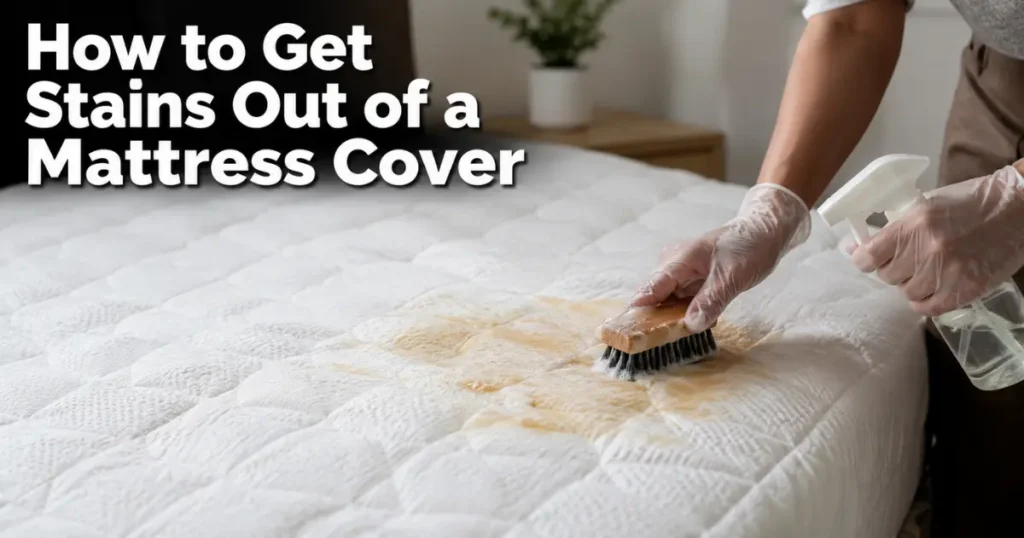
- A soft-bristle brush (for blood or protein-based stains)
If the cover is removable, take it off the mattress before you start. Treating stains while the cover is still in place risks pushing moisture into the mattress foam underneath.
Step 1: Identify the Stain Type
Match your treatment to the stain before you touch a bottle of anything. Protein-based stains like blood, sweat, and urine respond differently than oil-based or set-in yellow stains, and using the wrong method can set a stain permanently instead of removing it.
Blood, sweat, and urine are protein stains. They bond with fabric fibers when exposed to heat, so always use cold water on these, never hot (Mattress Miracle, 2026). Yellow discoloration from body oils and old sweat is usually an oxidized stain, which needs hydrogen peroxide rather than plain soap and water to break down.
Step 2: Vacuum the Area First
Run a vacuum with an upholstery attachment over the stained section before applying any liquid. This step is easy to skip, but it matters: loose dust and debris mix with your cleaning solution and grind back into the fabric if you don’t remove them first (Banner Mattress Online, 2026).
Focus on seams and any textured or quilted sections, since dust and skin cells collect there more than on flat areas.
Step 3: Treat Fresh Stains Immediately
Blot, don’t rub. Rubbing pushes the stain deeper into the fibers and can spread it. Press a clean, dry cloth firmly onto the spill to absorb as much liquid as possible.
Mix equal parts 3% hydrogen peroxide and clear dish soap in your spray bottle. Lightly mist the stain, let it sit for 5 to 10 minutes, then blot with a clean, damp cloth. This combination works well on fresh coffee, sweat, and most food or drink spills.
Step 4: Treat Set-In or Yellow Stains
Older stains need a stronger approach because the compounds have already bonded with the fabric. Sprinkle a layer of dry baking soda directly over the stain and let it sit for at least 15 minutes to loosen oxidized residue (Banner Mattress Online, 2026).
Mix 240 milliliters (one cup) of 3% hydrogen peroxide with two tablespoons of baking soda and one drop of dish soap in your spray bottle. Spray it over the treated area. The mixture will bubble slightly as it reacts. Let it sit for 15 to 30 minutes, then blot dry with a clean cloth.
Step 5: Handle Blood, Urine, and Sweat Stains Separately
For urine, apply a 1:1 solution of white vinegar and cold water using a cloth or spray bottle, then sprinkle baking soda on top to neutralize odor-causing uric acid (Sleep Foundation, 2024). For blood, apply the hydrogen peroxide and baking soda paste with a soft-bristle brush, working from the outer edge toward the center, and leave it until it stops bubbling, roughly an hour.
For colored or dyed mattress covers, swap hydrogen peroxide for equal parts white vinegar and water instead. Peroxide can lighten dyes and any wool fire barrier layer over time (Banner Mattress Online, 2026).
Step 6: Rinse and Blot
Once the treatment has had time to work, dampen a clean cloth with cold water and blot the entire area to remove any leftover solution. Your cloth should feel damp, not wet. Oversaturating the cover risks pushing moisture through to the mattress underneath.
Repeat the spray-and-blot cycle if the stain is still visible after the first pass.
Step 7: Dry Completely Before Reassembling the Bed
Never put a mattress cover back on, or into a dryer, while it’s still damp or stained. Heat sets stains permanently, and trapped moisture creates the right conditions for mold.
Plan on 4 to 8 hours of air-drying for a standard cover, and longer in humid climates (Banner Mattress Online, 2026). Open a window or run a fan to speed things up. Check the cover under good light before putting it back on the mattress; if a shadow of the stain remains, repeat the treatment rather than washing it, since machine heat can set a stain that hasn’t fully lifted.
Common Problems and How to Fix Them
| Problem | Likely Cause | Solution |
|---|---|---|
| Stain fades but a yellow ring remains | Oxidized oils weren’t fully broken down | Repeat the hydrogen peroxide and baking soda paste, letting it sit longer |
| Cover smells sour after drying | Moisture wasn’t fully removed before storage | Re-treat with baking soda alone and dry with a fan for several hours |
| Dye or color lightened after treatment | Hydrogen peroxide used on a colored or wool-barrier cover | Switch to a vinegar and water solution for future treatments |
| Stain reappears after a day or two | Treatment only reached the surface fibers | Repeat the full soak-and-blot cycle, and check that the cover was vacuumed first |
Frequently Asked Questions
How long does it take to get a stain out of a mattress cover?
Fresh stains usually lift within 10 to 15 minutes of treatment. Set-in or yellow stains need 15 to 30 minutes per application and may require two or three rounds before the stain is fully gone.
Can I put a mattress cover in the washing machine to remove a stain?
Yes, but only after pretreating and confirming the stain is no longer visible. Washing a stained cover on its own, in cold or warm water, works best, since hot water and dryer heat can set a stain permanently (Sleep Foundation, 2024).
What happens if I use bleach on a mattress cover stain?
Bleach can break down waterproof backing and weaken the cover’s fibers over repeated use. Hydrogen peroxide and vinegar remove most stains just as effectively without that risk.
Is hydrogen peroxide safe for all mattress cover fabrics?
Standard 3% hydrogen peroxide is generally safe on white or light-colored cotton and polyester covers, but it can lighten dyed fabric or a wool fire barrier layer. Spot-test a hidden corner first, and use a vinegar and water mix instead on colored covers (Banner Mattress Online, 2026).
Why do mattress cover stains turn yellow over time?
When a spill soaks into the fabric, it sits on the surface briefly before absorbing into the layers below. Once absorbed, the liquid oxidizes over days and weeks, turning a light spill into a visible yellow stain (Mattress Miracle, 2026).
Do I need a mattress protector if I already have a fitted sheet?
A fitted sheet doesn’t stop spills, sweat, or dust mites from reaching the mattress. A separate waterproof or water-resistant mattress protector catches liquid before it soaks through and is far easier to wash than the mattress itself.
Summary
- Match your cleaning method to the stain type: protein stains need cold water, oxidized yellow stains need hydrogen peroxide.
- Vacuum before treating, blot rather than rub, and never oversaturate the fabric.
- Skip bleach and hot water, both of which can set stains and damage the cover.
- Let the cover dry completely, 4 to 8 hours in most cases, before putting it back on the bed.
- Repeat treatment on stubborn stains rather than washing a cover that still shows a visible mark.
References

Leave a Reply