
TL;DR
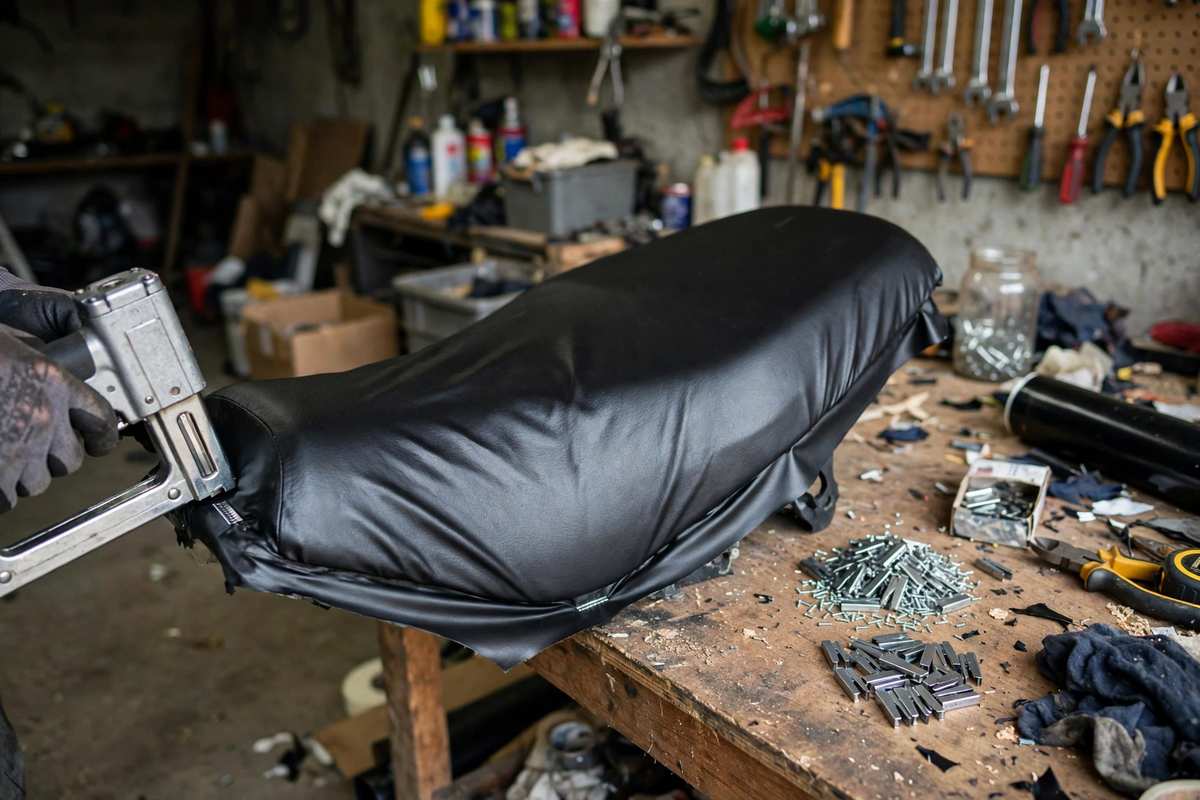
- Use 1/4 inch (6 mm) leg, 3/8 inch crown narrow-crown staples for most ATV seat covers. This is the size JetDrift (2025) recommends for powersport seat recovers.
- Go up to 5/16 inch (8 mm) only if the cover is thick or the seat pan is heavy plastic and 1/4 inch staples pull out.
- Staples that are too long punch through the pan or the cover and ruin the finish (Common Tread, 2019).
- Stainless steel staples resist rust on a seat that gets wet and muddy.
- Test on a scrap area of the pan first, then place a staple about every half inch (itStillRuns, 2023).
What Size Staples Should You Use for an ATV Seat Cover?
Use a 1/4 inch (6 mm) leg staple with a 3/8 inch crown. The crown is the flat top that spans the two legs, and the leg is the part that drives into the seat base. This size grips the plastic or composite pan without poking through into the foam or cover.
JetDrift (2025) lists 1/4 inch leg by 3/8 inch crown narrow-wire staples as a reliable choice for recovering powersport seats. Motorcycle installers give similar guidance, with Firestorm Motorcycles recommending roughly 1/4 inch or 7-10 mm staples.
Check that the staples fit your stapler before you buy. Heavy-duty staple families such as T50 cover many widths and leg lengths, so the label on the box matters more than the brand name.
Why Staple Length Matters on an ATV Seat
Staple length decides whether the cover holds or the seat gets damaged. Too short and the staple pulls out under tension. Too long and the legs come through the other side.
Common Tread (2019) warns that overlong legs can punch back through the cover or foam, or sit proud of the surface. A staple that sticks out is both a rider hazard and a tear point for the vinyl.
Think of it like a nail through a plank. The nail needs to bite deep enough to hold but stop before it exits the back.
How to Choose Between 1/4 Inch and Longer Staples
Start with 1/4 inch and move up only if the staples will not hold. Seat pan thickness is not always uniform, so one length may not work everywhere.
Common Tread (2019) notes that some seats need more than one staple length, depending on foam layers and pan thickness. Use this table as a starting point.
| Situation | Suggested Leg Length |
|---|---|
| Standard ATV seat, thin vinyl cover | 1/4 inch (6 mm) |
| Thick marine-grade vinyl or added foam layer | 5/16 inch (8 mm) |
| Thin or brittle plastic pan | 1/4 inch (6 mm), or shorter if legs poke through |
| Seat where staples keep pulling out | Next size up, tested on scrap first |
Many riders use staples one size longer than the factory ones. If you can, pull a staple from the old cover and measure it before you shop.
What Type of Staple Gun Works Best
A manual heavy-duty staple gun works, but an electric or pneumatic stapler saves your hand. A full seat takes a lot of staples, and a manual gun gets tiring fast.
Narrow-crown air staplers are common for seat work, and riders report using them on both motorcycle and personal watercraft seats. Confirm your tool accepts the leg length and crown width you picked. A weak gun may leave staples sitting above the surface, which a rubber mallet or flat-blade tap can fix. Dirt bike owners use the same stapling approach — see our guide to dirt bike seat cover staples.
Step-by-Step: Stapling a New Cover on Your ATV Seat
Step 1: Remove the Old Staples
Pry up the center of each staple with a flat-blade screwdriver, then pull it out with pliers. Leftover staples can snag the new cover, so clear the pan fully. Some seat cover makers suggest leaving the original cover in place, so check your kit’s instructions first.
Step 2: Position the Cover and Anchor It
Center the cover on the seat. Place two or three staples at the nose and the rear, pulling the cover taut as you go. Firestorm Motorcycles recommends starting at the front and rear, then working the middle.
Step 3: Staple Around the Seat
Think of the seat base as a clock face. Itstillruns (2023) places the first staples at 12, 3, 6, and 9 o’clock, then fills in with a staple about every half inch. Flip the seat over now and then to check that the vinyl is smooth.
Step 4: Pull Out Wrinkles and Re-Staple
If wrinkles remain, remove the staples in that area and pull the cover tighter. Staples should sit perpendicular to the direction you are pulling for the best holding power (Common Tread, 2019).
Step 5: Trim the Excess
Cut off extra material once the cover is secure. Leave at least 15-20 mm of cover past the staples so they have material to grip.
Common Mistakes When Choosing ATV Seat Staples
- Using staples that are too long, so the legs punch through the cover or leave sharp points under the seat.
- Buying staples that do not fit your stapler, then forcing them in and jamming the gun.
- Using plain steel staples on a seat exposed to mud and rain, which lets rust stain the cover.
- Skipping a test on scrap, which hides pan thickness differences until the cover is already ruined.
Frequently Asked Questions About ATV Seat Cover Staples
What size staples do I need for an ATV seat cover?
Use 1/4 inch (6 mm) leg, 3/8 inch crown narrow-wire staples for most ATV seats. Move to 5/16 inch (8 mm) only when the cover is thick or the pan is heavy and the shorter staples pull out.
Can I use T50 staples on an ATV seat?
Yes, if the leg length is right. T50 is a family of heavy-duty staples with different widths and lengths, so pick a short leg such as 1/4 inch and confirm it fits your stapler.
Are stainless steel staples worth it for an ATV seat?
Yes. ATV seats get wet, muddy, and washed often, and stainless staples resist the rust that can bleed onto vinyl. They cost a little more per box, which is minor against the price of a new cover.
How many staples does an ATV seat cover need?
Expect a lot. A common spacing is one staple every half inch (itStillRuns, 2023) around the base, with extra staples at the nose, rear, and any tight curves.
What do I do if a staple goes through the seat cover?
Pull it out with pliers and re-set it with a shorter staple in a fresh spot. If the legs came through the pan, drop to a shorter leg length for that area.
Should I remove the old seat cover first?
Not always. Some cover makers advise leaving the original cover on and only removing staples where needed (JetDrift, 2025). Follow the instructions that came with your kit.
Summary
- Start with 1/4 inch leg, 3/8 inch crown narrow-crown staples.
- Test on a scrap area before stapling the visible edge.
- Move up one length only if staples will not hold.
- Use stainless staples for wet-weather riding.
- Staple every half inch, pulling the cover taut as you go.
References
- Common Tread (CycleGear), “How to Reupholster a Motorcycle Seat: A Few Pointers” (2019)
- JetDrift, “How to Reupholster a Jet Ski Seat by Yourself”
- itStillRuns, “How to Reupholster an ATV Seat” (2023)
Use 1/4 inch (6 mm) leg, 3/8 inch crown narrow-wire staples for most ATV seats. Move to 5/16 inch (8 mm) only when the cover is thick or the pan is heavy and the shorter staples pull out.
Yes, if the leg length is right. T50 is a family of heavy-duty staples with different widths and lengths, so pick a short leg such as 1/4 inch and confirm it fits your stapler.
Yes. ATV seats get wet, muddy, and washed often, and stainless staples resist the rust that can bleed onto vinyl. They cost a little more per box, which is minor against the price of a new cover.
Expect a lot. A common spacing is one staple every half inch (itStillRuns, 2023) around the base, with extra staples at the nose, rear, and any tight curves.
Pull it out with pliers and re-set it with a shorter staple in a fresh spot. If the legs came through the pan, drop to a shorter leg length for that area.
Not always. Some cover makers advise leaving the original cover on and only removing staples where needed (JetDrift, 2025). Follow the instructions that came with your kit.



Leave a Reply