
[Published: September 10, 2026 | Last updated: September 10, 2026] | 8 min read
TL;DR
- Yes, bed bug mattress covers (encasements) work, but only as a containment tool, not a standalone cure – they trap bugs already inside a mattress and seal off hiding spots, they don’t stop bites from bugs elsewhere in the room.
- The EPA lists mattress and box spring encasements as a core part of Integrated Pest Management (IPM) for bed bugs (U.S. EPA, 2013).
- A Rutgers University field study found that encasements combined with steam and insecticide treatment reduced bed bug counts by 87-98% over eight weeks; encasements plus steam alone, with no insecticide, still produced a 23% reduction (Wang et al., Rutgers University, 2015).
- Look for a cover with full zip-around coverage, reinforced seams, and independent lab certification – cheap covers with weak zipper ends let bed bugs escape (Alaska Dept. of Environmental Conservation, 2024).
- Encasements should stay sealed for at least one full year to starve out and confirm elimination of any trapped bugs (U.S. EPA, 2013).
What Is a Bed Bug Mattress Cover?
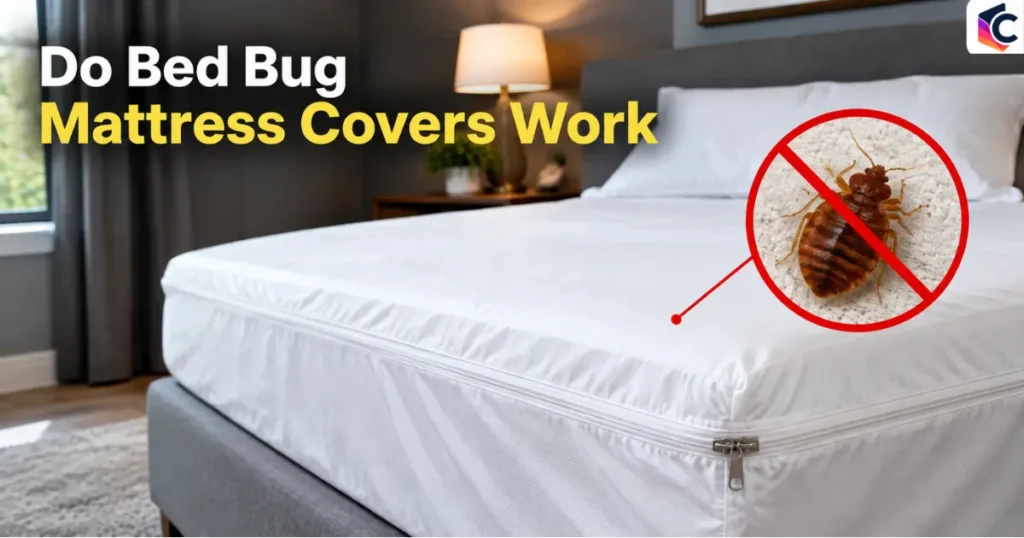
A bed bug mattress cover, also called an encasement, is a fabric shell that zips completely around a mattress or box spring. It’s not the same as a basic waterproof mattress protector, which only covers the top surface.
A true bed bug encasement wraps every side, including the bottom panel, and closes with a continuous zipper. That full seal is what separates a genuine bed bug-rated product from an ordinary mattress pad.
Do Bed Bug Mattress Covers Actually Work?
Yes, encasements work for two specific jobs: trapping bugs already inside your mattress and box spring, and removing the seams and crevices bed bugs use to hide. What they don’t do is stop bed bugs from crawling onto your bed from the floor, walls, or nearby furniture, or prevent every bite during an active infestation.
A properly fitted encasement helps contain bugs already living inside the mattress and blocks new ones from moving in, but it has no effect on bugs that reach the bed from somewhere else in the room (Terminix, 2026). That distinction matters: an encasement is one tool in a broader control plan, not a replacement for treating the rest of the room.
How the Trapping Mechanism Works
An encasement doesn’t repel or poison bed bugs. It physically blocks their exit. Bugs sealed inside a mattress lose access to a blood source and die off over time, since they can no longer feed or escape once the zipper is closed (Alaska Dept. of Environmental Conservation, 2024).
The EPA recommends leaving an encasement on for a full year once it’s installed on an infested mattress or box spring, so that bugs already trapped inside have time to starve and any eggs finish their life cycle before the cover comes off (U.S. EPA, 2013).
What the Research Shows
Independent evidence on encasements used completely alone is limited, because most studies test them as part of a combined treatment plan. That’s representative of how pest professionals actually use them: as one layer, not the whole strategy.
In a Rutgers University field study across two New Jersey apartment buildings, researchers installed vinyl mattress encasements and applied steam treatment in every unit, then added one of three insecticide products in three treatment groups while a control group received only encasements and steam. After eight weeks, the insecticide-treated groups saw 87-98% reductions in bed bug counts, and the encasement-and-steam-only control group still achieved a 23% reduction (Wang et al., Rutgers University, 2015).
The takeaway: encasements contribute measurably to control, but they perform best paired with steam, heat treatment, or insecticide, not used by themselves.
What Makes a Cover Actually Bed Bug-Proof
Not every product labeled “bed bug proof” meets a real standard. Several agencies and pest control companies flag the same weak points: incomplete coverage, loose fabric weave, and low-quality zippers.
Many mattress covers on the market don’t actually work against bed bugs, and some products marketed as bed bug proof aren’t correctly designed for the job (Alaska Dept. of Environmental Conservation, 2024). Before buying, check for these three things:
- Full encasement, not partial coverage: The cover must wrap the entire mattress and box spring separately, including the bottom panel, since bed bugs hide in every seam and corner, not just the top.
- A continuous, reinforced zipper: The best bed bug covers fully zip around the mattress and fit snugly (Western Exterminator, 2025), and a strip seal over the zipper track closes the one gap bugs most often exploit.
- Independent lab certification: Look for testing by an entomologist or accredited lab rather than marketing claims alone. This confirms the fabric and seams have actually been tested against live bed bugs, not just described as bug-proof.
Common Mistakes People Make with Mattress Covers
- Removing the encasement too early: Taking the cover off after a few weeks lets any surviving eggs or bugs back out before they’ve starved. Leave it sealed for a full year.
- Skipping the box spring: Bed bugs hide in box spring frames as much as mattresses. Encasing only the mattress leaves an active hiding spot untreated.
- Treating the cover as a complete solution: An encasement can help but won’t solve an infestation on its own, since bed bugs also hide in furniture, baseboards, and behind walls (Western Exterminator, 2025).
- Buying a waterproof mattress protector instead of a true encasement: A protector that only covers the top surface has no effect on bugs hiding in the sides or bottom seams.
Frequently Asked Questions About Bed Bug Mattress Covers
Do bed bug mattress covers really work?
Yes, for trapping bugs already inside a mattress or box spring and eliminating their hiding spots. They don’t stop bugs from other parts of the room from reaching you, so they work best as one part of a full treatment plan.
How long should I leave a bed bug encasement on?
The EPA recommends leaving encasements in place for a full year, giving trapped bugs and any unhatched eggs enough time to die off completely before the cover comes off (U.S. EPA, 2013).
Can bed bugs get through a mattress encasement?
A properly made encasement with a continuous zipper and reinforced seams should be impenetrable. Cheaper or poorly designed covers, especially ones with gaps at the zipper end, can still let small nymphs escape.
Do I need to encase the box spring too?
Yes. Bed bugs hide in box spring frames as readily as mattresses, and skipping it leaves an active source of new bites even with the mattress fully covered.
Should I use a pesticide-treated mattress cover?
General pest management guidance favors a plain physical encasement over pesticide-infused covers, since the value comes from sealing the bugs in, not from chemical exposure on a surface you sleep on directly.
Will a mattress cover alone get rid of an infestation?
No. Research on combined treatments shows encasements contribute to reduction but perform far better paired with steam or professional treatment than used by themselves.
Key Takeaways
- Mattress covers trap and starve bed bugs already inside your mattress and box spring, but they don’t stop bites from bugs elsewhere in the room.
- Full encasement of both mattress and box spring, a continuous reinforced zipper, and independent lab certification separate real bed bug covers from mattress protectors that just claim to be bug-proof.
- Combined with steam or insecticide treatment, encasements were part of an 87-98% reduction in bed bug counts in a Rutgers University field study; used alone they still contributed to a measurable reduction.
- Leave the encasement sealed for a full year and pair it with treatment of the rest of the room for the best results.
References
- U.S. Environmental Protection Agency, “Top Ten Tips to Prevent or Control Bed Bugs” – epa.gov/bedbugs
- Wang, C., Singh, N., Cooper, R. (Rutgers University), “Field Study of the Comparative Efficacy of Three Pyrethroid/Neonicotinoid Mixture Products for the Control of the Common Bed Bug, Cimex lectularius,” Insects, 2015 – ncbi.nlm.nih.gov/pmc/articles/PMC4553538
- Alaska Department of Environmental Conservation, “Mattress Encasements for Bed Bugs” – dec.alaska.gov

Leave a Reply