
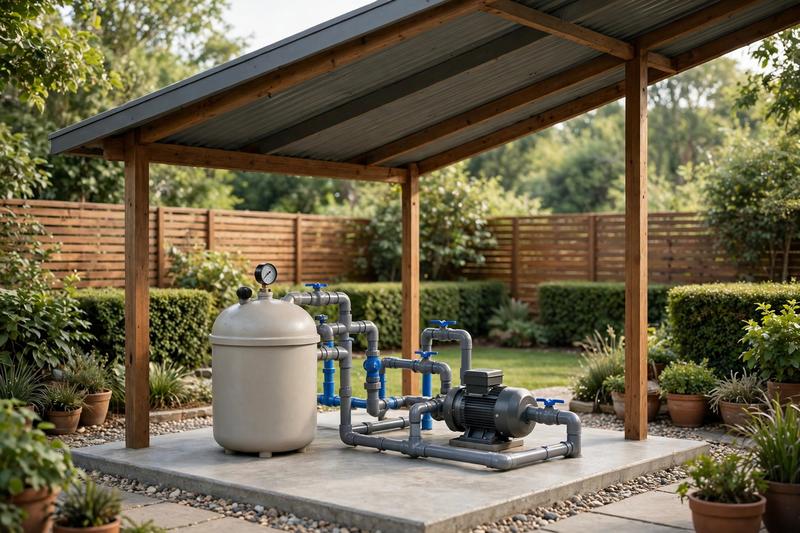
Last July, my pool filter tank cracked open like a dry melon. That pricey mess made me ask, do pool filters need to be covered outside?
I spent five years testing tarps, shade roofs, and open air on my pad. Some covers saved my gear, while tight wraps nearly burned out my pump.
Do Pool Filters Need to Be Covered in Every Season?
Yes, pool filters need overhead shade from sun and snow, but they must breathe. Wrapping a running filter tight traps heat and ruins motor seals fast.
When I got my first pool, I wrapped the whole pad in blue plastic. Within two weeks, my pump motor smelled like burnt toast.
Filter tank and valves: Block direct midday sun so UV rays do not crack the plastic shell.
Pump motor: Leave 12 inches of open air around vents so heat escapes fast.
Pressure gauge and pipes: Shield small parts from hail, frost, and falling tree branches.
My Golden Rule: Shade the top from harsh weather, but leave the sides open while water runs.
| Option I Tried | Best Use Case | My Honest Verdict |
|---|---|---|
| Open-air shade roof | Hot, sunny backyards | Best year-round choice |
| Loose winter tarp | Closed pools in snow | Great for off-season only |
| Tight vinyl bag | Never for running pumps | Overheated my motor fast |
| Louvered wood shed | Noisy pumps near patios | Cuts noise and sun |
Why Covering a Pool Filter Helps or Hurts Your Gear
A smart cover blocks sun damage, while a bad cover traps deadly motor heat. Outdoor filter pads face UV rays, driving rain, and frost every single week.
How Sun and Frost Wreck Uncovered Filters
Direct sunlight breaks down fiberglass and plastic tanks within three to five summers. Once the outer coat turns chalky white, water pressure splits the seam.
Brittle multiport valves: The top handle (which switches filter modes) snaps off after heavy sun baking.
Cracked pressure gauges: Water trapped inside the dial freezes at 32°F and bends the needle.
Dry rubber O-rings: Seals shrink and leak when summer heat hits 95°F on bare pads.
| Common Advice | My Real-World Test | Better Move |
|---|---|---|
| Wrap pumps tight in winter | Trapped damp air rusted bolts | Leave bottom edges open |
| Leave tanks bare all summer | Faded fiberglass in two years | Add a vented roof |
| Use dark black tarps | Raised pad heat by 20°F | Pick light tan covers |
| Cover right after shutoff | Steam soaked the motor coils | Let gear cool first |
How Much Airflow and Clearance Your Filter Needs
Every running pool filter setup needs 12 to 18 inches of clear air around it. Tight boxes choke cooling fans and make filter cleaning a sweaty chore.
Do Pool Filters Need to Be Covered Differently by Type?
Yes, sand, cartridge, and DE filters each need custom space for air and cleaning. Sand tanks stay closed, while cartridge and DE (diatomaceous earth) tanks open on top.
I learned this after building a low roof six inches above my cartridge tank. I had to unbolt the roof just to lift the lid out.
Space Check: Keep 24 inches clear above your filter lid so grids slide straight out.
| Size / Scenario | Exact Amount | How Often |
|---|---|---|
| Side air gap | 12 to 18 inches | Check every spring |
| Top lid clearance | 24 inches minimum | Measure before building |
| Roof overhang | 6 to 10 inches | Extend past tank edge |
| Wall vent space | 30% open slats | Clear leaves monthly |
When Do Pool Filters Need to Be Covered for Winter?
Winter covers keep snow, ice, and wet leaves out of valves and gauges.
My Step-by-Step Cover Prep Routine
Prep your equipment pad in ten minutes before placing any winter cover on top. Clean, dry gear prevents rust spots, green mold, and chewed wires from mice.
Cut power at the breaker: Never drape cloth or plastic near live wires or a running timer.
Rinse and dry the tank: Spray off pool salt and let the shell dry for two hours.
Pull the bottom drain plug: Empty all water from the tank before night temps hit 32°F.
Clip the cover loosely: Fasten corners with bungee cords while leaving a two-inch gap below.
Winter Tip: Tuck two peppermint oil pouches inside the base to keep nesting mice away.
| Step | Time Needed | Key Shortcut |
|---|---|---|
| Flip breaker switch | 1 minute | Label the panel clearly |
| Rinse salt and dirt | 3 minutes | Use a gentle hose spray |
| Drain tank water | 4 minutes | Open top air relief valve |
| Clip vented cover | 2 minutes | Use elastic tarp bungees |
Rookie Mistakes I Made Covering My Pool Filter
Sealing a wet filter inside a plastic bag was my biggest and priciest mistake. Trapped winter moisture rusted my pump shaft and fogged up my pressure gauge.
Buying thin blue tarps: Cheap tarps shred in 30 mph wind and clog pump vents with plastic strips.
Blocking the rear fan: Pushing a cover against the motor back stops cool air from reaching coils.
Covering a hot pump: Trapping warm motor heat creates heavy sweat inside the cover by morning.
Hard Lesson: If water droplets form inside your cover, lift the bottom edge two inches higher.
| My Early Mistake | What Happened | What I Do Now |
|---|---|---|
| Tied tarp tight to ground | Condensation rusted motor bolts | Leave 2-inch bottom gap |
| Covered a warm pump | Trapped steam fogged gauges | Wait 60 minutes after shutoff |
| Built a solid wood box | Motor overheated in July | Add slatted louver vents |
| Ignored winter mice | Chewed pressure switch wires | Place peppermint oil packets |
Better Ways to Protect Filters Without Full Covers
Simple shade roofs and UV coatings protect your filter tank with zero heat buildup. These swaps cost less than custom sheds and take under an hour to set up.
Smart Swaps I Use Around My Equipment Pad
Pairing a slanted roof with marine UV spray keeps tanks looking new for years. You get full rain and sun defense while keeping gauges easy to read.
Slanted metal awning: Mount a 3-by-4-foot panel 30 inches above the pad to shed rain and hail.
Marine UV protectant: Wipe 303 Aerospace spray onto plastic valves every April to stop sun fade.
Vented faux rock shell: Drop a hollow resin rock over small pumps for instant shade and style.
Best Budget Fix: A $45 roof panel on four posts outlasted three $60 vinyl covers in my yard.
| Warning Sign | Real Cause | My 2-Minute Fix |
|---|---|---|
| White powder on tank | UV sun damage | Wipe with marine UV spray |
| Pump shuts off hot | Blocked rear air vent | Pull cover back 12 inches |
| Sweat inside plastic cover | Zero bottom airflow | Prop hem up with bricks |
| Green moss on valve | Trapped shade dampness | Trim nearby bushes back |
FAQs for Do pool filters need to be covered
Do pool filters need to be covered in the summer?
Pool filters do not need full covers in summer, just overhead shade. Blocking direct UV rays stops plastic cracks while open sides keep motors cool.
Can I run my pool pump with a cover on it?
Never run your pool pump inside a closed cover or tight tarp. Motors need 12 to 18 inches of open air around vents so heat escapes safely.
Should I cover my pool filter during winter?
Yes, cover a drained pool filter in winter using a breathable, vented cover. Leave a two-inch gap at the bottom so trapped moisture cannot rust parts.
What is the best cover for outdoor pool equipment?
An open-sided shade roof or louvered shed works best for outdoor gear. Both options block sun, rain, and hail while giving your pump full airflow.
Does sun damage actually ruin pool filter tanks?
Yes, harsh UV rays break down fiberglass and plastic tanks in three to five years. Sun exposure turns shells chalky, weakens seams, and cracks valves.
Can I use a regular blue tarp over my pool filter?
Skip cheap blue tarps because they shred in wind and trap dampness. Choose a heavy, breathable canvas cover or build a simple slanted roof instead.
Your Next Five-Minute Step to Protect Your Pool Filter
Do pool filters need to be covered? Only from harsh sun, heavy rain, and winter ice—never from fresh air. Give your tank shade on top and open air on the sides. Your system will run strong for ten years.
Walk out to your equipment pad today and check for chalky sun fade or tight bushes. Clear 18 inches of space around your pump motor right now. That five-minute chore prevents overheating and saves hundreds in early repairs.


Leave a Reply