
[Published: July 26, 2026 | Last updated: July 26, 2026] | 8 min read
TL;DR
- Seat covers do not damage car seats in most cases – the risk comes from cheap materials, bad fit, and trapped moisture, not the cover itself (Black Duck, 2026).
- The main damage risks are friction wear, trapped moisture leading to mildew, heat buildup, and bunching that presses seams into the seat (Black Duck, 2026; CarAwareness, 2025).
- Well-fitted covers made from breathable, natural fiber material actually protect leather from UV cracking, spills, and scratches (TigerTough, 2026; Wet Okole, 2021).
- Leather and fabric seats face different risks – leather is more exposed to friction and slipperiness, while fabric absorbs spills fast (CalTrend, 2021).
- Choosing a custom fit, breathable cover and installing it correctly removes nearly all of the damage risk.
Do Seat Covers Damage Car Seats?
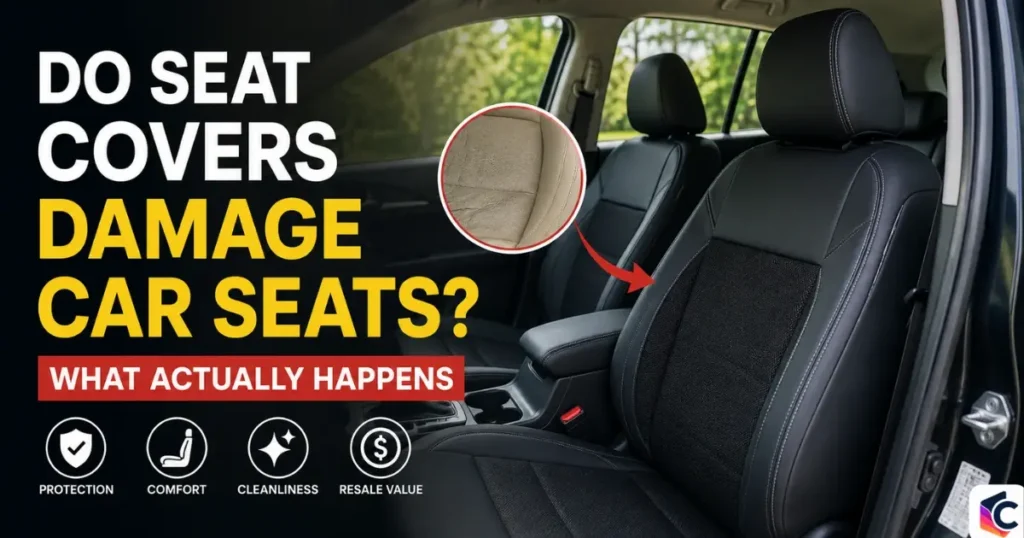
No, not in most cases. A properly fitted seat cover made from a quality, breathable material protects the seat underneath rather than harming it (TigerTough, 2026).
Damage happens when the cover is cheap, fits poorly, or traps moisture against the seat for long periods. The cover itself isn’t the problem – the material and the fit are.
This matters because car owners often buy seat covers to protect resale value, only to worry the fix will create a new problem. The seats under a bad cover can end up worse than seats left bare.
How Seat Covers Can Actually Cause Damage
Seat covers cause damage through four main mechanisms: friction, trapped moisture, heat retention, and poor fit.
Friction wear. A loose or rough-textured cover rubs against the seat every time someone gets in or out. Over months, that friction can wear down leather finish or fabric fibers (Black Duck, 2026).
Trapped moisture. Covers that don’t breathe hold in humidity from sweat, spilled drinks, or wet clothing. That moisture sits against the seat and can lead to mildew or discoloration (CarAwareness, 2025).
Heat retention. Some synthetic materials trap heat instead of releasing it. On leather seats, sustained heat speeds up drying and cracking (Black Duck, 2026).
Poor fit and adhesives. A seat cover that bunches up presses its seams into the leather underneath, leaving marks. Cheap covers that rely on adhesive strips can pull at the seat’s finish when removed (Black Duck, 2026).
How Seat Covers Protect Your Seats
A correctly chosen seat cover blocks the three things that damage seats fastest: sun, spills, and sharp objects.
UV rays fade and crack leather over time, and they fade fabric color the same way. A cover placed over the seat absorbs that exposure instead of the seat itself (Wet Okole, 2021).
Spills are the second risk. Leather resists liquid longer than fabric, but any spill left unattended can stain both materials. A cover intercepts the spill before it reaches the seat (CalTrend, 2021).
Sharp objects – keys, jewelry, pet claws, kids’ toys – can gouge leather permanently since cuts and rips in leather can’t be repaired. A cover adds a layer that takes the damage instead (CalTrend, 2021).
Leather Seats vs Fabric Seats: Different Risks
Leather and fabric seats respond differently to seat covers, so the right cover material depends on what’s underneath.
| Risk Factor | Leather Seats | Fabric Seats |
|---|---|---|
| Spill absorption | Slow – liquid sits on the surface longer | Fast – stains set in almost immediately |
| Friction damage | Higher – leather scuffs and scratches more easily | Lower – fabric tolerates rubbing better |
| Slipperiness | High – covers can shift and bunch | Low – covers stay in place more easily |
| Sun damage | Cracking and fading | Fading and thread weakening |
| Moisture trapping | Can dry out or discolor | Can develop mildew smell |
Leather owners need a cover that fits snugly enough to stop shifting but breathes enough to avoid trapping heat. Fabric owners can prioritize waterproofing since spill absorption is the bigger threat (CalTrend, 2021).
How to Choose a Seat Cover That Won’t Cause Damage
Pick a cover based on fit, material, and breathability – in that order.
Get a custom or vehicle-specific fit. A cover built for your exact seat model won’t bunch, shift, or press seams into the upholstery. Universal covers are the most common source of friction and marking (Black Duck, 2026).
Choose a breathable material. Canvas and natural-fiber blends let air circulate, which prevents the moisture buildup that causes mildew and discoloration. Fully sealed synthetic covers are more likely to trap heat and humidity (Black Duck, 2026).
Avoid adhesive-backed covers on leather. Adhesives can pull at the leather’s finish when the cover is removed or repositioned. Covers that use straps, hooks, or a tailored elastic fit are safer for leather (Black Duck, 2026).
Check for a snug but not tight fit. Too loose causes friction from rubbing. Too tight, especially with neoprene, can leave pressure marks or indentations. A proper fit sits flush without pulling (CarAwareness, 2025).
Common Mistakes to Avoid with Seat Covers
- Buying a universal-fit cover for a leather interior: Universal covers rarely sit flush, and the extra movement creates friction. Use a model-specific cover instead.
- Leaving a wet cover on the seat: A cover soaked from rain, sweat, or a spill traps that moisture against the seat. Remove and dry a wet cover rather than letting it sit.
- Choosing the cheapest available cover: Low-cost covers are more likely to use adhesives, stiff seams, or non-breathable synthetic fabric. Spend more on fit and material to avoid marks and moisture damage.
- Ignoring the seams: Covers with hard or raised seams can press into leather over time. Check for a cover with covered or flat-felled seams before buying.
Frequently Asked Questions About Seat Cover Damage
Do seat covers damage leather car seats?
Not if the cover fits correctly and is made from a breathable material. Damage typically comes from cheap materials, poor fit, or trapped moisture rather than the presence of a cover itself (TigerTough, 2026).
Can seat covers cause mold or mildew?
Yes, if the material doesn’t breathe and moisture from spills, sweat, or humidity stays trapped against the seat. Choosing a breathable fabric and drying a wet cover promptly prevents this (CarAwareness, 2025).
Are neoprene seat covers safe for leather seats?
Neoprene is durable and water-resistant, but its snug fit can leave pressure marks or indentations on leather if it’s too tight. A properly sized neoprene cover avoids this issue (CarAwareness, 2025).
Do seat covers protect resale value?
Yes. Seat covers block UV fading, spill stains, and scratches from sharp objects, all of which lower resale value if they reach the original seat (Wet Okole, 2021).
How long can I leave a seat cover on before checking for damage?
There’s no fixed rule, but check underneath every few months for early signs of moisture, discoloration, or seam marks so any issue gets caught before it sets in.
Key Takeaways
- Seat covers themselves don’t damage seats – poor material choice, bad fit, and trapped moisture do.
- A custom-fit, breathable cover protects leather and fabric from UV, spills, and cuts.
- Leather seats need snug but breathable covers; fabric seats need better waterproofing.
- Skip adhesive-backed and universal-fit covers on leather to avoid marks and finish damage.

Leave a Reply