
TL;DR
- Latex paint is bad for drains in anything beyond a small, occasional brush rinse, because liquid paint can clog pipes and damage septic systems and sewage treatment plants.
- Latex paint is water-based and is not classed as hazardous waste, but that does not make it drain-safe.
- Septic systems are far more vulnerable than city sewers, since paint disrupts the bacteria that break down waste.
- Storm drains are off limits for any paint or rinse water, because they flow to local waterways untreated.
- The safe way to dispose of leftover latex paint is to harden it and put the can in the trash, or drop it off at a paint recycling site.
Is Latex Paint Bad for Drains?
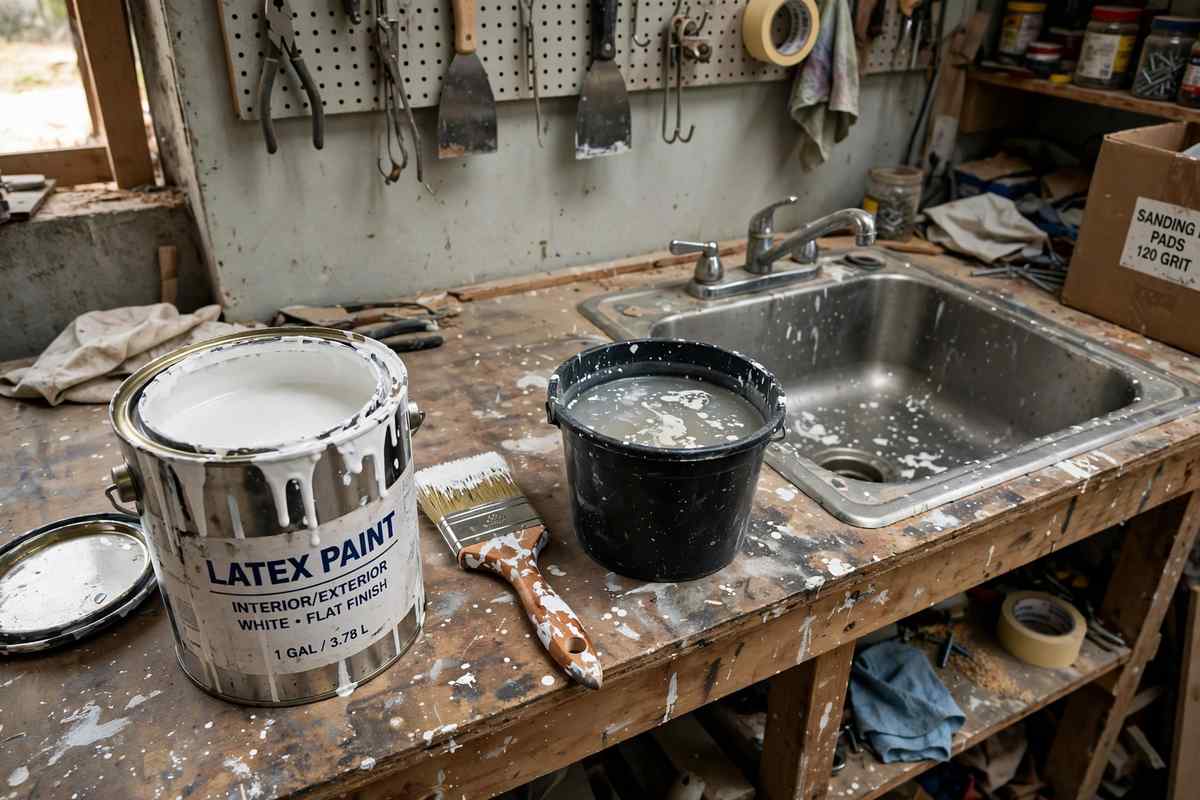
Yes. Pouring leftover latex paint down a household drain can clog pipes, strain wastewater treatment, and damage septic systems. A small amount of rinse water from cleaning a brush is the one exception, and only when it is occasional and the drain connects to a city sewer.
The American Coatings Association (ACA) is the trade group for paint makers. It says paint does not have to be treated as hazardous waste, but latex paint still should not be poured down the drain. The confusion comes from the label “water-based.” Water-based describes how the paint is thinned. It does not describe what the paint does inside a pipe.
What Happens When Latex Paint Goes Down a Drain
Latex paint dries into a thin plastic film once the water leaves it. Inside a pipe, that film builds up on the walls, narrows the opening, and catches hair, grease, and soap scum. Think of pouring melted wax down a sink: it looks like liquid for a minute, then it sets where you cannot reach it.
The damage does not stop at your property line. Clemson University’s Home and Garden Information Center says improper paint disposal and brush cleaning can strain municipal wastewater treatment systems, damage septic systems, and pollute groundwater and downstream waters.
The City of Fort Collins adds that many of the chemicals in paint can bypass wastewater treatment or septic systems and contaminate lakes, streams, or groundwater. Treatment plants are built to process human waste, not coatings.
Why Latex Paint Is Worse for Septic Systems Than City Sewers
A septic system is more at risk than a city sewer because a septic tank relies on a living colony of bacteria to break down waste. Paint disrupts that colony, and a damaged tank can fail without much warning. A city sewer dilutes a small amount of paint across a much larger system.
Clemson’s guidance puts it plainly: septic systems are designed for human waste and toilet paper, and dumping other materials in them can upset the bacterial balance and lead to septic failure.
King County, Washington, warns that liquid latex paint can damage or clog septic fields and sewage treatment plants. A clogged septic field is one of the most expensive plumbing repairs a homeowner can face, so treat the septic drain as a no-paint zone.
Is It Ever Okay to Rinse a Paintbrush in the Sink?
Rinsing a brush in the sink is acceptable if it is occasional, the brush has been scraped or wiped first, and your home connects to a city sewer. It is a bad habit for septic homes and for anyone washing out several rollers and trays after every project.
The ACA’s own guidance draws the line clearly. Small amounts of latex paint can be washed down the drain to a septic system or treatment plant, but only for occasional brush, roller, or applicator cleanup, and frequent disposal of rinse water can harm a septic system.
Wipe as much paint as you can off the tool before it touches water. The less paint that reaches the sink, the less the pipes have to handle.
Why Storm Drains Are Off Limits for Paint
Storm drains carry water to local streams, rivers, and lakes without treatment, so no paint or rinse water should ever go into one. This applies to driveways, gutters, and street inlets, not just the grate at the curb.
Dougherty County, Georgia, states that everything collected in drainage systems returns to the water supply untreated. The City of Kirkland, Washington, goes further and notes that it is illegal to let paint, stains, or rinse water from paint equipment enter a storm drain, surface water, or groundwater. Local rules vary, so check your city or county website before a large project.
How to Dispose of Leftover Latex Paint Safely
The safest way to dispose of leftover latex paint is to harden it into a solid and put the can in your regular trash, or to drop it off at a paint recycling program. Never put liquid paint in the garbage, because it can leak and cause the same problems it causes in drains.
Follow these steps to harden a small amount of paint:
- Stir cat litter, sawdust, or shredded newspaper into the can. Rutherford County, Tennessee, notes that kitty litter is the least expensive way to solidify paint, and more can be added after an hour if the paint is still wet.
- Let the mixture set until it no longer moves when you tilt the can.
- Leave the lid off and place the can in your trash container. King County confirms that hardened latex paint can go in the garbage with the lid off.
For a larger amount, line a cardboard box with a plastic bag and pour in the paint a layer at a time. Let each layer solidify before adding the next.
Another option is recycling. PaintCare drop-off sites accept leftover house paint and primers for free in participating states, funded by a fee on new paint sales. Availability depends on your state, so search for your nearest location.
How to Clean Brushes and Rollers Without Harming Your Plumbing
The best way to clean paint tools is to remove as much paint as possible before any water touches them, then rinse the rest into a sanitary sewer connection. This protects your pipes and keeps paint out of the ground.
- Scrape excess paint from brushes and rollers back into the can.
- Wipe the tool with a rag or paper towel.
- Rinse in a utility sink or bucket, not a kitchen sink if you can avoid it.
- Let the rinse water settle in the bucket, then pour the clear water into a sink or toilet connected to a city sewer. Kirkland’s guidance says to dispose of latex rinse water in a toilet, utility sink, or sanitary sewer clean-out.
- Solidify the leftover sludge the same way you would leftover paint and throw it away.
Septic owners should skip steps 4 and the sink entirely. Use an absorbent material to soak up the rinse water and put the solid waste in the trash.
Quick Reference: What Is Safe for Latex Paint and Drains
| Situation | Safe? | What to do instead |
|---|---|---|
| Pouring leftover liquid paint down any drain | No | Harden it or recycle it |
| Rinsing one brush occasionally, city sewer | Usually | Wipe the brush first |
| Rinsing brushes and rollers regularly, septic system | No | Absorb rinse water and trash it |
| Dumping paint or rinse water in a storm drain | No, and often illegal | Use a sanitary sewer or solidify |
| Throwing a hardened can in the trash | Yes | Leave the lid off |
| Throwing liquid paint in the trash | No | Harden it first |
Common Mistakes to Avoid with Latex Paint and Drains
Most latex paint drain problems come from a few repeated habits. Each one has a simple fix.
Assuming “water-based” means “drain-safe”: the label describes how the paint is thinned, not how it behaves in plumbing. Treat all liquid paint as something to harden or recycle.
Washing every tool in the kitchen sink: paint solids settle in the trap and bends. Use a utility sink or bucket instead.
Air drying or leaving cans open without checking local rules: some institutions and cities restrict how paint can be solidified, so confirm your local waste rules first.
Rinsing tools outside: this sends paint into storm drains and soil. Always rinse indoors into a sanitary sewer connection.
Putting wet paint in the trash: liquid paint can leak in the truck and landfill. Always harden it first.
Frequently Asked Questions About Latex Paint and Drains
Yes, in anything beyond a small rinse. Liquid latex paint can build up on pipe walls, clog drains, and strain sewage treatment plants. The ACA says only occasional, small-scale brush and roller cleanup is acceptable.
No. Running water dilutes the paint temporarily but does not stop it from sticking to pipes or reaching a septic tank or treatment plant. Harden leftover paint or take it to a recycling site.
No. Paint can upset the bacteria that a septic tank needs to break down waste, which Clemson’s extension guidance links to septic failure. Keep paint and regular rinse water out of a septic system.
Let solids settle in a bucket, then pour the clear water into a toilet or utility sink connected to a city sewer. On a septic system, soak the water up with cat litter or sawdust and put the solid waste in the trash.
Usually not. The ACA says paint does not have to be treated as hazardous waste. Oil-based paint is different and typically goes to a household hazardous waste site, so never mix the two.
Mix it with cat litter, sawdust, or shredded newspaper until it hardens, then throw the can away with the lid off. This costs little and takes under an hour of active work in most cases.
Yes, a small amount of paint washed from hands is minor and goes to the same place as brush rinse water. Wipe your hands with a rag first and avoid heavy washing on a septic system.
References
- Clemson University Home and Garden Information Center, “Proper paint disposal and brush cleaning”: https://hgic.clemson.edu/?p=15855
- King County (Washington) Solid Waste, “Paint recycling”: https://cdn.kingcounty.gov/en/dept/dnrp/waste-services/garbage-recycling-compost/services/paint-recycling
- Green Building Advisor, “FAQ: Hidden Risks of Cleaning a Paintbrush” (quoting American Coatings Association guidance): https://www.greenbuildingadvisor.com/article/faq-hidden-risks-of-cleaning-a-paintbrush



Leave a Reply