
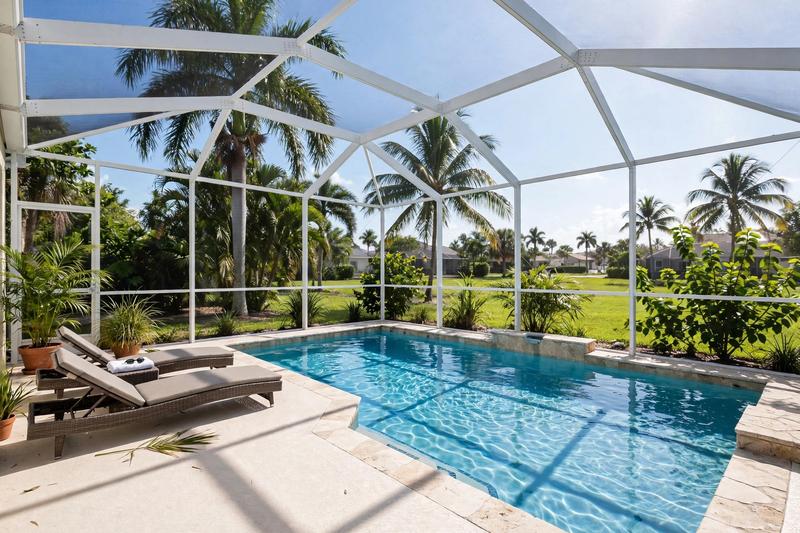
Flying into Orlando, my first question was simple: why are pools covered in Florida? Every backyard looked like it sat inside a giant white tent.
Six months after buying my Tampa home with an open pool, I got my answer. Mosquitoes ate me alive at dusk, and oak leaves clogged my pump weekly.
Why are pools covered in Florida in plain English?
Pools are covered in Florida with fine mesh cages to block bugs, falling leaves, harsh sun, and stray wildlife. These aluminum frames hold tight screen panels that let fresh breeze flow through.
Locals call this structure a lanai or pool cage. Before I built mine, I wasted hours each week fighting four constant backyard headaches:
Biting bugs and no-see-ums: Tiny sand gnats slip through standard window mesh, so builders use tight 20×20 screen.
Constant leaves and pine needles: Live oaks drop leaves all spring, turning an open pool green in three days.
Intense ultraviolet rays: Fine mesh filters harsh midday sun, protecting your skin and patio chairs from fading.
Unwanted backyard wildlife: Tree frogs, snakes, raccoons, and stray gators stay out of your deep end.
What a Florida lanai actually is
A Florida pool cage is an open-air screen room, not a solid glass greenhouse. Rain falls straight through the roof mesh to top off your water level naturally.
When I first shopped for screens, I tested three common materials on my back patio:
| Option I Tried | Best Use Case | My Honest Verdict |
|---|---|---|
| Standard 18×14 fiberglass | Basic leaf and mosquito control | Cheap, lasts ten years |
| Tight 20×20 no-see-um | Coastal yards with tiny gnats | Best upgrade I bought |
| Glass or solid roof | Cold northern backyards | Traps way too much heat |
My First-Year Aha Moment: I feared a pool cage would feel hot and stuffy. Instead, the mesh blocked sticky wind gusts and made evening swims feel five degrees cooler.
How a covered pool changes daily life in Florida
Covering a pool cuts weekly cleaning time in half and slashes chemical bills. Before my cage went up, I spent Sunday mornings skimming dead bugs instead of swimming.
Many newcomers ask why are pools covered in Florida if the weather stays warm year-round. The answer comes down to relentless sun and nonstop yard debris.
Why are pools covered in Florida for water care?
A screened enclosure blocks enough ultraviolet light to slow down chlorine loss and algae growth. My liquid chlorine use dropped from three heavy jugs a week to just one.
Harsh Florida sun burns off free chlorine by noon unless you add stabilizer. Adding a screen roof shades the water just enough to keep chemistry steady.
| Warning Sign | Real Cause | My 2-Minute Fix |
|---|---|---|
| Chlorine hits zero fast | Harsh sun burning off sanitizer | Check stabilizer and add mesh shade |
| Skimmer basket overflows | Live oak leaves and pollen | Empty basket and hose screen roof |
| Green algae on steps | Warm water plus low chlorine | Brush steps and shock at dusk |
| Tiny bites at sunset | No-see-ums passing through wide mesh | Upgrade panels to 20×20 screen |
My hands-on maintenance wins after screening
Routine pool chores shifted from daily emergency skimming to a quick ten-minute Friday check. Because less dirt enters the water, my pump and filter work much less.
I tracked my pool expenses for twelve months before and after installing my cage:
- Filter cleanings dropped: I now rinse my cartridge filter every three months instead of every four weeks.
- Water stayed warmer: Blocking cool night breezes kept my water three degrees warmer in January.
- Fewer dead critters: I stopped scooping out tree frogs and beetles every morning before work.
- Furniture lasted longer: Patio cushions stopped fading and cracking after one brutal July.
Time-Saving Shortcut: Rinse the outside of your screen walls with a garden hose once a month. Clearing pollen early keeps airflow strong and stops green mildew from staining aluminum beams.
Why are pools covered in Florida: myths vs. reality
Most out-of-state visitors assume pool cages stop hurricanes or trap heat, which is false. Real screen enclosures bend with the wind and stay breezy all summer.
When I first priced out my enclosure, three neighbors warned me about storms and dark rooms. Living with one quickly proved those rumors wrong.
What internet forums get wrong about pool cages
Modern Florida pool cages meet strict building codes for winds up to 150 miles per hour. During major storms, individual panels pop out safely so the aluminum frame stays standing.
Here is how popular online rumors stacked up against my real backyard results:
| Common Advice | My Real-World Test | Better Move |
|---|---|---|
| Cages trap summer heat | Breeze flows right through mesh | Add an outdoor ceiling fan |
| Screens fail in storms | Frame survived two tropical storms | Trim nearby oak branches early |
| You never need fences | State law requires door alarms | Add self-latching screen doors |
| Dark mesh blocks views | Charcoal mesh nearly disappears outdoors | Pick charcoal over bright silver |
Early mistakes I made with my screen enclosure
Choosing silver screen and skipping kick plates cost me extra repair money later. Bright silver mesh glared in the afternoon sun like a chain-link fence.
I also learned the hard way how fast a string trimmer shreds low screen panels. Fixing those early blunders taught me three smart upgrades:
| My Early Mistake | What Happened | What I Do Now |
|---|---|---|
| Bought bright silver mesh | Sun glare blocked my yard view | Always choose dark charcoal screen |
| Skipped bottom kick plates | Weed trimmer tore lower panels | Install 16-inch solid kick plates |
| Let oak limbs touch roof | Falling branches ripped top panels | Keep branches six feet back |
Safety Warning: Never rely on a standard screen door alone to stop small children. Florida pool safety laws still require door alarms or self-latching gates on exits.
Who needs a covered pool and who should skip it
A screened pool cage pays for itself if you have trees nearby or swim at dusk. However, homeowners who love deep tanning or live on tight budgets may prefer open decks.
Understanding why are pools covered in Florida also means looking at real 2026 ownership costs. Building a new cage runs $12,000 to $25,000 across most Florida cities.
Matching your yard to the right setup
Your backyard tree cover and bug pressure decide whether a full cage makes sense. Open pools work fine on breezy coastal lots with zero overhanging oaks.
Before signing any contract, budget for both upfront installation and routine ten-year upkeep:
| Size / Scenario | Exact Amount | How Often |
|---|---|---|
| New standard pool cage | $12,000 to $25,000 upfront | Once every 25 years |
| Full mesh rescreening | $1,200 to $3,500 total | Every 10 to 15 years |
| Single torn panel fix | $150 to $650 per visit | Only after storm damage |
| Gentle screen wash | $150 to $250 service | Once every 12 months |
Use this quick checklist to decide which path fits your backyard best:
- Build a cage if: Live oaks drop leaves daily, or mosquitoes ruin your evening patio dinners.
- Build a cage if: You want a secure barrier that helps meet local pool safety codes.
- Skip a cage if: You want full, unfiltered midday sun for tanning on your pool deck.
- Skip a cage if: Your neighborhood bans tall cages or blocks waterfront views.
Budget Reality Check: Factor in $100 a month in saved chemicals, water refills, and pool service fees. Over ten years, your cage quietly pays back half its initial build cost.
How I planned my pool cover without getting overwhelmed
Getting three local quotes and checking neighborhood rules first saved me weeks of permit delays. Breaking the project into small steps keeps contractor bids honest and clear.
Do not sign the first contract handed to you after a five-minute walkaround. Taking one week to compare specs saved me $3,200 on my build.
My simple 3-step starter plan
Follow these three steps in order to lock in fair pricing and durable materials.
- Check property lines first: Pull your lot survey to confirm how close aluminum beams can sit to fences.
- Request 20×20 charcoal mesh: Ask every builder to quote tight no-see-um screen and rust-proof fasteners.
- Compare three itemized bids: Check aluminum frame thickness and warranty length before paying any deposit.
| Step | Time Needed | Key Shortcut |
|---|---|---|
| Check lot survey lines | 15 minutes | Confirm utility easement boundaries early |
| Gather three local quotes | 3 days | Ask neighbors who rescreened recently |
| Finalize mesh and doors | 20 minutes | Pick two wide self-closing doors |
Pro Buying Tip: Schedule your build between November and February. Florida screen contractors have shorter waitlists in winter and often offer better seasonal pricing.
FAQs for Why are pools covered in Florida
Are pool enclosures required by law in Florida?
No, Florida law does not mandate full cages, though every home pool must have a legal safety barrier like a fence, alarm, or enclosure.
Do Florida pool cages keep alligators and snakes out?
Yes, heavy aluminum frames and tight bottom kick plates block snakes, frogs, and gators from ever wandering into your backyard pool.
How much does a pool screen enclosure cost in Florida?
A new Florida pool cage costs $12,000 to $25,000, while full rescreening runs $1,200 to $3,500 depending on yard size and mesh type.
Do pool cages make the water too cold to swim?
No, screened cages actually keep pool water warmer by blocking cool wind gusts and slowing overnight heat loss during mild winter months.
How long do Florida pool screen enclosures last?
Aluminum frames last 20 to 30 years with basic care, while fiberglass screen mesh typically needs replacing every 10 to 15 years.
Can a Florida pool cage survive a hurricane?
Modern cages handle winds up to 150 miles per hour, because individual screen panels pop out safely to relieve pressure on the frame.
My biggest lesson after five years with a covered Florida pool
Living in Florida taught me that an uncovered pool quickly turns into a daily chore. Screening my lanai gave me back my evenings and cut my weekly maintenance in half.
Walk out to your patio tonight at dusk and count the mosquito bites after five minutes. If bugs or falling leaves ruin your swim, call two local screen builders tomorrow for free quotes.

Leave a Reply