
[Published: July 29, 2026 | Last updated: July 29, 2026] | 7 min read
TL;DR
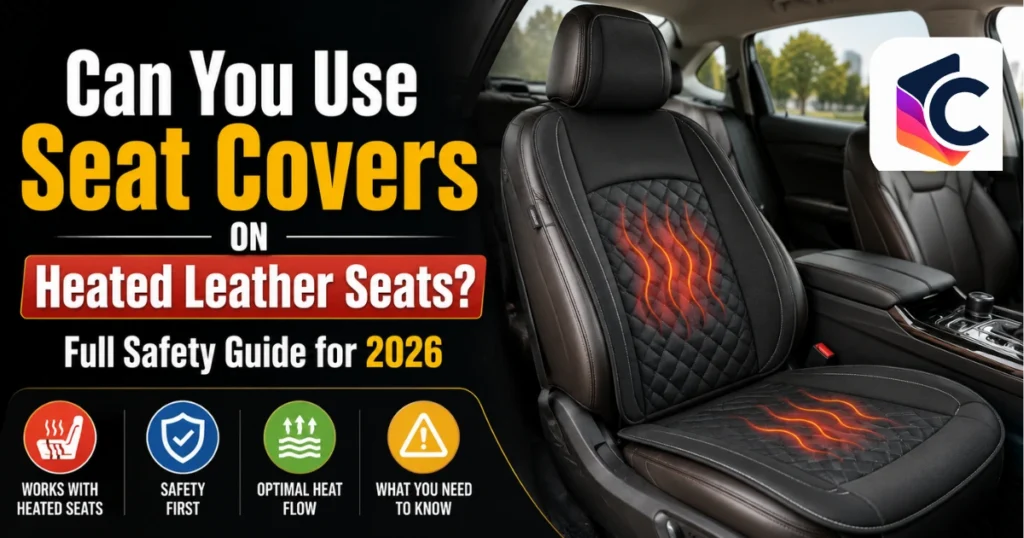
- Yes, you can use seat covers on heated leather seats, but only if the cover is made from thin, breathable, heat-compatible material.
- Thick, foam-backed, or fully insulated covers trap heat against the wiring and can cause hot spots or damage to the heating element.
- Polyester, CORDURA, mesh, and thin neoprene blends transfer heat well (TigerTough, 2024).
- Avoid covers with metal rivets or hardware near the seat surface – they can heat up and scratch the leather (TigerTough, 2026).
- Custom, vehicle-specific covers protect airbag deployment and heating sensors better than universal covers (Saddleman, 2025).
What Happens When You Put a Seat Cover Over a Heated Leather Seat
Heated leather seats use thin resistance wires or heat-conducting cables embedded in the foam under the leather. Electricity passes through the wires, they warm up, and the heat rises through the leather to your back and legs (Jalopnik, 2025).
A seat cover sits between you and that leather. If the cover material is thin and breathable, heat passes through with minimal loss. If it’s thick, foam-backed, or non-breathable, it acts as insulation and blocks that heat from reaching you – and can trap heat against the wiring instead.
That’s the entire question in one sentence: the cover doesn’t stop the heating element from working, but the wrong material stops the heat from reaching you and can stress the wiring over time.
Which Seat Cover Materials Are Safe for Heated Seats
Not every fabric behaves the same way once the heating element switches on. Some materials let heat pass through cleanly. Others trap it.
| Material | Heat Transfer | Notes |
|---|---|---|
| Polyester / CORDURA | Good | Thin and breathable, standard pick for heated seats (TigerTough, 2024) |
| Mesh/jacquard | Good | Breathable, common in OEM-style replacement covers (MyCustomCar, 2026) |
| Thin neoprene | Moderate | Waterproof and wipeable, but less breathable in hot climates (TigerTough, 2026) |
| Leatherette / faux leather | Poor | Doesn’t breathe, traps heat and humidity against the seat (TigerTough, 2026) |
| Foam-backed or quilted covers | Poor | Insulates the seat and can create hot spots (TigerTough, 2024) |
| Sheepskin or furry covers | Poor | Too thick for consistent heat transfer, avoid on heated seats (TigerTough, 2024) |
If you already own a cover and aren’t sure about the material, check the label or product listing for “heated seat compatible.” Manufacturers that build covers for heated seats state this directly, because it’s a common return reason otherwise.
Why Metal Hardware and Cheap Universal Covers Are the Real Risk
The direct answer: metal rivets, buckles, or hardware positioned over the seating surface can get uncomfortably hot and scratch leather once the heater cycles on (TigerTough, 2026).
Universal, one-size-fits-all covers carry a second risk. They shift and bunch because they aren’t cut for your specific seat contours. Repeated heat cycles make loose covers move more, which increases wear on both the cover and the leather underneath (TigerTough, 2026).
Custom-fit covers, built for your exact make and model, solve both problems. They stay in place, keep hardware away from the heated zone, and are far more likely to work correctly with airbags, split-fold mechanisms, and factory seat sensors than a generic cover (MyCustomCar, 2026; Saddleman, 2025).
Do Seat Covers Interfere With Side Airbags
Many vehicles route side-impact airbags through the seam of the seat itself, not the door panel. A seat cover that doesn’t have a matching seam in that exact spot can block the airbag from deploying correctly.
This is why vehicle-specific covers matter more than material choice alone. A cover built for your exact seat has airbag seams pre-installed in the correct location, so the airbag tears through the cover the same way it tears through the factory upholstery (CarParts.com, 2024).
If you’re shopping for a universal cover instead, check the packaging for an explicit airbag-compatible label before buying.
Common Mistakes to Avoid With Heated Seat Covers
- Buying based on price alone: The cheapest universal covers are usually the thickest and least breathable, which is the opposite of what a heated seat needs.
- Skipping the material check: Confirm “heated seat compatible” on the listing before ordering, not after installation.
- Leaving covers on during deep cleaning: Remove covers periodically to vacuum and clean the leather underneath with a dedicated leather cleaner, not a general carpet cleaner (Jalopnik, 2025).
- Ignoring hardware placement: Check that snaps, hooks, or rivets sit away from the direct heating zone.
- Using a cover that’s not cut for your seat: A loose or universal cover shifts under repeated heat cycles and wears unevenly.
Frequently Asked Questions About Seat Covers on Heated Leather Seats
Can you put seat covers on heated leather seats?
Yes. Use a cover made from thin, breathable, heat-compatible material such as polyester, CORDURA, or mesh. Avoid thick, foam-backed, or leatherette covers, which trap heat instead of letting it pass through (TigerTough, 2024).
Will a seat cover damage the heating element?
A properly rated cover won’t damage the heating wires. Thick or insulating covers don’t damage the element directly, but they can create hot spots and reduce how well the heat reaches you, which adds strain over repeated use (TigerTough, 2026).
Do heated seat covers work with airbags?
Vehicle-specific covers are built with seams that align with your factory airbag deployment points, so they don’t block the airbag. Universal covers only work safely if they’re explicitly labeled airbag-compatible (CarParts.com, 2024).
What’s the best seat cover material for heated leather seats?
Thin, breathable fabrics like polyester, CORDURA, and mesh transfer heat most efficiently. Thin neoprene works but breathes less well in warm climates (TigerTough, 2024; TigerTough, 2026).
Do seat covers reduce how warm heated seats feel?
Thicker materials reduce the warmth you feel, since they add a layer between you and the heating element. They won’t damage the heater, but you’ll notice a slower or weaker warm-up (TigerTough, 2026).
Can cloth seat covers go over heated leather seats?
Yes. Cloth is generally breathable enough for heat to pass through, though it may transmit heat slightly less evenly than leather or vinyl covers (Seat Cover Solutions, 2023).
Key Takeaways
- Seat covers and heated leather seats are compatible when the cover material is thin and breathable.
- Thick, foam-backed, leatherette, or furry covers block heat and should be avoided.
- Metal hardware near the seat surface can heat up and scratch leather.
- Vehicle-specific, custom-fit covers protect both airbag function and heated seat performance better than universal covers.
Sources:
- TigerTough – Can You Put Seat Covers On Heated Seats?
- CarParts.com – Can You Put Seat Covers on Heated Seats and Is It Safe?
- Jalopnik – Is It Safe To Use Seat Covers On Heated Seats?

Leave a Reply