
[Published: August 12, 2026 | Last updated: August 12, 2026] | 6 min read
TL;DR
- Most disposable paper toilet seat covers are designed to be flushable and will break down in water (RD.com, 2025).
- “Flushable” on the label doesn’t guarantee your pipes can handle it – older plumbing and septic systems are the main risk factor (RD.com, 2025).
- Decorative covers made of cotton, vinyl, or faux fur are never flushable and should go in the trash (Little Upgrades, 2023).
- If you’re unsure about your building’s plumbing, throw the cover away instead of flushing it.
- Flush only one cover at a time to avoid clogs, even with flushable versions.
What Is a Toilet Seat Cover, and Is It Flushable?
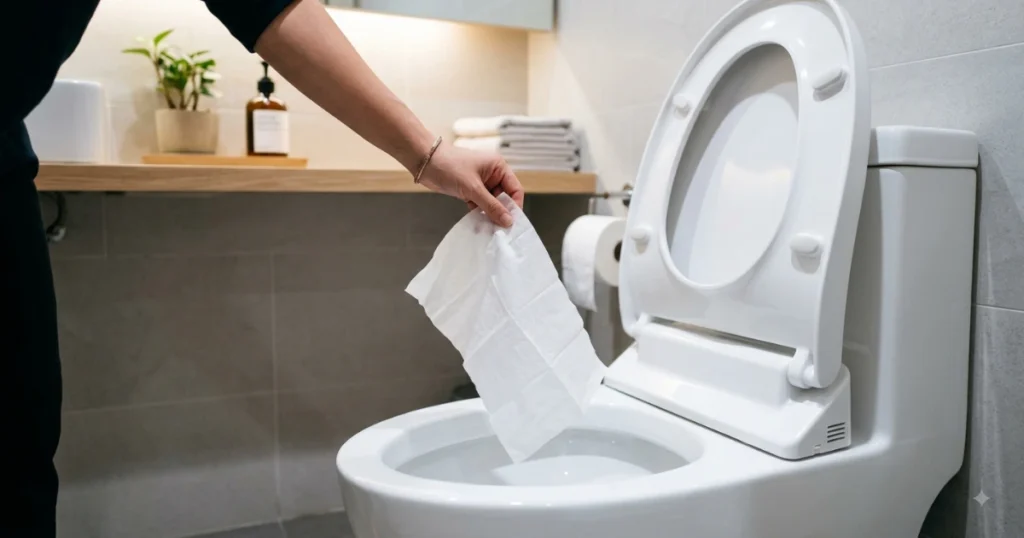
A toilet seat cover is a thin, single-use paper liner placed over a public toilet seat for hygiene. Most brands found in public restrooms are made to be flushable, with a paper flap designed to hang into the bowl water.
When you flush, the water pulls that flap down, and the rest of the paper follows and dissolves (RD.com, 2025). This is the standard design for the cover dispensers in airports, offices, and restaurants.
Not every seat cover works this way, though. Reusable or decorative covers – think cotton, vinyl, or faux fur styles sometimes used at home – are not designed to break down and should never go in the toilet.
Why “Flushable” Doesn’t Always Mean Safe for Your Pipes
The label “flushable” means the material will physically pass through a toilet, not that every plumbing system can handle it. Older sewer lines and septic tanks are designed to process only toilet paper (RD.com, 2025).
Public health researcher Diana Gimeno Ruiz de Porras notes that flushable products still carry risk for outdated systems: buildings with pre-1980s piping or a septic tank can back up even when the cover technically dissolves (RD.com, 2025). In those cases, the safer move is the trash bin, not the bowl.
If you don’t know the age or type of plumbing you’re dealing with – which is common in public restrooms – treat every flush as a small gamble and default to the trash can when one is available.
How to Tell If Your Toilet Seat Cover Is Actually Flushable
Check the packaging first. Genuine flushable covers are usually labeled clearly and made from water-soluble paper that softens within seconds of contact with water.
Non-flushable versions are typically thicker, textured, or made from fabric-like material that stays intact even after soaking. If you’re not sure, run a small torn piece under water in a sink – true flushable paper will start breaking apart almost immediately.
A simple rule: if the cover feels more like fabric than tissue paper, don’t flush it (Little Upgrades, 2023).
What Happens If You Flush a Non-Flushable Cover
Non-flushable covers don’t dissolve, which means they can catch on pipe bends, tree roots in older sewer lines, or narrow points in a septic system. Over time, this builds into a clog that requires a plumber to clear.
This is the same reason plumbers warn against flushing wipes, paper towels, or feminine hygiene products labeled “flushable” – the material may pass through the toilet bowl but stall further down the line. One non-flushable cover rarely causes an immediate backup, but repeated flushing compounds the risk.
Best Practices for Using Public Restroom Seat Covers
- Check the label: Look for “flushable” printed on the dispenser or the cover itself before assuming it’s safe.
- Flush one at a time: Even flushable covers can clump together and clog if multiple are flushed in one go.
- Use the trash when in doubt: If a restroom looks like it has older plumbing or you’re unsure, bin the cover instead.
- Never flush decorative or reusable covers: These are made for durability, not disposal, and belong in the wash or the trash.
Frequently Asked Questions About Flushing Toilet Seat Covers
Can toilet seat covers be flushed?
Most disposable paper toilet seat covers found in public restrooms are designed to be flushed and will dissolve in water. Decorative or fabric covers are not flushable and should be thrown away.
Are all “flushable” toilet seat covers safe for septic systems?
Not necessarily. Septic systems and older sewer lines are built to handle toilet paper only, so even flushable covers can cause problems in these systems (RD.com, 2025).
What happens if I flush a non-flushable toilet seat cover?
It can get caught in pipe bends or narrow points in the plumbing, building into a clog over time that may require a plumber to fix.
How can I tell if a toilet seat cover is flushable?
Check the packaging for a “flushable” label, or test a small piece in water – genuine flushable paper breaks apart quickly, while non-flushable material stays intact.
Should I flush more than one toilet seat cover at once?
No. Flush covers one at a time, since multiple covers can clump together and cause a clog even if each one is individually flushable.
Key Takeaways
- Standard paper seat covers in public restrooms are usually flushable, but decorative or fabric ones are not.
- Older buildings and septic systems are the main reason a “flushable” label can still cause a clog.
- When unsure about the plumbing, use the trash bin instead of flushing.
Sources:
- RD.com — “How to Use a Toilet Seat Cover, According to Public Health Experts” (2025): https://www.rd.com/article/right-way-to-use-toilet-seat-cover/
- Little Upgrades — “Are Toilet Seat Covers Flushable? How to Use Them Correctly” (2023): https://littleupgrades.com/toilet-seat-covers-flushable/

Leave a Reply