
[Published: August 24, 2026 | Last updated: August 24, 2026] | 7 min read
TL;DR
- Most loose toilet seat covers are fixed by tightening the two hinge bolts underneath the bowl – no new parts needed.
- The full fix takes about 10 minutes with a screwdriver, pliers, and possibly a replacement bolt kit.
- If the bolts spin freely or the plastic nut is stripped, a replacement seat bolt kit costs $5 to $10 (FixUpFirst, 2026).
- A cracked hinge or a seat that still rocks after tightening usually means it needs to be replaced, not repaired.
- Standard replacement seats run $15 to $30, while slow-close versions run $30 to $60 (FixUpFirst, 2026).
What You Need Before You Start
- A flathead or Phillips screwdriver, depending on your bolt type
- Needle-nose pliers
- Rubber gloves (the hinge area collects grime)
- Penetrating oil, such as WD-40, for corroded bolts
- Optional: a replacement seat bolt kit if the existing hardware is stripped
Clean the hinge area before you start. <cite index=”6-1″>A dirty hinge makes disassembly both unsanitary and harder to work with, so wipe it down first.</cite>
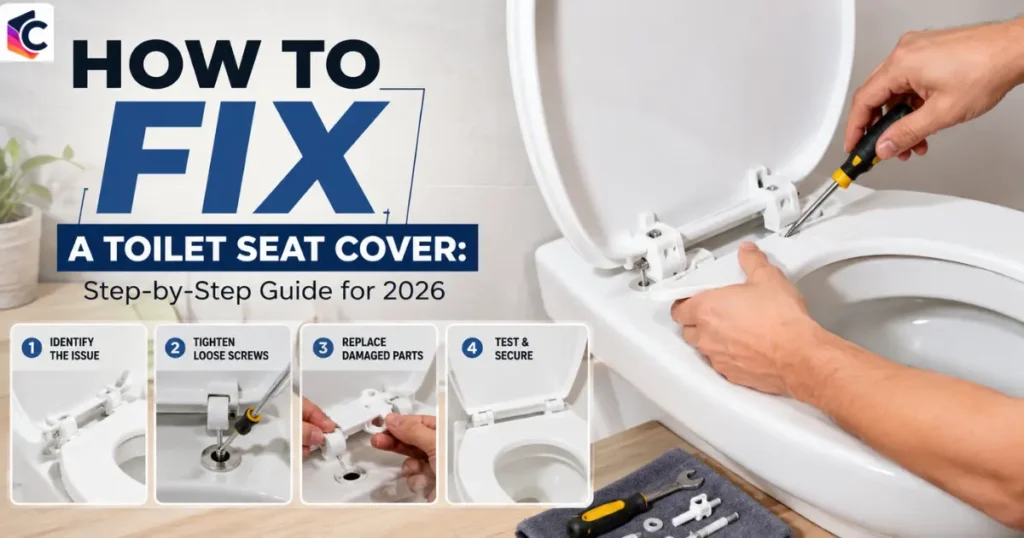
Step 1: Figure Out Why the Cover Is Loose
Before you grab a tool, check what’s actually wrong. <cite index=”8-1″>A loose seat is usually caused by loosened mounting bolts or worn-out hinges, a cracked hinge that needs full replacement, or bolt holes that have widened enough that the seat shifts sideways.</cite>
Sit on the seat (lid down) and gently rock it side to side. If it wobbles evenly, the bolts are loose. If one side pivots more than the other, the hinge itself may be worn. <cite index=”12-1″>If the seat slides sideways even when the bolts are tight, the rubber or plastic bumper pads on the hinge have likely worn smooth and no longer grip the bowl.</cite>
Step 2: Open the Hinge Caps
Most toilet seats hide their bolts under small plastic caps at the back of the hinge. <cite index=”7-1″>Many modern bolt covers pop open with your fingers, similar to a shampoo cap; if they don’t, gently pry them open with a flathead screwdriver.</cite>
Once open, you’ll see either a plastic bolt head you hold from above, or a recessed screwdriver slot. <cite index=”12-1″>Look underneath the toilet bowl rim for a matching plastic wing nut on each bolt.</cite>
Step 3: Tighten the Bolts
This is the fix that solves most wobbly-seat problems. <cite index=”12-1″>Hold the bolt from above with a screwdriver or pliers, then turn the wing nut clockwise from underneath. Alternate between the two sides instead of fully tightening one before starting the other.</cite>
Stop as soon as each bolt resists turning. <cite index=”7-1″>Overtightening can strip or break the bolt, so ease off once you feel resistance.</cite> Sit on the seat again to confirm it no longer rocks, then snap the hinge caps back into place.
Step 4: Add Washers If It Still Wiggles
If the seat still moves after tightening, the bolt holes may have widened over time. <cite index=”7-1″>Adding a toilet seat hinge washer, which costs less than $1 per bolt, is designed specifically to keep a seat from shifting.</cite> Unscrew each bolt fully, slide the washer into place where the bolt meets the bowl, then reinsert and re-tighten the bolt.
Step 5: Deal With a Spinning or Stripped Bolt
A bolt that spins without tightening means the bolt or nut has stripped. <cite index=”12-1″>Grip the bolt head firmly with needle-nose pliers while you turn the nut from below. If the nut itself is stripped, remove the old hardware entirely and install a replacement seat bolt kit, which runs $5 to $10 at most hardware stores.</cite>
For rusted or corroded metal bolts on older seats, don’t force them. <cite index=”11-1″>Spray the bolt with a rust penetrant and wait five to ten minutes before trying again.</cite> <cite index=”8-1″>If the bolts still won’t move after a few drops of penetrating oil and a 10 to 15 minute wait, you’ll likely need to cut them.</cite> A miniature hacksaw works well here: saw just beneath the bolt head until it separates, then clear away the debris before installing new hardware.
Step 6: Know When to Replace Instead of Repair
Tightening only works if the hardware itself is intact. Replace the cover instead of repairing it when any of these apply:
- The plastic wing nut has cracked or stripped and tightening no longer helps
- The hinge itself is cracked or physically broken
- The seat or cover is stained, warped, or broken through
- You want to upgrade to a slow-close or bidet-compatible seat
<cite index=”12-1″>Standard replacement seats cost $15 to $30, slow-close versions run $30 to $60, and bidet seats range from $80 to $400.</cite> If the bolt hole in the bowl itself is cracked, skip the standard hardware entirely. <cite index=”12-1″>A seat riser bracket or stabilizer clip attaches to the underside of the rim without using the damaged holes.</cite>
Common Problems and How to Fix Them
| Problem | Likely Cause | Solution |
|---|---|---|
| Seat rocks evenly side to side | Loose hinge bolts | Tighten bolts clockwise, alternating sides |
| Seat still wiggles after tightening | Widened bolt holes | Add hinge washers to each bolt |
| Bolt spins without tightening | Stripped nut or bolt | Grip bolt with pliers or replace with a bolt kit |
| Bolt won’t turn at all | Rust or corrosion | Apply penetrating oil, wait, then retry or cut the bolt |
| Seat slides sideways even when tight | Worn hinge bumper pads | Replace the seat, as pads can’t be repaired individually |
| Cracked bowl bolt hole | Age or over-tightening | Install a seat riser bracket or stabilizer clip |
Frequently Asked Questions About Fixing a Toilet Seat Cover
What is the fastest way to fix a wobbly toilet seat cover?
Open the hinge caps, hold each bolt with a screwdriver or pliers, and turn the wing nut clockwise from underneath the bowl. This is a 10-minute fix when the hardware itself isn’t damaged.
How do I tighten a toilet seat cover without new tools?
A basic screwdriver is enough for most seats. If the nut spins along with the bolt, needle-nose pliers let you hold the bolt head steady while you turn the nut.
Can I fix a toilet seat cover with a stripped bolt?
Yes. Remove the stripped hardware entirely and install a replacement seat bolt kit, which costs $5 to $10 at most hardware stores and fits standard toilet bowls.
Why does my toilet seat cover keep coming loose after I tighten it?
Repeated tightening without washers can widen the bolt holes over time. Adding a hinge washer to each bolt, or switching to a stainless steel bolt and nut kit, gives a more durable hold than the original plastic hardware.
Should I repair or replace a cracked toilet seat cover?
Replace it. A cracked hinge or a stripped nut that no longer holds a tightened bolt won’t hold long-term, and standard replacement seats start around $15.
Do all toilet seat covers use the same bolt system?
No. Some use plastic wing nuts accessed from underneath the bowl, while others use a top-tighten nut on the hinge itself that you can adjust from above without reaching underneath.
Summary
- Most loose covers just need the two hinge bolts tightened clockwise from underneath the bowl.
- Add washers if the seat still wiggles after tightening, since worn bolt holes are a common repeat cause.
- Stripped or spinning bolts need a $5 to $10 replacement bolt kit, not more force.
- Corroded bolts respond to penetrating oil; if they still won’t turn, cut them with a hacksaw.
- A cracked hinge, stripped nut, or worn bumper pad means it’s time to replace the seat rather than keep repairing it.
References

Leave a Reply