
[Published: August 18, 2026 | Last updated: August 18, 2026] | 7 min read
TL;DR
- Most seat covers last 1 to 10 years, depending almost entirely on material and daily use, with basic polyester or budget fabric covers on the low end at 1 to 5 years.
- High-grade eco leather and CORDURA typically last 5 to 10 years, sometimes longer with care (Seat Cover Solutions, 2026; Alexcar, 2025).
- Neoprene covers usually hold up for 3 to 6 years before compression fatigue sets in (Seat Cover Solutions, 2026). Alexcar
- UV exposure, seam quality at the headrest post, and how snugly the cover fits are the three biggest factors in premature wear.
- Replace covers at the first sign of rips, cracking, or shifting – waiting only accelerates damage to the seams and the seat underneath.
How Long Do Seat Covers Actually Last?
The honest answer: it depends on the material, not the brand name on the label. On average, seat covers last anywhere from 1 to 5 years, but that range stretches much further once you factor in material grade and care.
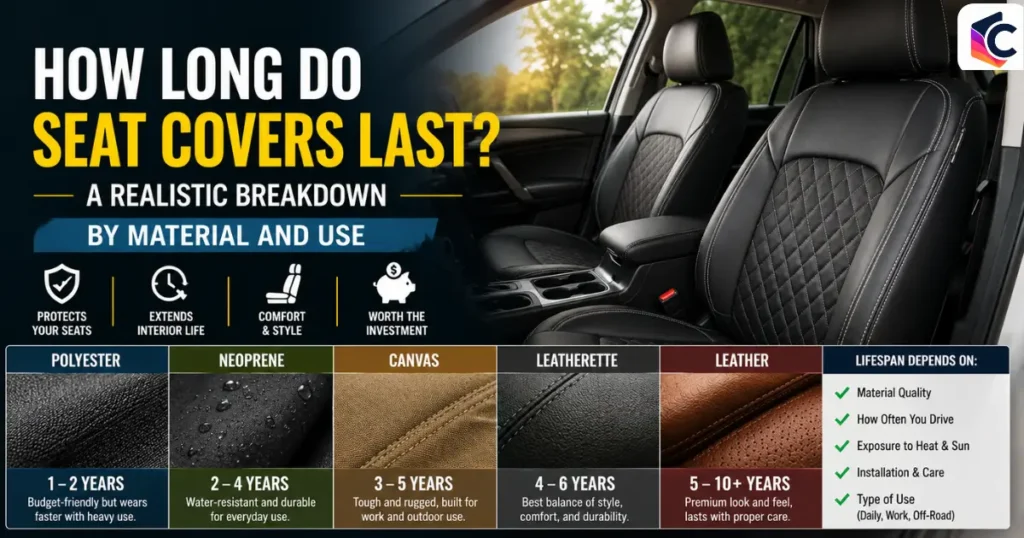
Cheap polyester covers sit at the bottom of that range. Premium leather, eco leather, and CORDURA sit at the top, often doubling or tripling the lifespan of a basic fabric cover. Overall, seat covers can last anywhere from 5 to 10 years or more, depending on the material, how the vehicle is used, and how well the covers are maintained (Auto Seat Factory, 2025).
Daily drivers wear covers down faster than weekend vehicles. Most car owners find that daily driving causes visible wear and tear faster than occasional use, which means covers may need replacing sooner if the car is on the road every day (AutoChamp of Texas, 2026).
Lifespan by Material: What to Expect
| Material | Typical Lifespan | Notes |
|---|---|---|
| Budget polyester/fabric | 1-3 years | Lightest fibers, simplest seams, wears fastest under stress (Seat Cover Solutions, 2026) |
| Cloth (OEM-style) | 5-7 years | Breathable and affordable but absorbs moisture and spills (Auto Seat Factory, 2025) |
| Neoprene | 3-6 years | Retains heat, which speeds up surface aging in hot climates (Seat Cover Solutions, 2026) |
| Eco leather | 4-10 years | Range varies by brand; UV-stabilized coatings extend the top end (Seat Cover Solutions, 2026; Seat Cover Review, 2026) |
| Genuine leather / CORDURA | 7-10+ years | Most durable option with proper conditioning (Alexcar, 2025) |
Eco-leather covers with a polyurethane face resist UV degradation and surface cracking that shortens neoprene lifespan, which is why they tend to outlast neoprene in the same climate (Seat Cover Review, 2026). Seam construction at the headrest post matters just as much as the face material – single-stitched headrest covers fail significantly faster than double-stitched or overlocked alternatives (Seat Cover Review, 2026). Auto Seat FactoryAuto Seat Factory
What Shortens a Seat Cover’s Lifespan
Three factors drive most premature failures: sun exposure, poor fit, and skipped maintenance. Fix any one of these, and you add real years to the cover’s life.
Sun exposure. Vehicles parked outside in direct sun every day degrade all seat cover materials faster, with neoprene and budget polyester affected the most (Seat Cover Review, 2026). A windshield sunshade or covered parking spot slows this down noticeably. Auto Seat Factory
Loose or universal fit. Universal covers rarely sit tightly, and once a cover shifts even slightly, friction increases at stress points, which speeds up deterioration (Seat Cover Solutions, 2026). A trim-specific or custom fit removes most of that friction. Alexcar
Skipped cleaning and conditioning. Dirt and grit act like sandpaper against fabric fibers every time you sit down. Leather and leatherette covers need conditioning every 1 to 2 months to stay soft, flexible, and less prone to cracking (Auto Seat Factory, 2025).
Signs It’s Time to Replace Your Seat Covers
A worn seat cover shows itself before it fails completely. Catching these signs early protects the factory upholstery underneath, which is usually far more expensive to repair than the cover itself.
- Visible rips, holes, or fraying seams: expose the seat below to dirt, moisture, and UV rays.
- Cracking or stiffening, especially on leather and leatherette, from sun exposure and dried-out material.
- Stains that no longer come out, which affect both appearance and hygiene.
- Sagging or shifting fit, which increases friction and speeds up further wear.
- Loss of cushioning or comfort, a sign the padding underneath the cover has compressed.
Common Mistakes That Shorten Seat Cover Life
- Buying universal-fit covers for a snug budget: they shift constantly, which increases friction at the seams. A trim-specific cover costs more upfront but wears more evenly.
- Skipping the sunshade: UV rays are the single biggest driver of cracking and fading, and a $15 shade prevents most of it.
- Ignoring spills: letting liquid sit lets it soak into the padding, not just the cover, which can cause odor and mildew that no amount of surface cleaning fixes.
Frequently Asked Questions About Seat Cover Lifespan
How long do seat covers last on average?
Most seat covers last 1 to 10 years. Budget fabric covers typically sit at the low end, around 1 to 5 years, while premium leather or CORDURA covers can last 7 to 10 years or more with regular care.
What material lasts the longest?
Genuine leather and CORDURA are the most durable options. With proper care, these premium materials can last 7 to 10 years or more, while neoprene and standard fabric covers typically last 3 to 5 years (Alexcar, 2025).
Do neoprene seat covers wear out faster than leather?
Yes, in most climates. Neoprene usually holds up for 3 to 6 years before compression fatigue becomes noticeable, and it retains more heat than leather-based materials, which accelerates surface aging in warmer climates (Seat Cover Solutions, 2026). Alexcar
Does daily driving shorten seat cover lifespan?
Yes. Covers on daily-driven vehicles wear faster than those in cars used occasionally, since friction and UV exposure add up with every trip. Cleaning and conditioning on a set schedule offsets much of this extra wear.
Is it worth buying more expensive seat covers?
Usually, if you plan to keep the vehicle for several years, higher-grade materials such as eco leather or genuine leather typically provide better cost-per-year value than replacing low-cost polyester covers every 1 to 3 years (Seat Cover Solutions, 2026). Alexcar
Key Takeaways
- Lifespan ranges from 1 year (budget fabric, heavy daily use) to 10+ years (premium leather or CORDURA, well maintained).
- Sun exposure and poor fit are the two biggest causes of early wear.
- Conditioning leather every 1-2 months and using a sunshade meaningfully extend cover life.
- Replace covers at the first sign of rips, cracking, or persistent shifting to protect the factory seats underneath.
References:

Leave a Reply