
Published: August 30, 2026 | Last updated: August 30, 2026 | 7 min read
TL;DR
- Toilet seat covers turn yellow mainly from uric acid buildup, hard water minerals, harsh cleaning chemicals, and UV exposure.
- Urine that dries on plastic crystallizes and bonds with the surface, which plain water and wiping can’t remove (True Toilet, 2026).
- Bleach can make yellowing worse, not better, because chlorine reacts with the plastic and oxidizes it (Toiletseek, 2026).
- Sunlight breaks down plastic through photodegradation, the same process that yellows old electronics and appliance casings (Hackaday, 2017).
- Vinegar, baking soda, or hydrogen peroxide left to sit for 15-20 minutes clears most stains; deep yellowing usually means it’s time to replace the seat.
What Causes Toilet Seat Covers to Turn Yellow?
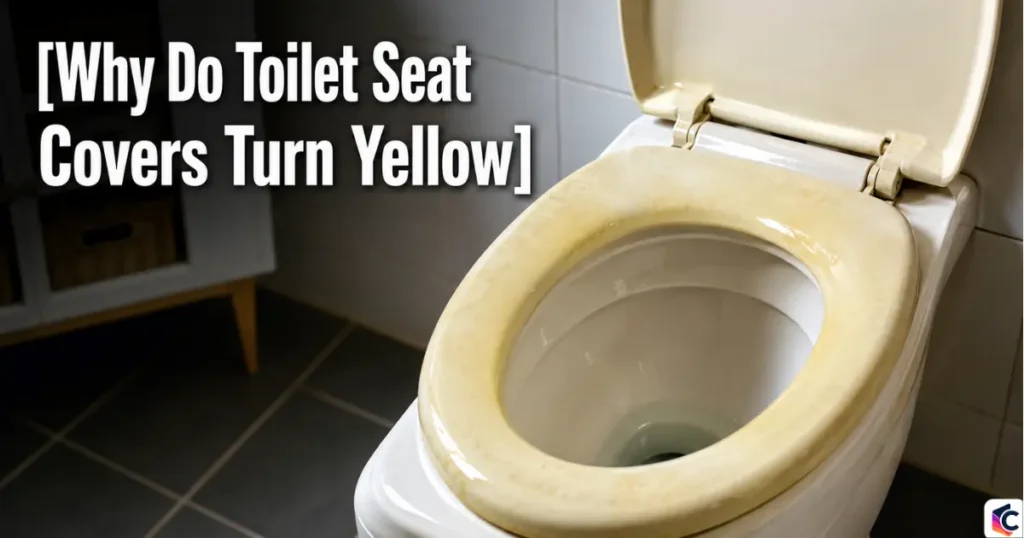
Toilet seat covers turn yellow from a combination of urine residue, mineral deposits, chemical reactions with cleaners, and sun exposure. Each cause leaves a slightly different pattern of staining, and most seats are dealing with more than one at once.
Plastic toilet seats are porous at a microscopic level. Anything that lands on the surface and isn’t rinsed off quickly can work into that texture and stay there, even after a normal wipe-down.
Urine and Uric Acid Buildup
Urine is the single biggest cause of yellow toilet seats. It contains uric acid, calcium, and proteins that crystallize as the liquid dries, and those crystals don’t dissolve in water alone (The Indoor Haven, 2022).
Once dried, uric acid also contains urochrome, the pigment that gives urine its yellow color (Sunrise Specialty, 2022). Left on the seat for even a day or two, it hardens into a film that plain wiping can’t lift.
This is why splash marks on the underside of the seat, or on the top if someone urinates while seated, tend to show up as the earliest yellow patches. Bacteria can also grow in these deposits over time, adding odor to the discoloration.
Hard Water Minerals and Rust Stains
Hard water leaves yellow-tinted mineral deposits on toilet seats through calcium, magnesium, and iron that build up as water evaporates on the surface. This is separate from urine staining, though the two often overlap.
Rainwater picks up minerals as it travels through soil and rock before reaching your home’s water supply. Those minerals don’t disappear when the water evaporates; they stay behind as a residue that darkens with repeated exposure.
Homes on well water or in areas with iron-rich groundwater tend to see this faster, often as a rust-tinted yellow rather than a pale one.
Chemical Damage from Bleach and Harsh Cleaners
Bleach and ammonia can turn a toilet seat yellow instead of cleaning it, because chlorine is a strong oxidizer that reacts with the plastic itself (Toiletseek, 2026). The stain this leaves behind is often mistaken for a dirty seat, when it’s actually chemical discoloration.
Many toilet seats are made from thermoplastic or duroplast, both of which can react poorly to undiluted bleach (True Toilet, 2026). The damage tends to show up as a deeper, almost orange-yellow tone rather than the pale yellow of urine stains.
If a cleaning product’s label doesn’t list plastic toilet seats as a safe surface, that’s a sign to skip it or dilute it heavily before use.
Sunlight and UV Exposure
Direct sunlight ages plastic toilet seats through a process called photodegradation, where UV light breaks down the chemical bonds in the plastic and shifts its color toward yellow. This is the same mechanism that yellows old electronics casings and outdoor furniture over years of exposure (Hackaday, 2017).
Bathrooms with a window near the toilet, or seats that sit close to a skylight, will often show a yellow patch that matches the shape of the light hitting the plastic. Flame-retardant additives in some plastics make this process happen faster, since UV light destabilizes those additives and pulls them to the surface (How-To Geek, 2022).
Unlike urine or mineral stains, UV yellowing changes the plastic itself. It usually can’t be scrubbed away because the color shift happens below the surface, not on top of it.
Age and Plastic Type
Older toilet seats yellow faster simply because they’ve had more years of exposure to urine, cleaners, and sunlight combined. Plastic quality also plays a role, since cheaper or older manufacturing processes used less UV-stable materials than seats made today.
A seat that’s five or more years old, cleaned regularly but still showing a dull yellow tint, has likely reached the point where the discoloration is baked into the material. Replacement is usually faster and cheaper than trying to restore it.
How to Remove Yellow Stains from a Toilet Seat
Most yellow stains respond to a mild acid or a mild abrasive paste, applied and left to sit before scrubbing.
- Mix a paste of baking soda and water, or use undiluted white vinegar, and apply it directly to the yellowed area.
- Let it sit for 15 to 20 minutes so the acid has time to break down the uric acid crystals or mineral deposits.
- Scrub with a soft brush or non-scratch sponge, working in small circles rather than pressing hard in one spot.
- Rinse thoroughly with clean water to remove any residue, then dry with a clean cloth.
- Repeat if needed for older, more set-in stains, but avoid combining vinegar with bleach, since mixing them releases harmful fumes.
For stains that don’t budge after two or three attempts, hydrogen peroxide left on the surface for an hour tends to work on deeper discoloration. If the plastic still looks yellow after that, the color change is likely permanent and a new seat is the more practical fix.
Common Mistakes to Avoid
- Using undiluted bleach on a regular basis: This oxidizes the plastic and often causes the exact yellowing it’s meant to prevent. Dilute it heavily or skip it in favor of vinegar or a seat-safe cleaner.
- Letting urine sit for more than a day: Uric acid crystallizes quickly, and once it hardens, it takes far more scrubbing to remove. Wipe splashes as soon as you notice them.
- Scrubbing hard water stains without an acid: Dry scrubbing alone won’t dissolve mineral deposits and can scratch the plastic, giving future stains more surface texture to grip onto.
Frequently Asked Questions About Yellow Toilet Seats
What is the main cause of a toilet seat turning yellow?
Urine is the most common cause. Uric acid and urochrome in dried urine crystallize on the plastic and resist plain water, which is why regular wiping alone often isn’t enough.
How does bleach make a toilet seat more yellow?
Chlorine in bleach is a strong oxidizer. When it reacts with the plastic or resin in the seat, it can shift the color toward yellow or orange instead of whitening it, especially if it isn’t rinsed off quickly.
Can sunlight really turn a toilet seat yellow?
Yes. UV light breaks down chemical bonds in plastic over time, a process called photodegradation. It’s the same reaction that yellows old plastic electronics and outdoor furniture, and it changes the plastic itself rather than just the surface.
Is a yellow toilet seat unsanitary?
It can be. Uric acid deposits and mineral buildup give bacteria a place to grow, so a persistently yellow seat is worth cleaning thoroughly or replacing, not just for looks but for hygiene.
How often should I clean my toilet seat to prevent yellowing?
Wiping down the seat two to three times a week, and immediately after any urine splashes, prevents most staining before it sets. A deeper clean with vinegar or a seat-safe cleaner once a week handles what daily wiping misses.
Will vinegar damage my toilet seat?
No. White vinegar’s acetic acid is mild enough for most plastic and resin seats and is one of the more effective options for breaking down both uric acid crystals and hard water deposits.
Key Takeaways
- Urine, hard water minerals, harsh chemicals, and UV exposure are the four main causes of yellow toilet seats.
- Bleach can worsen yellowing through a chemical reaction with the plastic, so dilute it or avoid it on seats.
- Vinegar, baking soda, or hydrogen peroxide left to sit before scrubbing removes most stains without damaging the plastic.
- UV-caused yellowing changes the plastic itself and usually can’t be scrubbed away; an aging or heavily discolored seat is often best replaced.

Leave a Reply